Quick Facts
CAO America 250th Anniversary – Bury the Leaf
Some cigars walk in like they’re interviewing for a job. This one kicked the damn door open, put its boots on your coffee table, and dared you to say something about it. The CAO America 250th Anniversary Robusto doesn’t flirt, it doesn’t apologize, and it sure as hell doesn’t pretend to be gentle. It’s loud, proud, and fully committed to being the most stars‑and‑stripes thing you’ll smoke this year.
From the first draw, it felt less like a flavor exercise and more like a personality test. Either you’re on board with full‑tilt pepper, earth, and grit, or you go find something with training wheels. This isn’t that. This is the white‑collar guy who crushes spreadsheets all week and then shows up to the cookout in cutoff jean overalls, a mullet, and mirrored shades, shotgunning domestic beer and not losing a wink of sleep over it.
If you want a polite handshake of a cigar, keep walking. If you want something that tastes like it was rolled by people who still believe in loud trucks, loud music, and loud opinions, this is your lane. For the price it’s running at the big online shops, the CAO America 250th is exactly what it looks like: a bold, blue‑collar salute in cigar form that doesn’t need your approval to light itself up.
By the Numbers
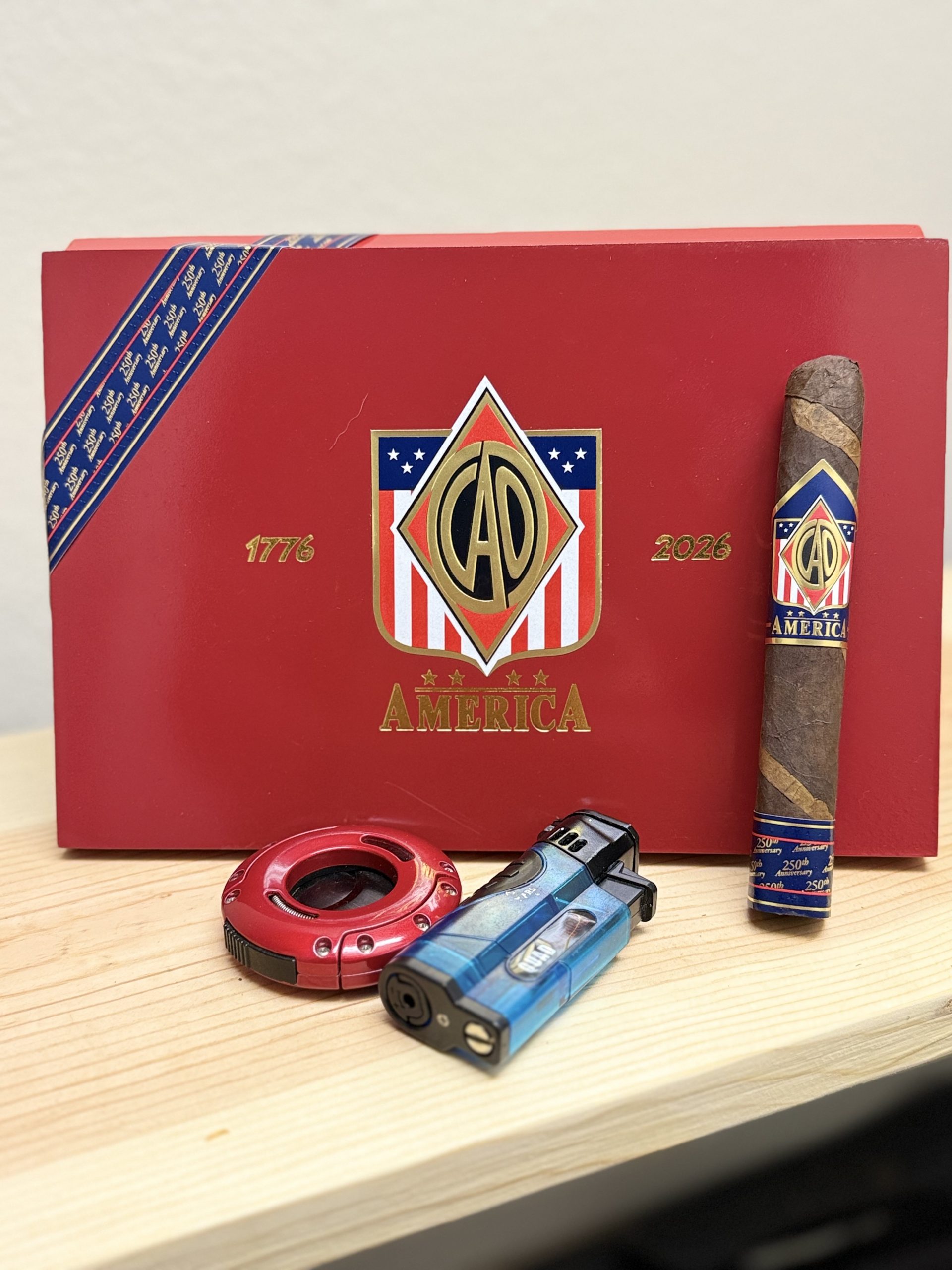
- Vitola: Box‑pressed Robusto (5.5 x 55)
- Wrapper: Dual barber‑pole, U.S. Connecticut Broadleaf & U.S. Connecticut Shade
- Filler/Binder: U.S. tobacco blend (American puro core)
- Cut: V‑cut with Colibri SV
- Procured from: JR Cigars
- Price Paid: $11.09
- Estimated MSRP: Low‑to‑mid teens range
- Duration: 1 hour 48 minutes smoke time
- Band Rating: 4 Bands
Construction & First Impressions
Before fire ever touched it, this thing already smelled like it meant business. The foot and wrapper came off with cocoa, roasted coffee, and straight tobacco—heavier, darker, and more serious than anything in the “breakfast cigar” lane. The kind of aroma that tells you up front you’re not here for a dainty little warm‑up.
Cold draw brought a surprising twist: a sweetness that leaned toward sweet tea, with a little citrus tucked into it. Not syrupy, not candy, just that familiar Southern glass‑of‑tea vibe riding over the tobacco. The V‑cut from the Colibri SV left the draw slightly restricted but not enough to earn a complaint—just a bit of extra resistance that fit the overall heft of the cigar.
On the first holds, a light floral hint floated in the background. It never tried to take over, never got perfumey or cloying—just a soft little accent dancing on top of the heavier notes. Visually, that box‑pressed barber‑pole presentation did its job. It looks like a cigar that showed up ready to prove something, and from the first few puffs, it backed that up.
First Third
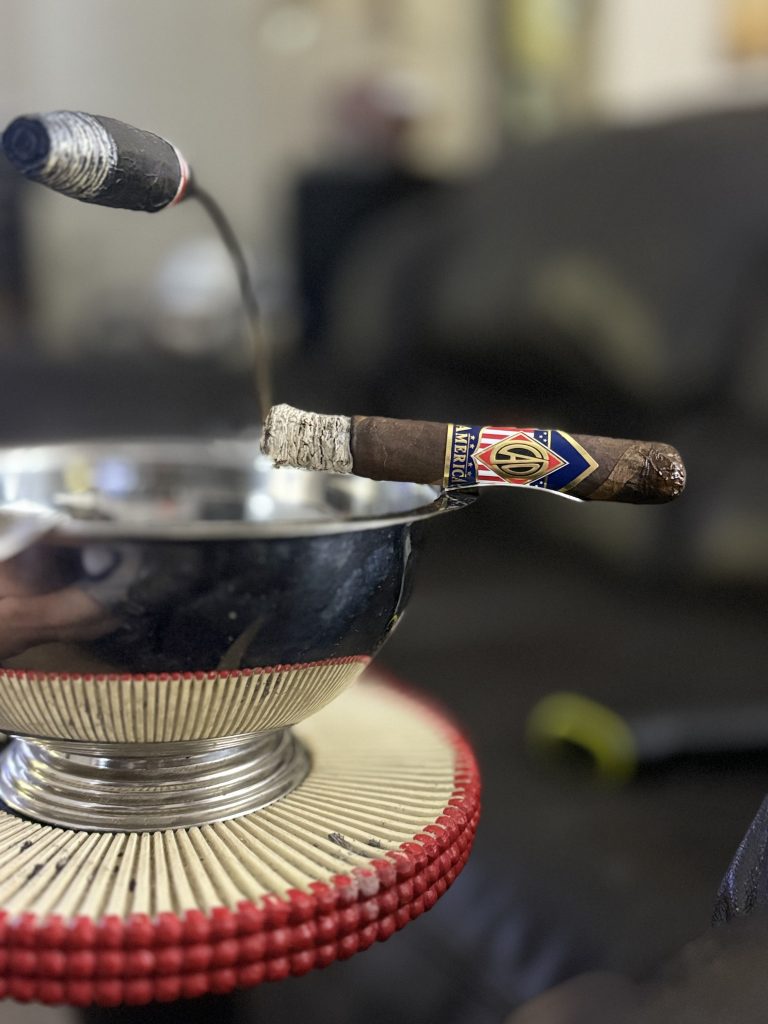
All that cold‑draw sweetness? It bailed the second fire hit. The opening wasn’t gentle. It came out swinging with a tongue‑forward pepper blast that grabbed the front of the palate and dug in. The spice coated everything, but it landed hardest up front and eased off slightly toward the back of the tongue, which kept it from feeling like a blunt instrument.
Underneath that pepper, an earthy, dirty minerality set up camp and refused to leave—and that was a good thing. It added a grounded, gritty layer that made the cigar feel honest and unpolished in the right way. It tasted like something that had spent time in real dirt, not a lab. That note stuck around on the finish and gave each puff a little bit of rugged swagger.
A spicy leather note joined the party early, more spice than leather but clearly carrying that “broken‑in” feel. It brought to mind a favorite old smoking chair or a well‑worn wallet that’s been in the same pocket for years. It didn’t dominate the profile, but it gave the core of the cigar a backbone beyond just “strong and peppery.”
Somewhere in the background was a wood character heavier than cedar, but it never quite pinned itself down. It stayed in that “I know it’s wood, but I’m not going to lie and name the tree” zone. That vague, heavier wood note added weight to the profile without turning into a guessing‑game gimmick.
By the time the first third wrapped up, the cigar had already laid its cards on the table. Full, bold, pepper‑forward, earth‑driven, leathery, with a gritty mineral edge and no interest in faking refinement. It wasn’t trying to be everything to everyone, and that worked entirely in its favor.
Second Third
Rolling into the second third, a thought hit: there aren’t many American puros in the rotation, and if this is what they’re capable of, that feels like a missed opportunity. This stick carried enough attitude to justify the flag‑waving band, and it did it on flavor, not just presentation.
The strength stayed up and the cigar kept its identity. It didn’t suddenly decide to get polite just because it had some mileage on it. Pepper still led the charge, leather still hummed underneath, and the earth and minerality kept the profile grounded. But there were signs something was shifting under the surface.
As the first half closed out, the pepper began to back off just a touch. In its place, a darker sweetness started to edge in—nothing cloying, nothing sugary, just a heavier, almost brooding sweetness working its way into the finish. At first it felt like potential more than reality, but it was enough to make you pay attention.
As the second third settled in, that sweetness brightened up. What started as darker and heavier loosened and lifted, adding a little glow to the edges of each puff without watering down the core. Then, as you neared the end of the second third, an almost mint‑like note slipped in. It wasn’t toothpaste or menthol; it was more of a cool, refreshing streak that cut through the heavier flavors and kept the profile from feeling stuck in one gear.
Even with those changes, the cigar never abandoned its roots. It remained bold and powerful, the spice stayed present, and the leather and earth never left the stage. The difference now was that the profile had a little more dimension—a few more corners to turn—without ever trying to reinvent itself as something delicate.
Final Third
In the final stretch, this cigar kept its foot on the gas. The power didn’t fade, the body didn’t hollow out, and the core flavors didn’t wash into mud. Pepper, earth, leather, that lingering minerality, and the evolved sweetness all kept working together, more like variations on a theme than three distinct acts.
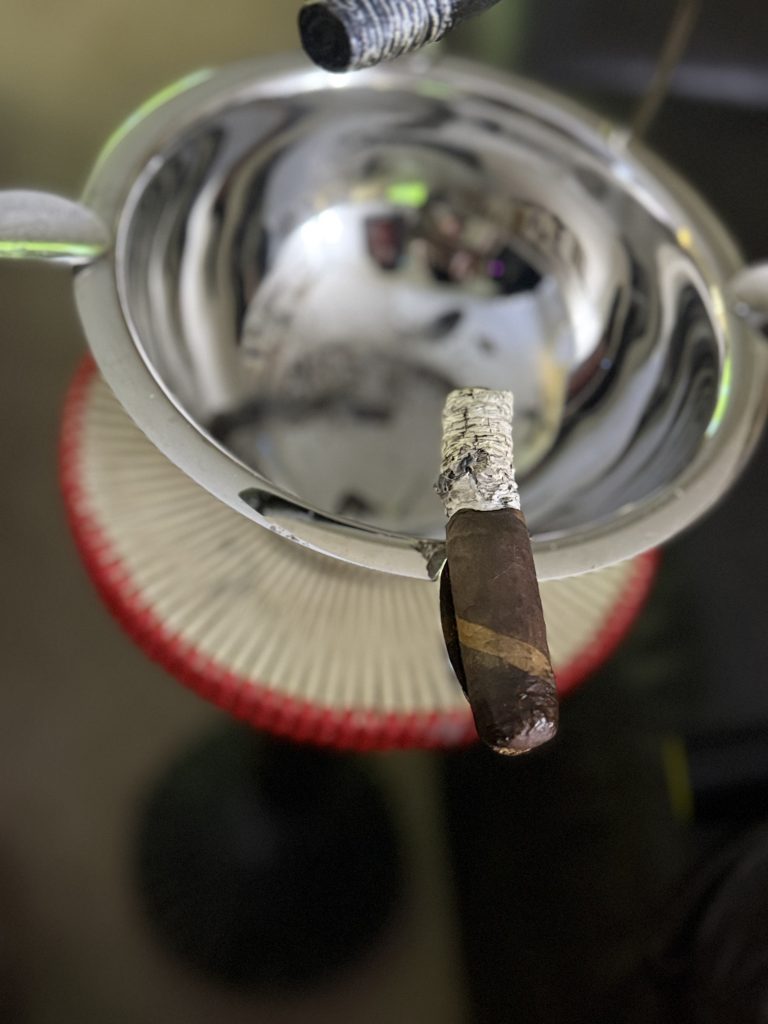
Construction held up almost the entire way before finally showing a bit of attitude. Late in the game, the burn line drifted about a quarter inch out of line on one side. Enough to notice, not enough to panic about. Instead of grabbing a lighter, it went into the ashtray for a short timeout to see what it would do on its own.
A few minutes later, that little problem had sorted itself out like it had never happened.
That self‑correction said a lot about how the cigar was built. No unraveling, no canoeing meltdown, no constant touch‑up dance. It wandered, it fixed itself, it kept moving. Even near the nub, the profile still felt coherent: strong, spicy, earthy, leathery, with that dirty mineral streak and traces of the lifted sweetness and cool note that had shown up in the middle.
By the time the final inch was on deck, it was easy to look back and see the throughline. This wasn’t a cigar that tried to wow you with a circus of transitions. It took a clear personality—loud, grounded, and unapologetic—and added just enough movement to keep it from feeling one‑dimensional. It knew exactly what kind of smoker it wanted, and it stuck to that.
Millennium of Aftermath
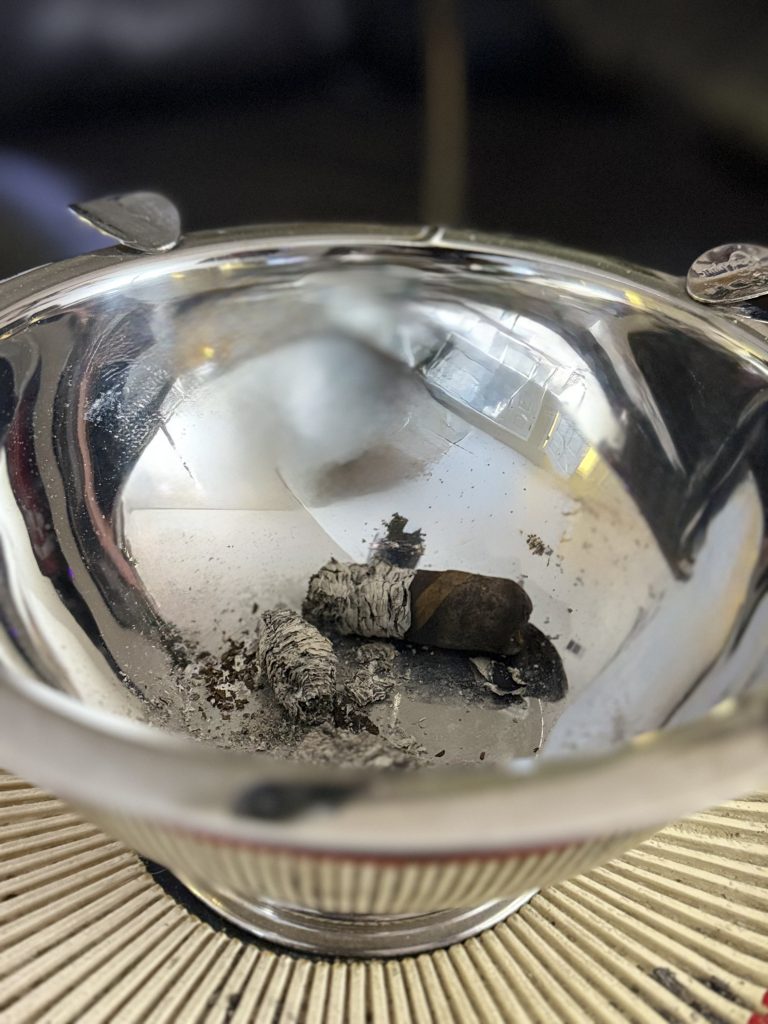
What’s great about America? Capitalism. Bourbon whiskey. BBQ spare ribs. The Daytona 500. The Rocky Mountains. The Super Bowl. Freedom. The World Series. And the CAO America 250th Anniversary.
That list isn’t subtle, and neither is this cigar.
For just over an hour and forty‑five minutes, it delivered a full‑tilt ride built on pepper, earth, leather, and that gritty mineral core, with a cold‑draw nod to sweet tea, a disappearing‑and‑returning sweetness, a brightening shift in the middle, and an almost mint‑like twist near the end of the second third. It never went soft, never tried to clean itself up for the sake of fitting in, and never forgot that the whole point was to feel big, loud, and proudly American.
Is it for everyone? No—and that’s exactly the point. This is for the smoker who wants a cigar that stands up straight, speaks with its chest, and doesn’t care if it’s a little too much for somebody else. At the price it’s running online, it earns its 4‑Band mark without breaking a sweat.
If you want the one‑line summary: this cigar is Lee Greenwood strapped to a bald eagle, belting out the chorus while the smoke rolls and nobody reaches for the remote.
-
Wanted for Disturbing the Peace
Black Label Trading Company Lawless Robusto – Bury the Leaf Some cigars politely introduce themselves.…
-
Sometimes the Guy Behind the Counter Knows Something
Stolen Throne Call to Arms Sumatra – Bury the Leaf There are plenty of ways…
-
A S’more at the Start and Corojo by the Finish
Ceniza Fina Corojo – Bury the Leaf Some cigars arrive with a marching band. This…

Final Verdict — Buy Again?
Yes
Where to Buy
Shop This Cigar on Gotham CigarsConsistency is King ($3.42)
Leave a Reply