Quick Facts
My Father La Lealtad – Bury the Leaf
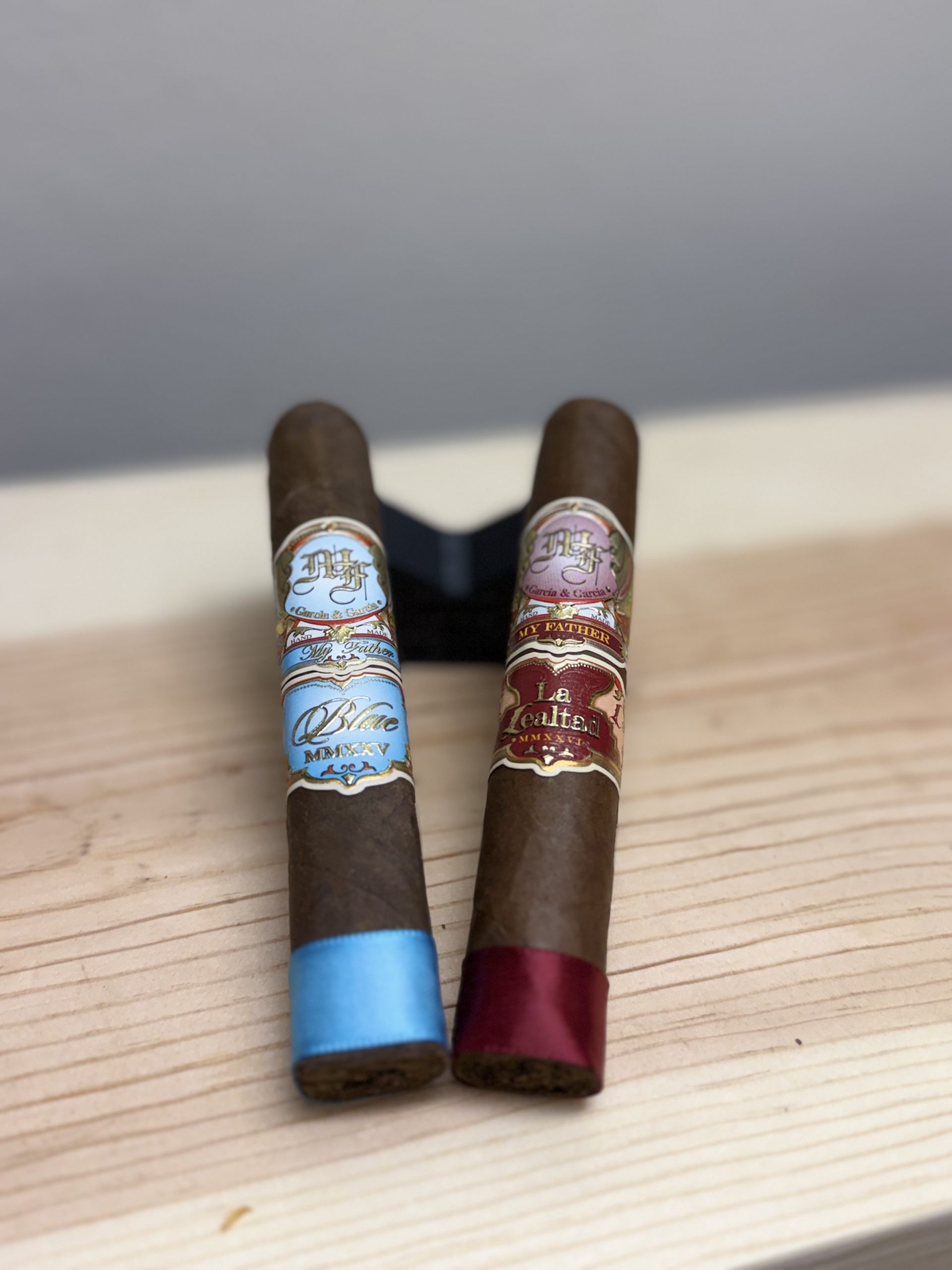
Some cigars show up with expectations baked into the band. My Father La Lealtad is one of them. It walks in carrying three different stories at once: the Garcia family’s Honduran operation flexing again after Blue, that familiar ornate My Father branding promising craft, and an Ecuadorian Habano oscuro wrapper hinting that this one might not be here to play nice.
I didn’t meet La Lealtad in my home lounge. It caught my eye at a Cigars International in Newport, KY—a red‑footed banded up sibling to the Blue that had been waiting patiently back home. Same name family, same Honduran factory, same general pedigree. Blue had already shown me what the Garcias could do in Honduran soil when they dialed back the aggression. La Lealtad felt like the answer to the question, “Okay, but what if we turn the knobs a little further?”
To keep the playing field level, I gave La Lealtad the same treatment as Blue: deep V from the Colibri SV, simple seltzer water on the side, and nothing else on the docket. No palate‑coating drinks, no snacks that could fudge the edges. If this was going to be a fair fight in The Battle of Honduras, La Lealtad needed to stand on its own legs first.
By the Numbers
- Brand: My Father
- Line: My Father La Lealtad
- Vitola Smoked: Robusto
- Factory: My Father Cigars Honduras
- Wrapper: Ecuadorian Habano Oscuro / Rosado
- Binder: Honduran & Nicaraguan (dual binders)
- Filler: Honduran & Nicaraguan long‑filler
- Rest Time: About one week in the humidor
- Purchased At: Cigars International – Newport, KY
- Pairing: Plain seltzer water
- Cut: Deep V‑cut (Colibri SV)
- Fire: Soft‑flame lighter
Construction & First Impressions
If you’ve seen one My Father band, you haven’t seen them all—but you have seen the philosophy. La Lealtad wears the same ornate family crest treatment as Blue: detailed artwork, multiple colors, intricate trim work, and a secondary band that keeps the palette cohesive. Just like its cousin, the stack of paper eats up a shocking amount of real estate on a robusto. It looks fantastic, but you can’t help wondering why a third of the cigar needs to be dressed in formal wear.
The wrapper itself is a looker. The Ecuadorian Habano Oscuro/Rosado leaf is a warm, reddish brown with a gentle oil sheen. Veins are small and well‑managed, seams are tidy, and the overall roll feels solid without being overstuffed. Nothing about the exterior says “rush job.” It looks like it belongs in the same family as the core My Father lines.
Then there’s the shape. Both of the La Lealtads I bought had a noticeable faux box‑press. The foot is distinctly rectangular, with clear edges like a traditional box‑pressed cigar. Flip it around, though, and the head is perfectly round. If you place the cigar in your palm and close your hand so the foot is hidden, you’d swear you were holding a standard round robusto. Open your hand and that pressed foot gives the game away. It’s a neat little quirk: box‑pressed attitude with a familiar feel in the mouth.
On the nose, both wrapper and foot lean earthy: rich soil and straight tobacco rather than barnyard funk or bright cedar. The cold draw, once the Colibri SV does its work, jumps out with hay. It practically shouts “hay there, stranger,” riding over that earthy base. Airflow is easy but not loose, setting the stage for bigger smoke output than Blue showed.
Taken together, La Lealtad makes a strong first impression: familiar My Father polish, a slightly odd hybrid shape, and pre‑light notes that say “I’m here to be a cigar first, a showpiece second.”
First Third
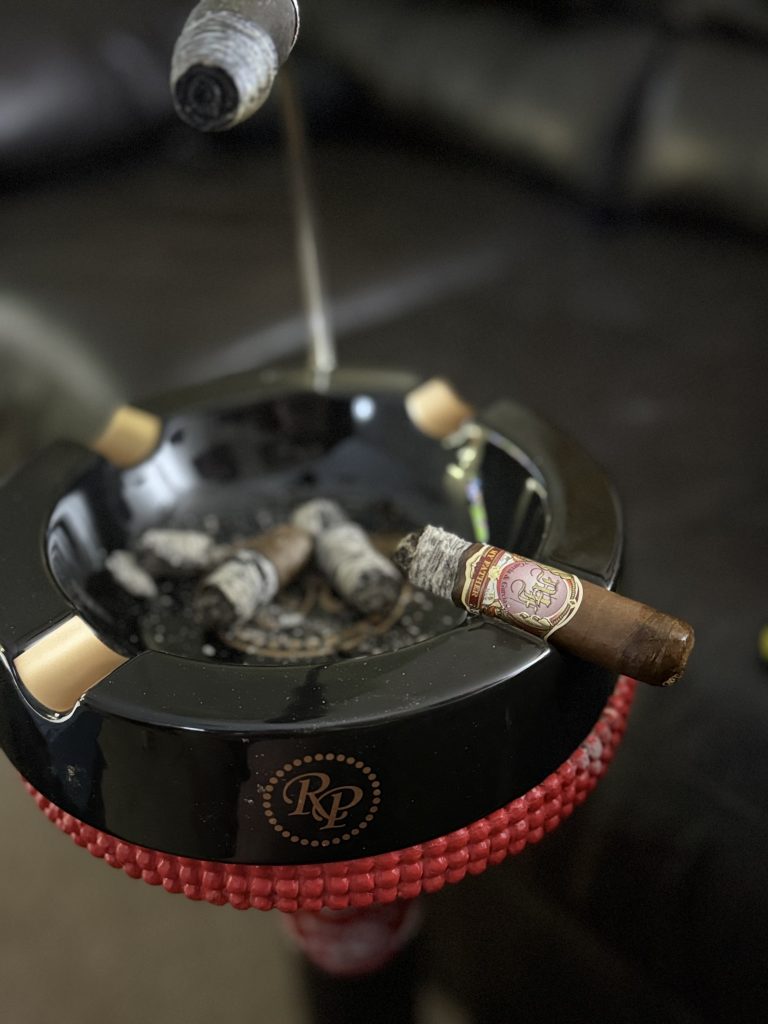
From the first draw, La Lealtad sets a different tone than Blue.
Instead of taking a few minutes to find itself, it opens immediately with a clear sweet tobacco presence. That sweetness hits first, right at the front of the draw, then settles into the background as the smoke leaves your mouth. Riding underneath it is that fresher‑than‑hay, duller‑than‑grass flavor from the cold draw—a muted greenery that feels more like a soft echo of fresh cuttings than a bowl of salad.
Within the first few puffs, the cigar starts to show more of its Garcia DNA. By the third or fourth draw, the traditional My Father spice steps into the spotlight. It’s that familiar peppery warmth—more insistent than Blue ever was in its opening act—that plays primarily on the tongue and a bit in the retrohale. It doesn’t bite, but it doesn’t hide either.
One of the first things you notice is smoke volume. La Lealtad gives you more of it. Each draw produces a thicker, denser cloud than Blue did, coating the palate with a creamy texture that makes the flavors feel more substantial. The cigar feels “bigger” in the mouth even if the actual strength isn’t wildly higher.
Flavor-wise, the first third is anything but one‑dimensional. Along with the sweet tobacco and pepper, there’s a clear nutty spice starting to develop—think of spice that seems to come bundled with some kind of toasted nut rather than just raw pepper. Then the cigar throws a curveball: your brain starts poking you with impressions of popcorn and, oddly enough, Italian dressing. It’s not that the cigar literally tastes like a movie theater and a salad, but there’s a toasty, slightly tangy, almost herbal quality that’s hard to park anywhere else.
What matters is that it works. The savories, the sweetness, the spice, and the nuttiness all play together in a way that stays smooth. There’s no harsh edge, no “too much” moment. The first third on La Lealtad feels like the blend clearing its throat and saying, “Yes, I’m related to Blue, but I’m not trying to be Blue.”
Construction is already matching the flavor. Burn line is clean and even, ash is stacking confidently, and the draw remains easy, feeding that thick, satisfying smoke.
Second Third
As you move into the second third, La Lealtad starts to settle into itself.
That early nutty spice smooths out into a soft toasted nuttiness. It’s still there, but now it’s less of a headline flavor and more of a textural backdrop, adding warmth without demanding attention. The popcorn and Italian dressing weirdness that made the first third so memorable fades into a more coherent savory‑sweet undercurrent.
In its place, a “raw toasted coffee bean” note steps forward. This isn’t the dark, brewed coffee you get in a lot of heavier blends. It’s more like standing near a roaster: roasted, aromatic, a little bitter on the nose but not punishing in the mouth. That coffee‑bean impression sits right next to the toasted nuts and earth, giving the middle of the cigar more depth without dragging it into heavy territory.
The sweet tobacco from the opening never fully leaves. It weaves in and out, sometimes more prominent on the draw, sometimes just a faint echo on the finish. The greenery from the cold and early puffs gradually recedes, replaced by a more grounded, earthy sweetness that feels squared‑up and comfortable.
What really stands out in this section is how smooth the whole experience is. For a cigar wearing an oscuro Habano wrapper and carrying some Nicaraguan influence, La Lealtad is surprisingly composed. The Garcia spice is still there, but it behaves. It seasons the profile rather than trying to dominate it. There are no harsh transitions, no jagged spikes—just an easy, confident flow from one set of flavors to the next.
The burn continues to be unbothered. The faux box‑press doesn’t cause any weird canoes or hot spots. You get the visual interest of the pressed foot without any of the construction drama some box‑pressed cigars bring along.
Final Third
By the time you roll into the final third, La Lealtad has already made its case. The last stretch is where it quietly closes the sale.
As the second third winds down and the final third begins, a subtle creaminess shows up—more texture at first than flavor. Very soon, that creaminess starts to pick up a light vanilla edge. It’s not a full‑on vanilla bomb, but there’s a vanilla‑like sweetness smoothing over the earth and coffee, rounding everything into a softer profile.
The core at this stage is a creamy earthiness. Earth is still the base note, but it’s wrapped in that soft, almost silky cream texture you’ve been noticing more and more as the cigar progressed. The toasted nuts remain in the background, and the raw coffee bean impression has deepened into something closer to a roasted coffee tone without ever becoming a blunt espresso hammer.
Then there’s the sweetness. Somewhere in this last stretch, you start picking up a semi‑sweet note that’s hard to pin down—and your brain lands on Dr Pepper. Not in a gimmicky, “this tastes like soda” way, but in the sense of a darker, slightly spiced sweetness that doesn’t scream any single flavor. It’s a blend: a little dark, a little herbal, a little sweet, distinctly “not just sugar.”
Construction never stops being a non‑issue. The burn line stays rock steady, the draw never tightens, and the smoke output remains thick and satisfying right up until the end. At one point, an ash that would have made a great Instagram shot decides to punch out onto your lap instead of the ashtray. It’s messy, but it also tells you the cigar was stacking ash like a champ.
As the cigar winds down, that creamy earthiness is what closes the door. It doesn’t crash into bitterness, it doesn’t char out, and it doesn’t turn into a pepper stick. It simply eases off, leaving you with the impression of a cigar that knew exactly when to stop talking.
Millennium of Aftermath
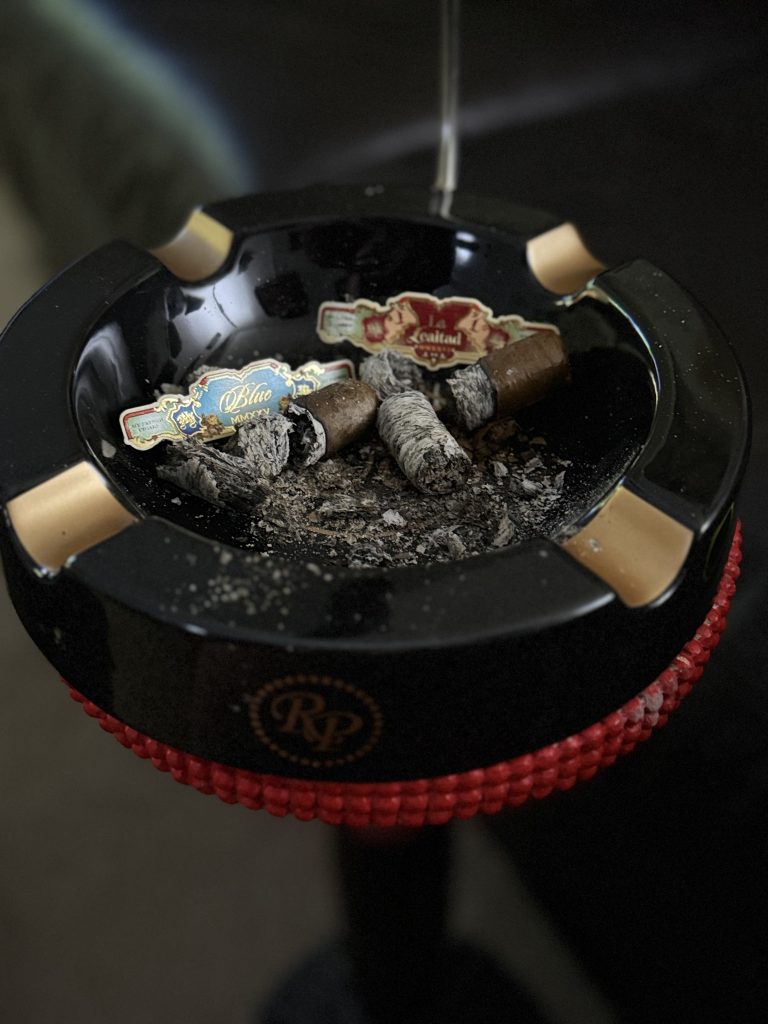
My Father La Lealtad came in with a lot to prove. It’s following Blue in the Honduran lineup, it’s wearing a Habano oscuro wrapper that usually signals strength and spice, and it’s got that dual Honduran/Nicaraguan core hinting at bigger flavor. It would have been very easy for this cigar to turn into a heavy‑handed “look what we can do in Honduras” statement.
Instead, it turned out to be something smarter: a cigar that manages to show off the Garcia family’s spice and complexity without sacrificing smoothness.
The highlights are easy to spot. From the jump, La Lealtad gives you sweet tobacco and classic Garcia spice in the first handful of puffs, instead of waiting until the last chapter. The first third is engaging and a little weird—in a good way—with nutty spice, popcorn‑like toastiness, and even a faint Italian‑dressing tang that keeps your attention. The second third settles into a confident mix of soft toasted nuts, raw coffee bean, earth, and lingering sweetness. The final third ties it all together with creamy earth, subtle vanilla, and that semi‑sweet Dr Pepper‑ish note that makes the finish memorable.
All of this rides on construction that matches—and arguably equals—the Blue: easy draw, even burn, zero babysitting. The faux box‑press foot is a small but fun touch, and the ash shows enough backbone to wreck your lap when you’re not paying attention.
The question is always the same: would I smoke it again, and would I reach for it before its siblings? In this case, the answer to both is yes. La Lealtad feels like the more complete expression of what a Honduran‑made My Father can be. It has the spice you expect, the smoke output you want, and a level of smoothness that encourages you to sit with it rather than fight it.
On The Evening Draw BAND ladder, La Lealtad sits at least a rung above Blue. Blue is the technician—clean, precise, a little reserved. La Lealtad is the smooth operator that brings more flavor, more presence, and a finish you actually think about after the cigar is out.
If this is the direction the Garcia family is taking their Honduran projects, I’m all in for whatever round comes next.
-
Brazil by Way of Honduras
Oz Family Maracana Toro – Bury the Leaf Some cigars introduce themselves politely. The Maracana…
-
Wanted for Disturbing the Peace
Black Label Trading Company Lawless Robusto – Bury the Leaf Some cigars politely introduce themselves.…
-
Sometimes the Guy Behind the Counter Knows Something
Stolen Throne Call to Arms Sumatra – Bury the Leaf There are plenty of ways…

Final Verdict — Buy Again?
Yes
Leave a Reply