
Quick Facts
Macanudo Emissary France Robusto – Bury the Leaf
The Macanudo Emissary France showed up looking like a spicy Habano bruiser and then spent an hour and a half proving it was actually a fresh‑palate assassin. What starts with briny minerality and Habano zing turns into dried fruit, lemon‑lime “flat Sprite” citrus, and a shockingly good plum finish that I never would’ve picked off a shelf, but now absolutely want more of in the humidor.
By the Numbers
- Vitola: Robusto (5 x 52)
- Wrapper: 10‑year aged Ecuadorian Habano
- Filler/Binder: 10‑year aged Dominican Piloto, 8‑year aged USA Broadleaf, 7‑year aged Brazilian Arapiraca, 4‑year aged French tobacco; USA Broadleaf binder
- Cut: Straight guillotine (Xikar XO), full cap came off and needed a repair
- Procured from:** Lounge stock; additional sticks available from Mike’s Cigars https://mikescigars.com/macanudo-emissary-france-robusto
- Duration: 1 hour 34 minutes
- Band Rating: 4 Bands
Construction & First Impressions
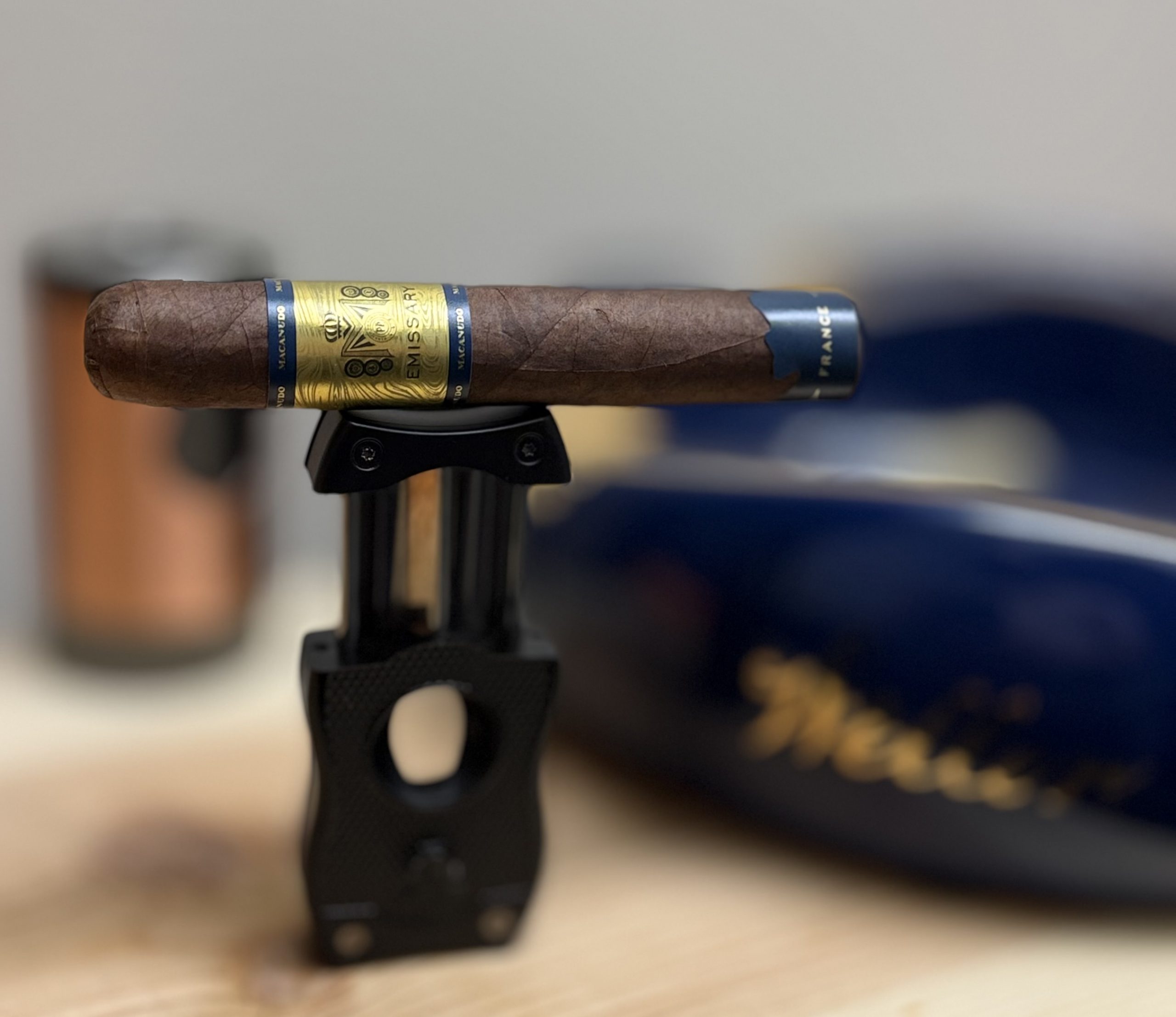
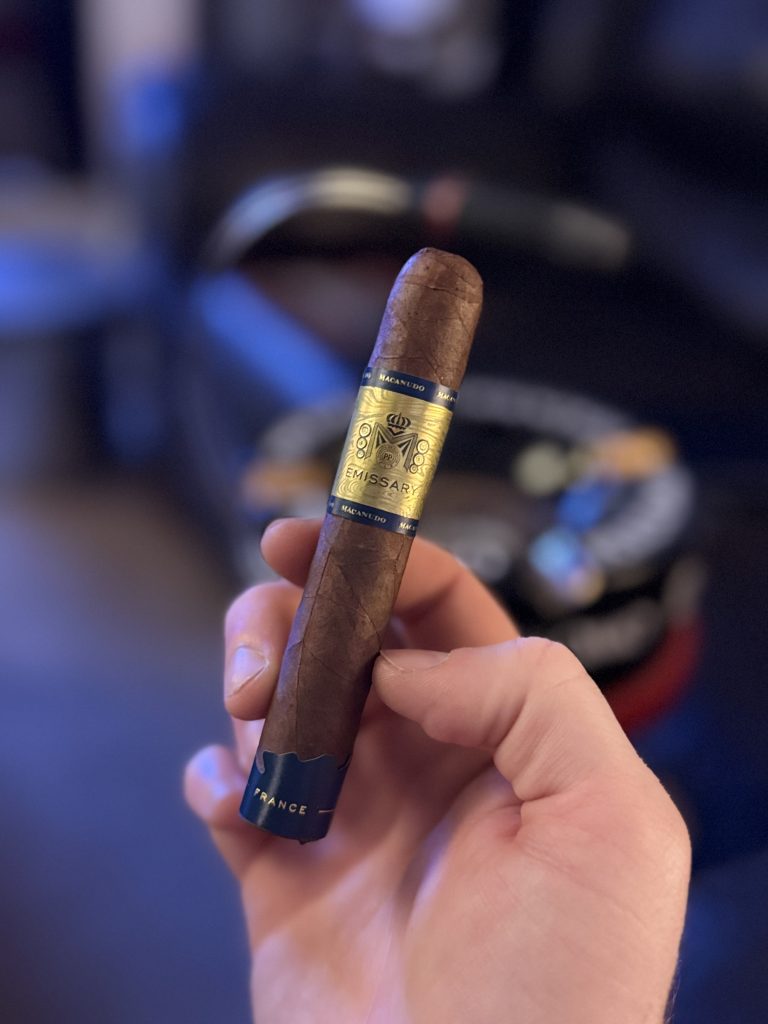
Right out of the cellophane, the Macanudo Emissary France makes a strong first impression. The box‑pressed Robusto wears a rich, even Habano wrapper with a light oil sheen and no obvious veins or soft spots. It feels well packed from head to foot without any hollow sections or mushy areas that would scream “problem incoming.” The presentation is dialed in: an ornate gold main band wrapped around the center and a deep blue foot band with “France” stamped across it just in case you missed the theme.
The look is very “big brand who cares about design,” but not in a cheesy way. The band has texture, dimension, and a map‑inspired pattern that hints at travel and terroir instead of just slapping a logo on and calling it a day. It absolutely looks like a cigar that wants to be taken seriously.
The cap, however, had other plans. One straightforward guillotine cut with the Xikar XO took the entire cap with it, and the head immediately hinted at some unraveling. Around here, that’s when the highly technical Evening Draw repair department comes out: a quick touch of help to keep things together and we roll on. Once patched up, the cigar still felt solid in the hand and the wrapper lay flat without any lifting seams.
On the pre‑light, the cold draw brought a bright berry‑like sweetness with a fresh grass note riding shotgun. Not a dusty hay barn or old attic, but fresh‑cut grass and clean field, paired with that fruit note in a way that felt energetic instead of heavy. The foot aroma leaned into sweet tobacco with a bit of that same berry brightness. Between the wrapper, the bands, and the cold draw profile, it was already clear this wasn’t headed toward the dark, heavy side of the spectrum.
After peeling off the foot band and toasting the cigar, the initial toast carried a little of that sweetness along with a clean, fragrant smoke. The draw was right in the sweet spot—no milkshake struggles, no wind tunnel nonsense—setting the table for a session that, at least mechanically, looked promising despite the earlier cap drama.
First Third
From the very first pulls, the Emissary France refuses to behave like the cold draw suggests. Instead of sweet berry and grass, the opening profile is briny and textured, like there’s a light salinity sitting on the tongue. That brine is wrapped in a clear Habano‑style spice that says, “Hey, I’m still a serious cigar,” even if the rest of the profile is aiming at a different target.
There’s a unique earthiness in those first few minutes that’s hard to pin down. It’s not the typical dark soil or cocoa powder we’re used to reaching for. It’s more like a clean, mineral‑driven earth—something that feels tied to that French filler leaf and whatever’s going on in the rest of the blend. On top of that, the sweetness from the cold draw doesn’t disappear; it just waits its turn. Instead of punching forward, it lingers in the background and creeps back in after the smoke leaves your mouth, coating the palate with a gentle berry echo.
As the burn line settles in, a floral note starts drifting through the smoke. Sometimes it’s bright and perfumy, sometimes it’s softer and muted, but it dances well with the fruit. Then, almost out of nowhere, a graham‑cracker nuance joins the party. The combination of sweet fruit, floral lift, and that graham‑cracker foundation starts to feel like the early stages of a fruit pie—crust, filling, and all—just before it goes into the oven.
The spice from the Habano wrapper is there, but it doesn’t stay in bully mode. It shows up early with some attitude and then drifts back toward the edges, letting the fresher, sweeter notes do more of the talking. Around the one‑inch mark, the mineral side of the cigar starts to really shine. There’s a bright, stony quality that cuts through the sweetness and keeps the profile from ever feeling syrupy.
This is where the pairing possibilities really start to stand out. That mineral‑fruit mix feels tailor‑made for a bold Bordeaux or Cabernet. It’s the kind of cigar you could see holding its own next to a good red wine without either one stomping on the other. For someone who usually leans toward pepper, leather, and heavyweight profiles, this first third is already outside the normal lane, but it’s interesting enough that you absolutely want to see where it’s heading.
Second Third
As the Emissary France moves into the second third, the flavor picture sharpens. The dried‑fruit character steps forward and settles in as the backbone of the cigar. It never lands on one easy grocery‑store fruit, but it lives somewhere in the stone‑fruit neighborhood—apricot, plum, maybe even a touch of something perfumy—without ever turning into syrup or candy.
The earlier graham‑cracker note is still hanging around, tying the whole thing together like a crust under that fruit filling. At the same time, the obvious pepper from the Habano wrapper fades, leaving only a soft, warming tingle here and there. This doesn’t become a mild cigar, but it absolutely stops trying to show off with spice.
As the cigar cools between slower puffs, a new layer shows up: a fresh, green note that feels like a mix of grass stalk and green onion. Not sharp and sulfuric, more like walking through a garden after rain—fresh, clean, and herbal. That green character blends with the fruit in a way that makes the profile feel natural and organic, as if nothing about the flavor is being pushed or forced.
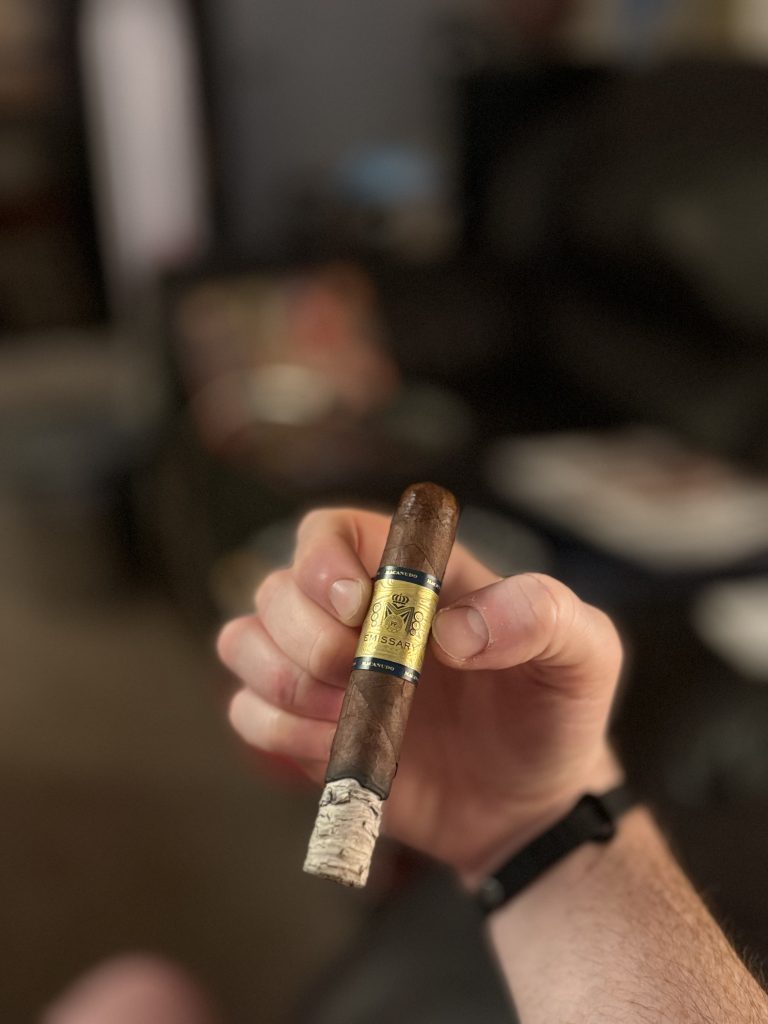
Construction has a couple of moments here. The wrapper gets ahead of the binder and filler, and the burn line drifts enough to justify a touch‑up. A little later, the cigar calls for a relight. Around here, that usually means we’re signing up for two or three relights on the night, but this stick behaves better than expected after the reset. The ash holds on in solid, dense chunks, and outside the wrapper getting bossy for a minute, the cigar feels well put‑together.
The overall impression in the middle section is “fresh.” Fresh fruit, fresh green notes, a clean, almost soapy clarity to the palate. Not soap like you got your mouth washed out for cussing—soap like a bar that smells so good you can practically taste it when you hold it up to your nose. It makes you pay attention to the cigar even if the profile isn’t what you usually chase.
This is also where the Emissary France makes a strong argument for samplers and subscription packs. If I had just been browsing a humidor and read a card describing French filler, mineral brightness, dried fruit, and floral sweetness, I probably would’ve walked right past it on my way to something heavier and more familiar. Instead, it showed up in the mail and forced me to sit with a profile I never would’ve picked out on my own—and I’m better for it.
Final Third
Somewhere crossing into the final third, the Emissary France takes another left turn and leans into citrus. Not orange, not grapefruit, but very specifically lemon‑lime. The best way to describe it is like a flat Sprite: the sugar dialed down, the fizz gone, but that unmistakable lemon‑lime character still sitting on your tongue.
That citrus rides on top of the dried fruit from earlier, giving the cigar a bright, almost palate‑cleansing edge. The combination of sweet, tart, and mineral keeps everything feeling lively without ever turning harsh. The Habano spice that opened the show is now just a memory, replaced by smooth, rounded flavors that let the fruit and citrus run the table.
Then the star really steps out: plum. As the cigar rests between draws and the smoke clears, a fully ripe red plum note shows up and refuses to leave. It’s not a whisper or a “maybe I’m imagining this” kind of thing. It’s front‑and‑center, singing loud and clear in the finish before you even pick the cigar back up again. For a palate that’s spent a lot of time on earth, leather, and pepper, that kind of plum‑forward finish is both unexpected and wildly enjoyable.
Even this late in the game, the cigar avoids the usual final‑third pitfalls. It doesn’t get hot and ashy, it doesn’t collapse into bitterness, and it doesn’t punish you for taking it to the nub. The burn line, which had wandered earlier, mostly straightens itself out and behaves. You still know you had a couple of touch‑ups along the way, but the cigar doesn’t rub your nose in it down the stretch.
Price will always be the deciding factor when you start talking about whether a stick is something you’d keep in regular rotation, but the Emissary France makes a strong case. If the shelf price sits in that mid‑teens neighborhood, this is absolutely something I’d smoke again and keep a few of on hand for nights when I want interesting rather than overpowering.
Millennium of Aftermath
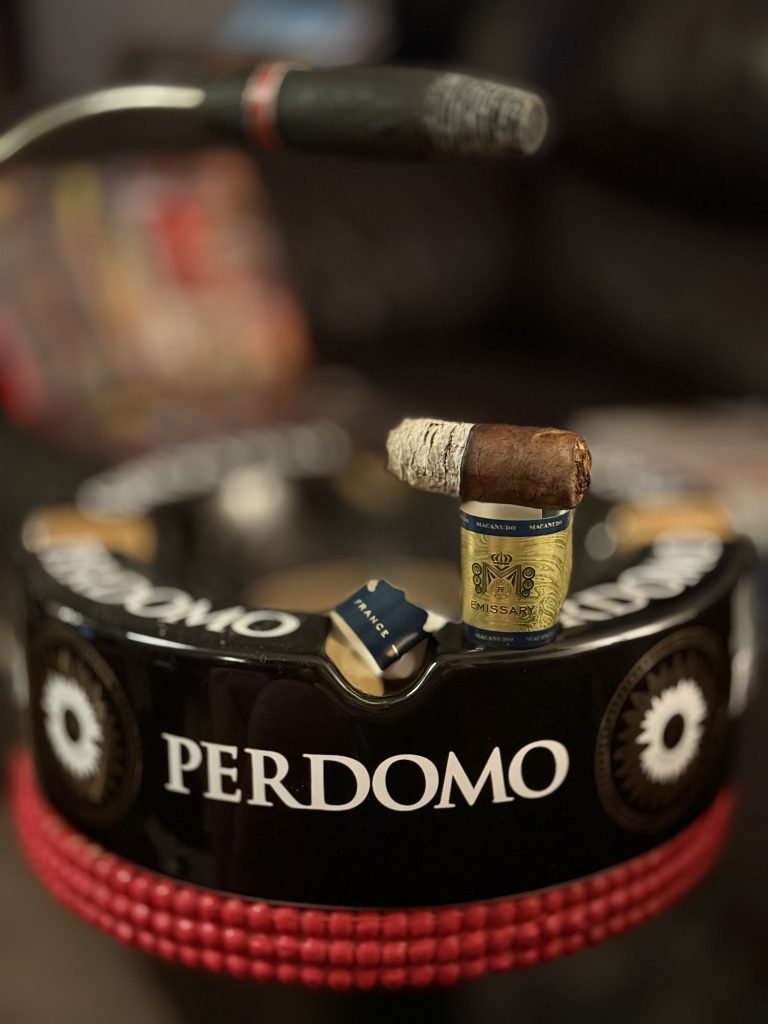
When the smoke finally clears and the ash hits the tray for the last time, the Macanudo Emissary France leaves one thing behind more than anything else: that plum‑driven finish. The dried fruit and lemon‑lime citrus are still in the mix, but it’s the ripe plum singing at full volume that sticks with you as you sit back and let your palate cool off.
The overall after‑effect is clean and refreshed instead of heavy and worn out. You don’t feel like you’ve just gone twelve rounds with a heavyweight. You feel like you’ve worked through a layered, thoughtful cigar that wanted to show you something new without beating you over the head with strength for its own sake.
This isn’t a flavor profile I ever would’ve chased based on a band, a shelf card, or a quick glance at the blend. I’m a spice‑and‑pepper guy by default, and this cigar lives on the bright, fruity, and floral side of town. But the Emissary France proved that there’s a whole corner of the map I’ve been ignoring, and it did it with enough character and consistency that I’m now actively curious about the rest of the Emissary line.
Construction wasn’t perfect—cap drama, a drifting wrapper burn, and a relight are all marks against it—but none of those issues were fatal. The draw stayed reliable, the flavor stayed consistent, and the cigar redeemed itself down the stretch. When you zoom out and look at the full experience, this lands squarely at 4 Bands on The Evening Draw scale.
That’s Box Worthy territory: better than good enough, worth keeping a few around, and absolutely worth revisiting when you want your palate scrubbed clean by fruit, citrus, and mineral instead of drowned in pepper and tar. The Macanudo Emissary France turned a skeptic into a fan for at least one night, and that’s saying something.
-
Wanted for Disturbing the Peace
Black Label Trading Company Lawless Robusto – Bury the Leaf Some cigars politely introduce themselves.…
-
Sometimes the Guy Behind the Counter Knows Something
Stolen Throne Call to Arms Sumatra – Bury the Leaf There are plenty of ways…
-
A S’more at the Start and Corojo by the Finish
Ceniza Fina Corojo – Bury the Leaf Some cigars arrive with a marching band. This…

Final Verdict — Buy Again?
Yes
Leave a Reply