Montecristo Espada Conquistador – Bury the Leaf
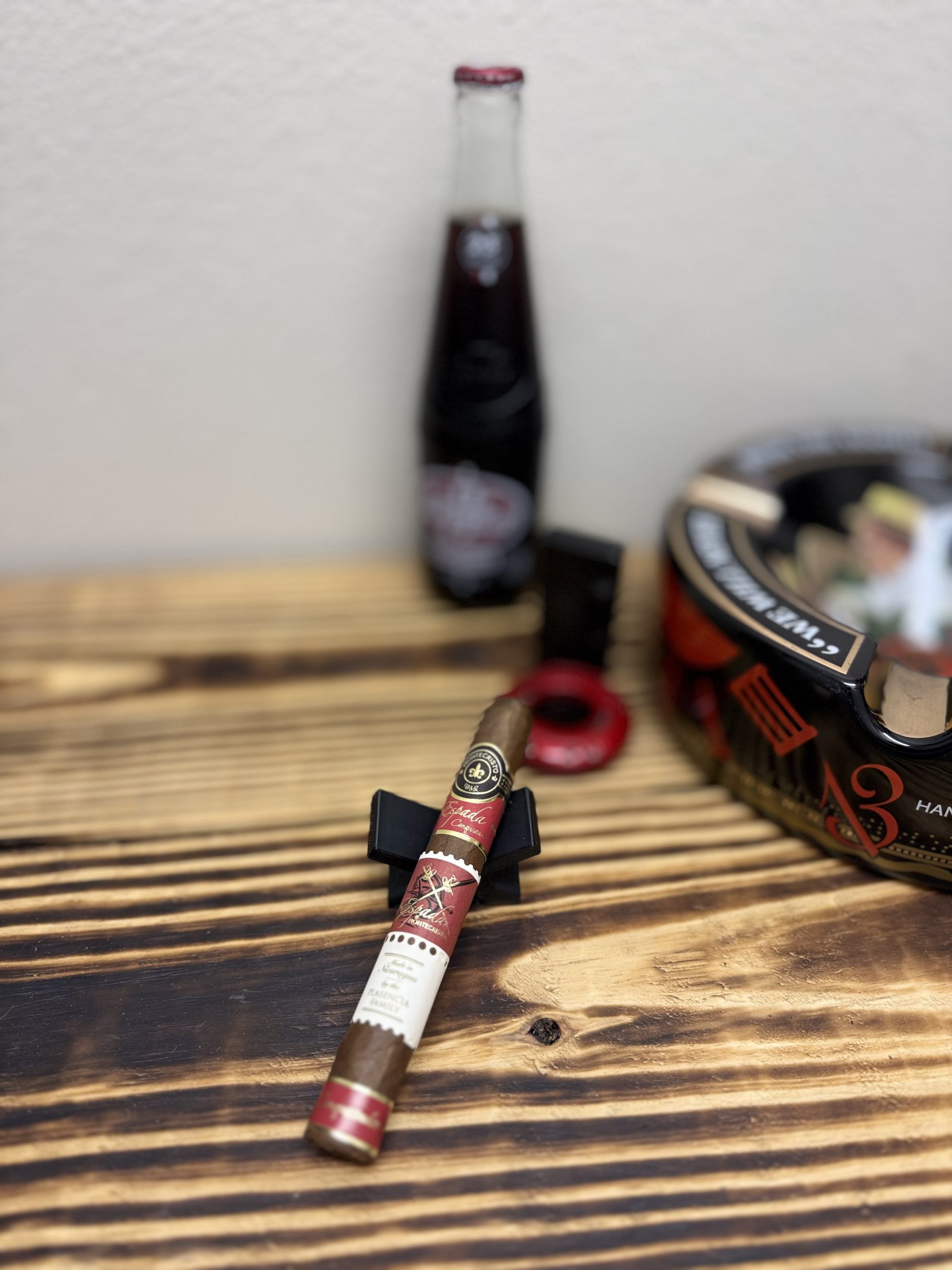
Some cigars arrive carrying enough paper, foil, and ceremony to make you wonder whether you bought tobacco or adopted a decorated field marshal. The Montecristo Espada Conquistador Toro is one of those cigars. It comes dressed for a parade, wearing enough bands to conceal most of the wrapper and enough gold trim to make subtlety pack a suitcase and leave town.
Usually, that sort of pageantry makes me suspicious. If you spend that much effort telling me something is special before I light it, I start looking around for the catch. This time, the cigar underneath the costume lived up to the introduction.
The Conquistador turned into one of those rare smokes that kept interrupting my train of thought because it was better than I expected it to be. It was peppery without becoming punishing, woody without tasting like I had licked the lumber rack at Home Depot, and interesting enough that I was already considering the next one before the first inch had disappeared.
At nearly nineteen dollars, it is not an automatic Tuesday-night purchase. But it is absolutely a cigar I would chase again—and once the street price settles down, there will be a place waiting for it in my humidor.
By the Numbers
- Vitola: Toro
- Wrapper: Jalapa Habano shade-grown
- Filler/Binder: Condega and Estelí filler; Ometepe binder
- Cut: Xikar guillotine
- Procured from: Neptune
- Price Paid: $18.86 before tax
- Estimated MSRP: $20.95
- Duration: 1 hour, 23 minutes
- Band Rating: 5 Bands — The Evening Draw
Construction & First Impressions

The Montecristo Espada Conquistador Toro is a Nicaraguan puro made by the Plasencia family, and its presentation does not leave much room for understatement. There is a traditional primary band, a decorated paper sleeve, foil at the head and foot, and stamp-like perforations that allow portions of the wrapper to peep through. Altogether, somewhere around two-thirds of the cigar is dressed in packaging.
To borrow from Tommy Boy, you can get a good look at a T-bone by sticking your head up a bull’s ass, or you can take the butcher’s word for it. I decided to remove the paper and see what Montecristo and Plasencia were actually working with.
Surprisingly, the sleeve came off without the wrestling match I expected. Underneath was a brown Habano wrapper with pronounced veins running in two directions. One substantial vein traveled nearly the length of the cigar, while smaller veins branched away from it like tributaries on a river map. I do not know whether that is how leaf experts describe tobacco veins, but it is how I describe rivers, so here we are.
The foot carried an unusual sweetness that reminded me of licorice. The same character continued through the cold draw after the guillotine cut. The draw itself was open and easy without feeling hollow.
I had been waiting for this cigar to acclimate because the Espada Oscuro was one of The Evening Draw’s earliest reviews and has quietly become a benchmark around here. The Conquistador uses Habano rather than Oscuro, so I expected a different animal. Since licorice is not normally high on my list of preferred cigar flavors, that cold sweetness added a little uncertainty.
There was only one practical solution: quit sniffing it and put some fire to it.
The pairing for the evening was cane sugar Dr Pepper in the handy-dandy Riedel H2O glass. It carries roughly enough sugar to satisfy the daily nutritional needs of a small village, but nobody wandered into the lounge looking for kale.
First Third
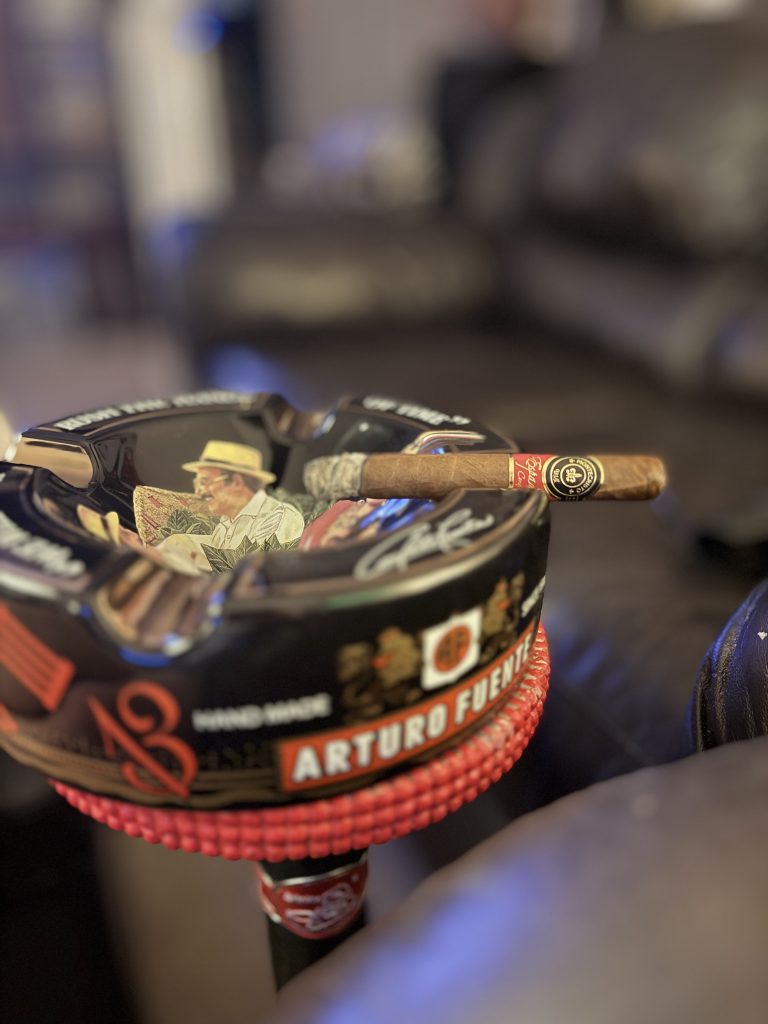
A soft flame brought the Habano wrapper to a solid toast, and the first draw immediately delivered a full mouth of smoke. That cold-draw sweetness appeared for a moment, still hovering somewhere around licorice, and then a sharp pepper note came marching in directly behind it.
This was not the standard black-pepper blast that shows up in every other tasting description. It leaned more toward red pepper flakes: bright, pointed, and persistent. It grabbed the back of the throat and lingered after the smoke was gone, adding character without turning the cigar into a punishment.
The sweetness did not stay long. It packed its bags, left a note on the kitchen table, and got the hell out of there. From that point, pepper took control. The cane sugar Dr Pepper proved useful immediately, softening the sharper edge of the spice while pulling a little earthiness out from underneath it.
An oak-like woodiness also began to appear early. Between the bright spice, darker wood, and the soda’s sweetness, the pairing worked much better than I expected. The Dr Pepper did not smother the cigar or turn it into dessert. It rounded the corners while allowing the Habano character to remain in charge.
The burn started slightly uneven and appeared to follow that prominent wrapper vein. It was noticeable early, but never dramatic. I left it alone rather than reaching for the lighter and trying to micromanage the situation. That turned out to be the right decision.
Meanwhile, the draw remained almost effortless. Every pull produced a generous volume of smoke, and the cigar never acted as though it needed to be coaxed along. Roughly three-quarters of an inch into the experience, I was already thinking about the next Conquistador—possibly another Toro, possibly a different vitola, but definitely another one.
That is usually a pretty fair sign that something has gone right.
Second Third

Approaching the middle of the cigar, the pepper remained present but began sharing the stage with a dry wood note. At first, it sat somewhere between cedar and oak without fully committing to either one. Then the wood became heavier, darker, and more seasoned.
Eventually, the answer arrived: mesquite.
That distinction may sound overly specific, but I spent part of a former life around restaurants and competition barbecue. Mesquite has a recognizable weight and sharpness, and this was it. The movement from oak toward mesquite made perfect sense of the increasingly dark, dry character I had been trying to identify.
The burn also corrected itself. The early concern along the wrapper vein disappeared without a touch-up or relight, leaving a stable line for the rest of the smoke. The draw stayed consistent, the smoke output remained substantial, and the construction quietly became one less thing to think about.
As the wood settled in, a nutty element emerged beside it. It did not replace the mesquite; it pulled up a chair. On the retrohale, that combination became a faded wood-and-nut profile with something approaching almond, followed by a small amount of bitterness.
Then it Forrest Gump-ed me. It jumped out and bit me.
The cigar was becoming dangerously close to one of my favorite Montecristos, which is not a casual statement when there are several Espada Diamantes sitting in the humidor waiting to be offended. I have slowly become more of a boutique-cigar guy, but that does not mean the larger companies cannot produce excellent cigars. This one was making that point rather forcefully.
Later in the middle third, the wood began to ease backward. Nothing aggressive rushed in to replace it, and that was fine. The smoke grew slightly muted and unexpectedly creamy—a funny development from a Habano wrapper, because “creamy” and “Habano” are not exactly the first two cards anybody matches in the kindergarten word game.
The pairing continued to earn its place. When I set the cigar down and returned to it, a faint echo of that original sweetness reappeared before the next draw. Some of that may have been the Dr Pepper dancing around the palate, but the combination worked. The soda complemented the spice, gave the wood more depth, and eventually drew out a light caramel sweetness.
The Evening Draw sommelier nailed this one.
Final Third
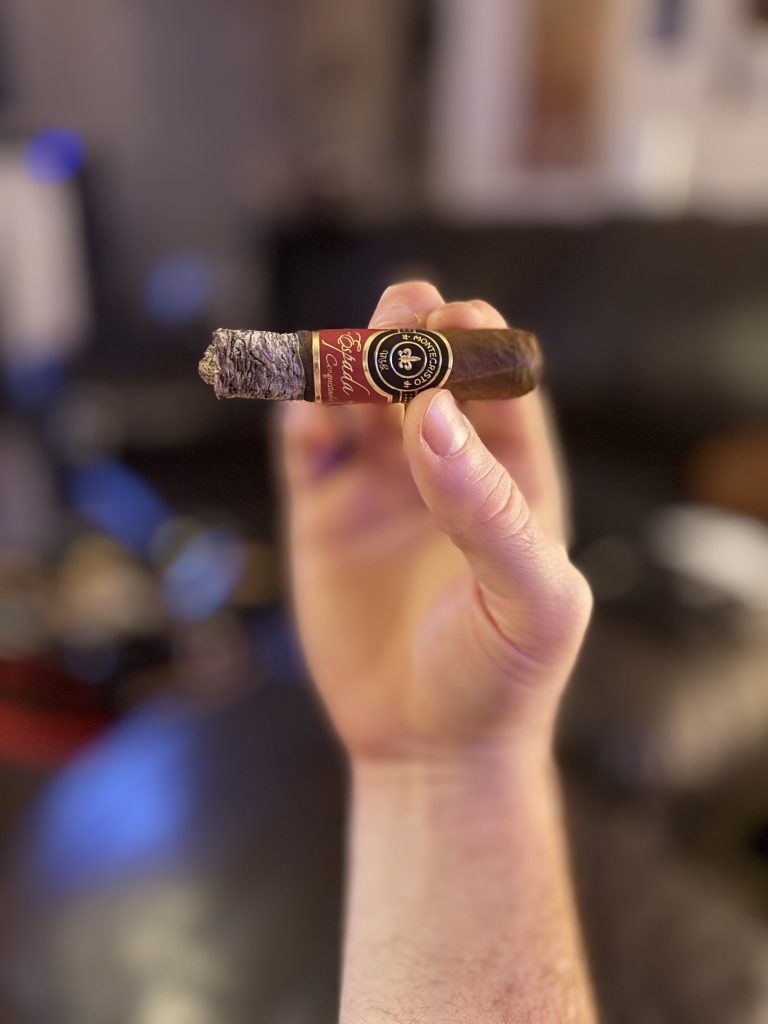
Moving into the final third, the cigar gained more body and a little more strength. The wood still coated the palate, but the profile alternated among oak, mesquite, and charred wood rather than staying fixed in one place. A difficult-to-name nut flavor moved closer to the front, accompanied by restrained creaminess and just enough caramel-like sweetness to be noticed.
The pepper gradually left the building. It had dominated much of the opening and stayed involved through the middle, but by the home stretch it was no longer directing traffic. What remained was darker wood, a subtle sweet edge, and the occasional brighter cedar note.
The construction stayed excellent. After correcting its early unevenness, the burn remained under control with no relights and no touch-ups. Even near the end, the cigar produced a tremendous amount of smoke through the same easy draw it had offered at first light.
Removing the last band exposed another interesting detail. The long central vein that had seemed to run almost from head to foot ended near the center of the banded area. I had spent most of the session following that vein like it was a county road, and then it simply stopped where the decoration had been hiding it.
The Conquistador finished with woody richness, bright cedar creaminess, and understated sweetness. It remained flavorful all the way down rather than becoming hot, sour, or tiresome. That matters on an expensive Toro. If I am paying close to twenty dollars, I do not want the final stretch to feel like an obligation.
I hated to see it go.
Millennium of Aftermath
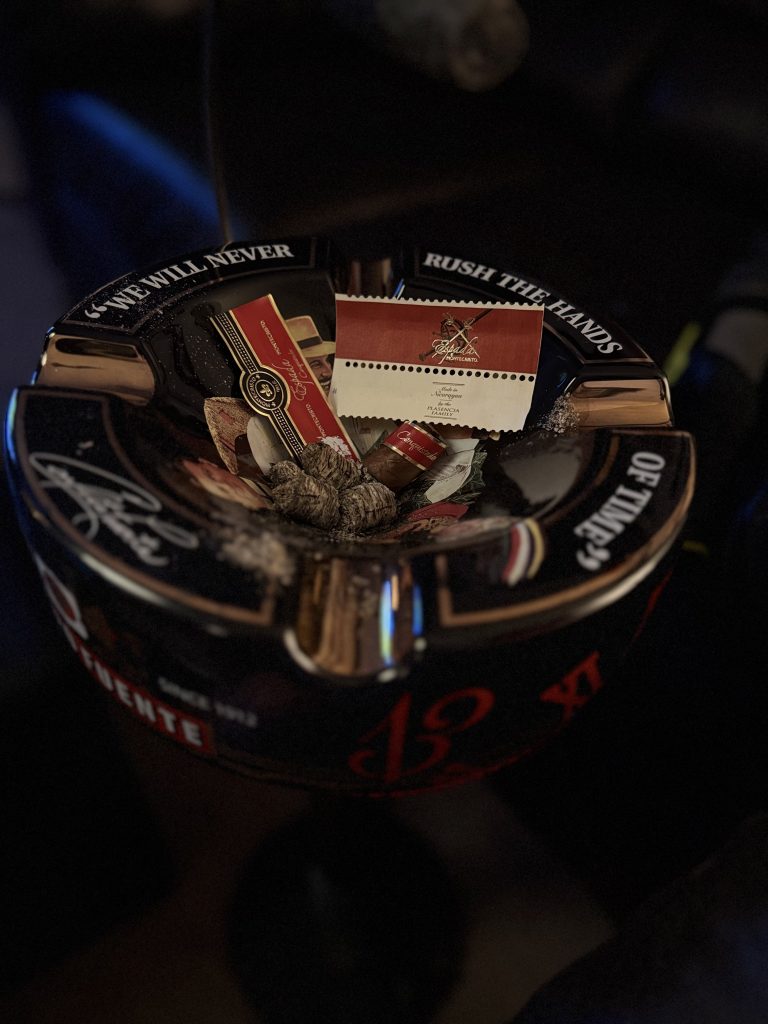
The Montecristo Espada Conquistador Toro is tremendously tasty and clearly carries the Plasencia influence. It has the tobacco, presentation, construction, and personality to stand beside the Espada Oscuro rather than merely borrowing the family name.
The opening offered a quick flash of unusual licorice-like sweetness before red-pepper spice took over. From there, the cigar developed through oak, dry seasoned wood, mesquite, earth, nuttiness, cream, caramel, and finally bright cedar. Those changes were noticeable without feeling staged. The cigar did not jump from one tasting-wheel buzzword to another every five minutes; it moved naturally while maintaining a recognizable woody backbone.
Construction was nearly excellent from end to end. The burn followed a heavy wrapper vein at first and created some early unevenness, but it corrected itself without intervention. The draw remained easy and full, smoke production stayed generous, and no relight or touch-up was required.
The cane sugar Dr Pepper was a near-perfect lounge pairing. Its sweetness balanced the red-pepper bite, added depth to the wood and caramel, and amplified rather than erased the cigar’s personality. I would confidently make that pairing again, assuming my pancreas agrees to the arrangement.
Price is the one thing standing between admiration and an immediate ten-count purchase. I paid $18.86 before tax against a $20.95 MSRP. That is more than I usually spend on a single cigar, and a box—even a ten-pack—becomes a real decision at that number.
Still, the price did not make me regret the purchase. It only made me hesitate before buying in volume. If the market price slides down after the new-release excitement settles, these will have a designated spot in the humidor. Even at the current price, I would buy another for the right evening.
This Montecristo Espada Conquistador Toro review ends with a cigar that nearly displaced the Diamantes as my favorite Montecristo. I loved the presentation, the decorated sleeve, the mixture of paper and foil, and the distinctive stamp-like perforations. More importantly, I loved the cigar once all that decoration came off.
The Conquistador is peppery, woody, substantial, and remarkably well behaved. It tastes premium without turning into a luxury-catalog caricature of itself. It kept me interested, survived my scrutiny, worked beautifully with the pairing, and finished as strongly as it started.
That is exceptional territory. Five Bands.
-
Wanted for Disturbing the Peace
Black Label Trading Company Lawless Robusto – Bury the Leaf Some cigars politely introduce themselves.…
-
Sometimes the Guy Behind the Counter Knows Something
Stolen Throne Call to Arms Sumatra – Bury the Leaf There are plenty of ways…
-
A S’more at the Start and Corojo by the Finish
Ceniza Fina Corojo – Bury the Leaf Some cigars arrive with a marching band. This…

Leave a Reply