League of Fat Bastards Serie O – Bury the Leaf
There are plenty of ways to sell a cigar.
You can put it in a lacquered box that looks like it ought to contain the Crown Jewels. You can give it a Spanish name nobody in Louisiana can pronounce correctly. You can slap some gold foil around it, tell me the tobacco was aged beneath a full moon while somebody played a violin nearby, and charge thirty bucks for the privilege.
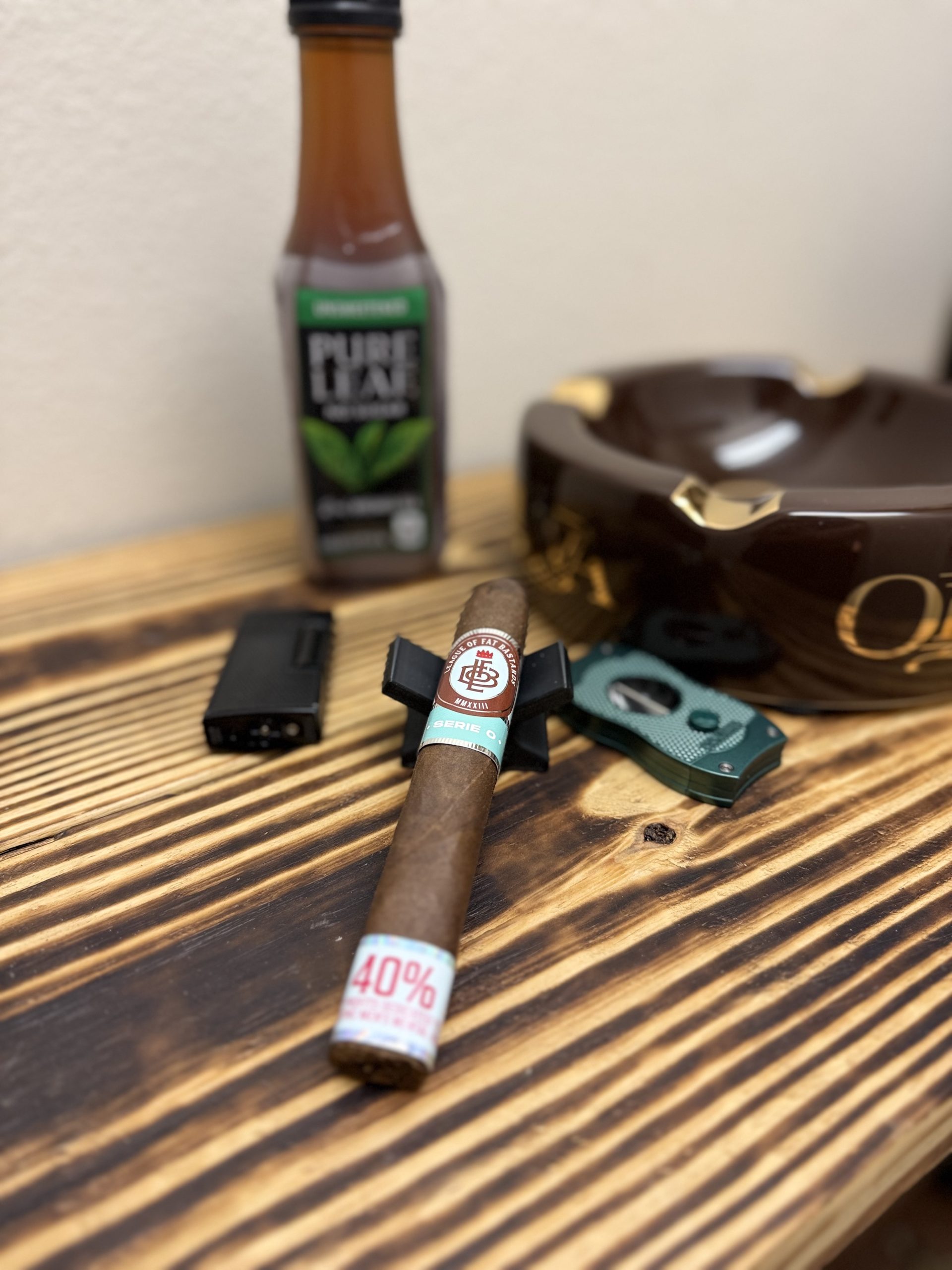
Or you can call the damn thing League of Fat Bastards, wrap a band around the foot telling me 40% of the profits are going toward men’s mental health, and see if the cigar itself is good enough to keep me around after the story wears off.
That last part matters.
A worthy cause can absolutely influence where I spend my money. I’m not going to pretend otherwise. But this is The Evening Draw, not The Evening Charitable Contribution. Eventually the fire hits the foot, the marketing gets peeled off, and whatever is underneath has to stand there naked and defend itself.
The Serie O didn’t need much defending.
This was one of those cigars where I spent most of the evening trying to find the catch. The construction worked. The draw worked. The flavors worked. Even the unsweetened black tea I paired with it started behaving like some kind of tobacco Ouija board, summoning tasting notes seemingly on command.
The biggest complaint I could muster was that one of the bands liked sliding around.
First-world problems indeed.
By the Numbers
- Vitola: Toro — 6 x 54
- Wrapper: Mexican San Andrés Negro Oscuro
- Filler/Binder: Nicaraguan Seco Condega, Viso Jalapa and Ligero Condega / Dominican binder
- Cut: Colibri V-cut
- Procured from: Neptune Cigar
- Price Paid: $14.71 after tax
- Estimated MSRP: $13.50
- Duration: 1 hour, 24 minutes
- Band Rating: 5 Bands — The Evening Draw
Construction & First Impressions
The Serie O Toro is a 6 x 54 box-pressed cigar made at Joya de Nicaragua, wearing a Mexican San Andrés Negro Oscuro wrapper over a Dominican binder and three Nicaraguan filler components.
Visually, the wrapper wasn’t especially oily and I wouldn’t call it toothy. Rough is probably the better description. There was a clearly visible leaf vein and some texture under the fingers, but this wasn’t a dirt road after a Louisiana rainstorm. It simply looked and felt like tobacco rather than something somebody had buffed for a showroom.
The aroma off the wrapper and foot started earthy, followed by cocoa and something darker and sweeter that eventually landed around molasses.
The box press meant standard operating procedure around here: V-cut.
And that Colibri made one hell of a cut.
The cold draw immediately reinforced the aromas from the wrapper: earth and molasses. Once lit, however, the Serie O wasted approximately no time introducing itself.
The opening was big, flavorful and full-bodied. Earth led the charge with wood and pepper underneath it, while the draw was remarkably smooth and easy. Smoke production was equally impressive. There was no fighting this cigar for anything; pull on it and smoke simply came pouring out.
My immediate reaction was pretty uncomplicated:
This is going to be a good one.
First Third
Earth became the foundation almost immediately.
Wood sat behind it, pepper moved around underneath, and cocoa began showing itself as the first third developed. None of those flavors individually qualifies as revolutionary cigar territory, but the way they were assembled was interesting. There was a mild underlying spice on the retrohale, occasional bitterness, and enough movement among the components to keep the profile from becoming a three-note loop.
Then there was the pairing.
I’d gone with Pure Leaf unsweetened black tea after consulting The Evening Draw’s extremely expensive in-house sommelier. The idea was that the tea’s tannic character could work against the earthy, woody profile rather than dumping sweetness all over it.
Different pairing.
But it worked.
The tea seemed to soften some of the heavier earth while simultaneously making the wood easier to identify. There was even a subtle natural sweetness in the tea despite it being unsweetened, which gave the profile another little shove in the right direction.
I didn’t take chemistry in college, so I’m not going to pretend I understand what in the hell was happening between tannins, tobacco and my tongue.
I know this:
It tasted good.
Construction through the first third was damn near effortless. The draw remained free-flowing, smoke production was excellent, and the burn behaved itself. Ash held nicely. Flavor stayed present without the cigar needing to be babysat or overworked.
My biggest complaint?
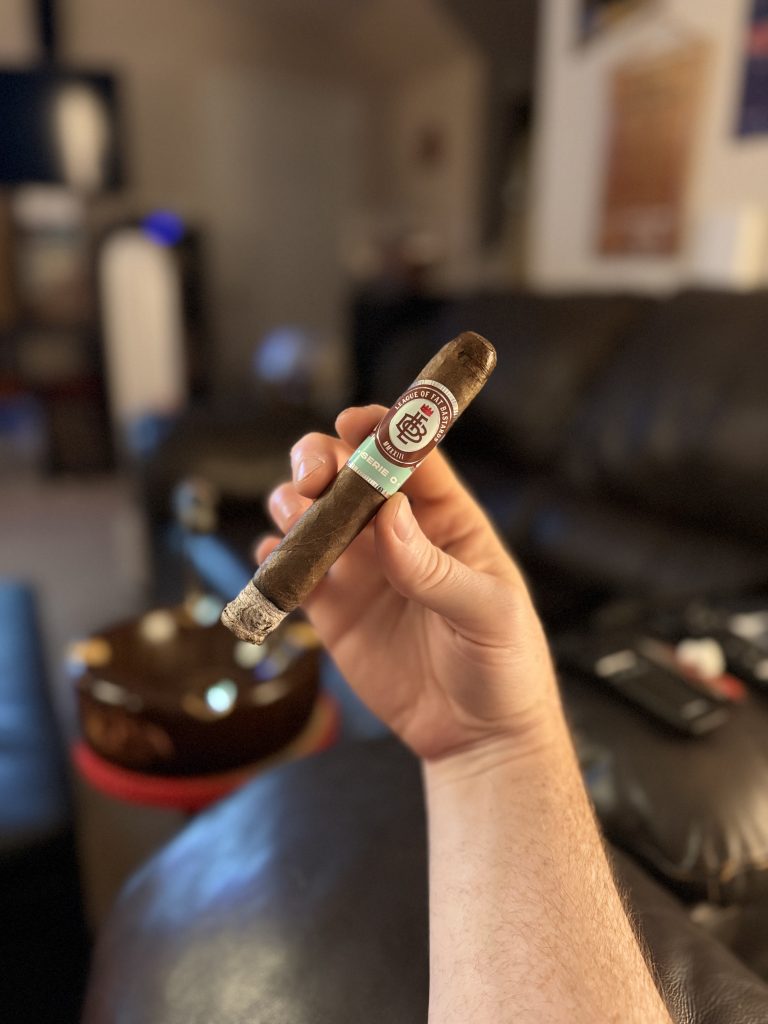
The band slid around when I tried to grab the cigar.
If that’s the crisis we’re dealing with, we’re doing all right.
The primary profile eventually settled into earth, cocoa, wood and pepper. The Serie O wasn’t trying to dazzle me with twelve flavors per puff. Instead, it was doing something I value considerably more: delivering a cohesive profile exceptionally well.
And the whole time that foot band was sitting there reminding me there was another part of this story.
Forty percent of profits dedicated to supporting men’s mental health.
That’s not an insignificant statement to put directly on your cigar.
Second Third
The transition into the second third wasn’t dramatic.
That isn’t criticism.
The earthy backbone remained, with the wood, cocoa and pepper continuing to orbit around it. What changed was the way the tea started pulling individual flavors forward.
LOFB’s published tasting profile talks about things like dark caramel, roasted nuts, leather and baking spice.
I still don’t know what in the hell “baking spice” is supposed to mean as one singular flavor, but the rest started showing up one by one.
First came the nuttiness.
Sip of tea. Draw from the cigar.
There it was.
Then I mentioned that I hadn’t found the leather.
Sip of tea. Draw from the cigar.
Boom. Leather.
At that point I decided we had discovered a new tasting methodology. Instead of searching for flavor notes, I was simply going to announce things I hadn’t found, drink some tea, and see whether the cigar produced them.
I therefore announced that I had not yet received the winning Powerball numbers.
Sip.
Draw.
Leather.
No Powerball numbers.
Damn.
The Serie O did require a minor burn correction during this stretch, but patience handled most of it before fire ever needed to become involved. Later there was a relight, but that was on me rather than the cigar. I got distracted talking instead of smoking, which isn’t exactly unprecedented around here.
More importantly, none of it changed my opinion of the construction. The wrapper remained intact, ash retention remained excellent, and the draw never stopped being one of the strongest parts of the experience.
This is also where the cigar and the mission became impossible to discuss completely independently.
To be clear, I don’t intend to become hyper-socially-conscious about every cigar purchase I make. I’m buying cigars, not vetting candidates for sainthood.
But when something resonates, it resonates.
Men are notoriously talented at telling everybody they’re fine right up until they’re very much not fine. So when a cigar company decides to put men’s mental health directly into its identity and dedicate a meaningful portion of its profits toward that work, I’m inclined to pay attention.
That absolutely makes me more interested in supporting League of Fat Bastards.
But here’s the important distinction:
The cigar itself had already earned the repeat purchase.
The mission wasn’t rescuing a mediocre product.
It was making me want to buy more of a cigar I already liked.
Final Third
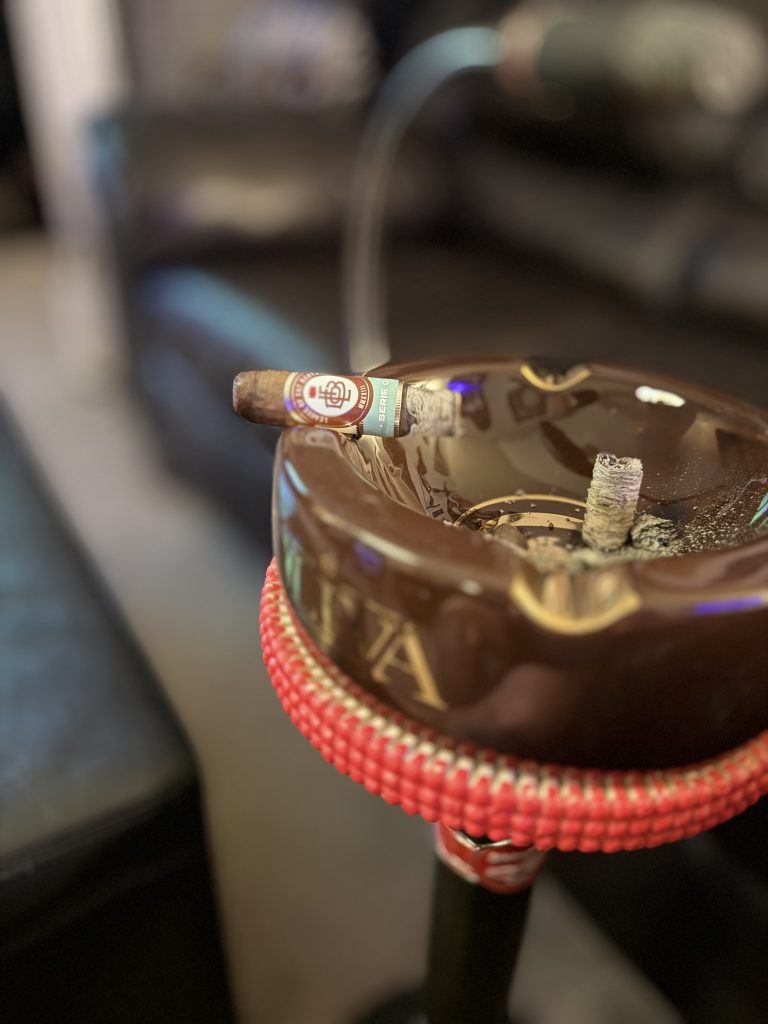
The Serie O saved another gear for the finish.
Oak arrived first.
Then pepper.
The earthiness that had anchored the cigar from the beginning became more mineral in character, and eventually a controlled bitterness joined the profile.
And once again the tea started playing its little parlor trick.
I had just finished saying I hadn’t really gotten the expected bitterness.
Sip of tea.
Draw.
Bitterness.
Fine.
Let’s try it again.
Sip.
Draw.
Pepper and oak.
League of Fat Bastards, what are you doing to me?
The black pepper became particularly sharp toward the end, cutting through the heavier profile like a knife. Oak gave the finish more structure while the mineral earthiness connected the final third back to where the cigar began.
That’s what made the progression work for me.
This wasn’t three completely different cigars stitched together. The Serie O established an earthy identity early and then developed around it. Cocoa and wood accompanied it through the opening. Nuts, leather and a little caramel-like sweetness emerged through the middle. Oak, pepper, bitterness and mineral character brought everything home.
Evolution without an identity crisis.
Construction remained strong despite my self-inflicted relight and the earlier minor correction. The draw stayed free-flowing and easy from beginning to end, smoke production remained generous, and the wrapper never gave me any meaningful trouble.
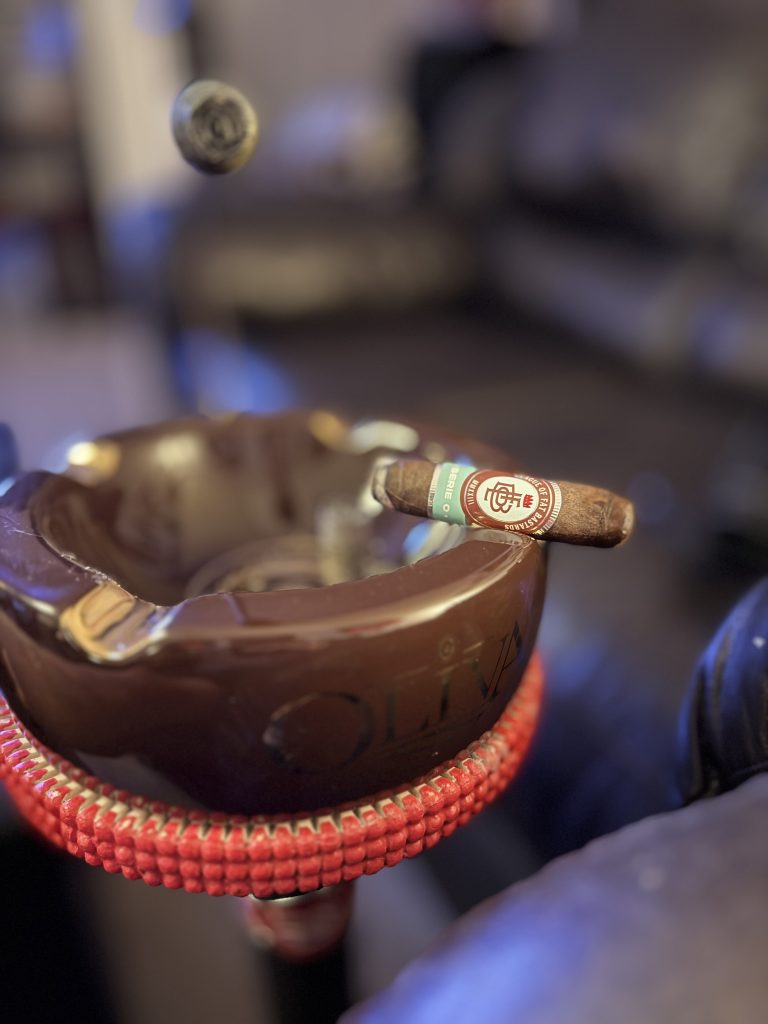
Even after being dropped.
Yes, I dropped it.
The cigar survived my incompetence too.
At some point you run out of legitimate complaints.
Millennium of Aftermath
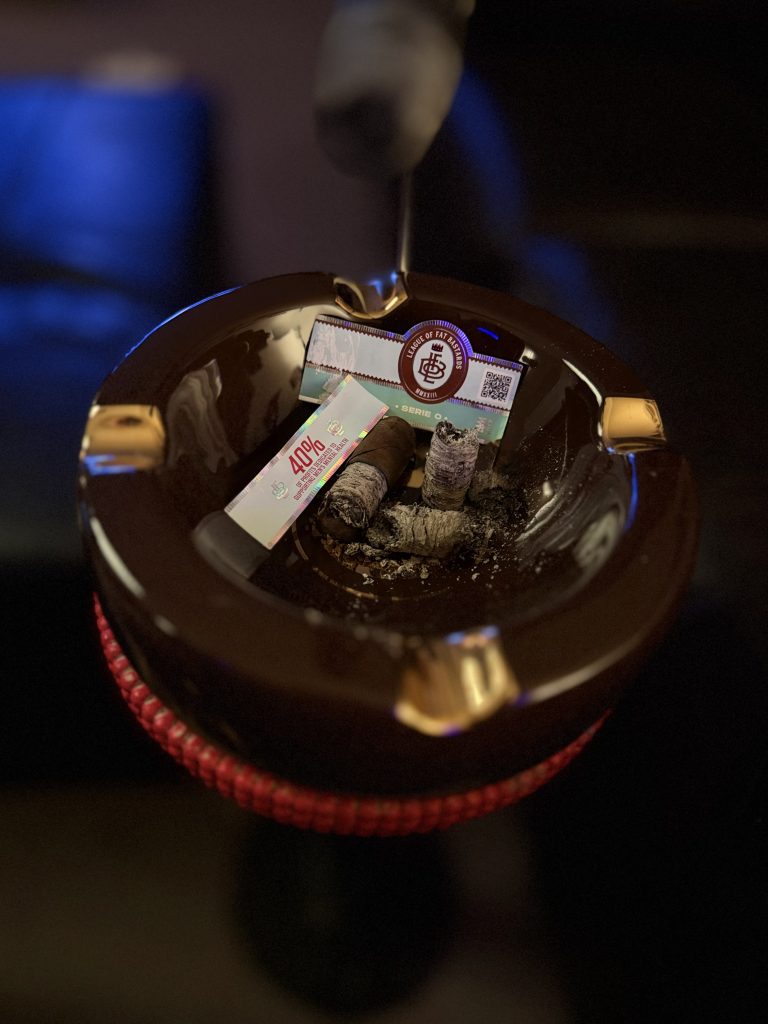
Strip away the bands.
Strip away the name.
Strip away the mental-health mission completely.
I’d buy this cigar again.
More importantly, I’d buy more than a five-pack.
That’s the dividing line here, because League of Fat Bastards has built a brand where the story could very easily become bigger than the product. Forty percent of profits supporting men’s mental health is memorable. The branding is memorable. The name is certainly memorable.
But none of that is why the Serie O earns its rating.
It earns it because the cigar underneath all that branding was excellent.
The Mexican San Andrés Negro Oscuro wrapper and multinational blend delivered a profile built around earth, cocoa, wood and pepper before developing nuts, leather, oak, mineral character and bitterness. It changed enough to remain interesting without abandoning the flavors that made the opening work.
The draw was fantastic. Smoke production was effortless. Ash retention was excellent. The burn needed one little correction, and my talking caused a relight. Neither materially affected the experience.
Then there’s the price.
I paid $14.71 after tax, and that’s enough money that I’m not going to call the Serie O some screaming bargain. At that price, a cigar needs to perform.
This one did.
Would I rather it cost ten bucks? Of course. I’d also like diesel to cost a dollar and the Powerball numbers to finally appear in my tasting notes.
Neither appears imminent.
At its $13.50 MSRP, however, I don’t think the Serie O is pretending to be something it isn’t. You’re paying premium-cigar money and receiving a genuinely premium experience.
Then you can put the bands back on.
Now the mission matters.
A company directing 40% of its profits toward men’s mental-health initiatives isn’t the reason I’m going to recommend a cigar that doesn’t deserve recommending. But when the cigar already deserves a place in the humidor, knowing some portion of the money behind that purchase is headed toward something worthwhile makes choosing it again pretty damn easy.
That’s the rare win here.
Support the cause if the cause speaks to you.
Support the brand if the brand speaks to you.
But buy the League of Fat Bastards Serie O Toro because it’s a dadgum good cigar.
The rest is just one hell of a reason to buy another.
5 Bands — The Evening Draw.
-
Wanted for Disturbing the Peace
Black Label Trading Company Lawless Robusto – Bury the Leaf Some cigars politely introduce themselves.…
-
Sometimes the Guy Behind the Counter Knows Something
Stolen Throne Call to Arms Sumatra – Bury the Leaf There are plenty of ways…
-
A S’more at the Start and Corojo by the Finish
Ceniza Fina Corojo – Bury the Leaf Some cigars arrive with a marching band. This…

Leave a Reply