Dunbarton Mi Querida Triqui Traca – Bury the Leaf
There are cigars that need twenty minutes to introduce themselves. They shake your hand, ask about the family, maybe circle the room a couple times before finally telling you why they showed up.
The Mi Querida Triqui Traca apparently considers all of that a tremendous waste of everybody’s time.
This thing walked through the front door like it owned the mortgage.
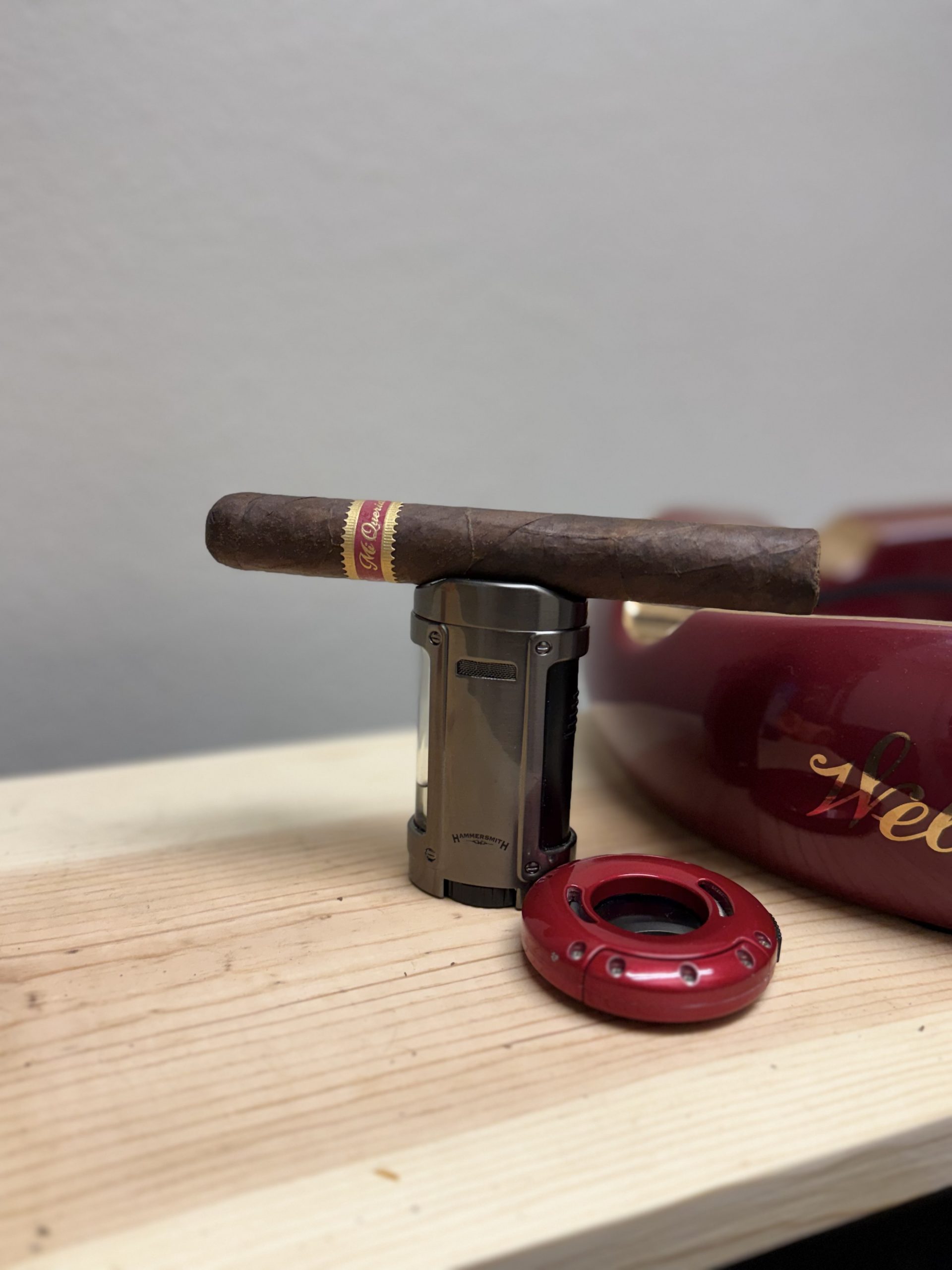
My first experience with Dunbarton Tobacco & Trust came with absolutely no history between us. No previous Mi Querida. No Sobremesa. No Steve Saka greatest-hits tour hiding somewhere in the humidor to color the expectations. I had a dark Connecticut Broadleaf cigar, an $8.90 price tag courtesy of a sampler, and the understanding that Triqui Traca is Nicaraguan slang for a string of firecrackers.
Fair enough.
Then I lit the damn thing.
There are moments in this little cigar journey when you realize you’ve been unnecessarily avoiding an entire neighborhood because you kept taking the same road home. This was one of them.
I don’t know what else Dunbarton has waiting for me.
But apparently I’ve got some catching up to do.
By the Numbers
- Vitola: 6 x 52 Toro
- Wrapper: Connecticut Broadleaf No. 1
- Filler/Binder: Not recorded in review notes
- Cut: Straight cut
- Procured from: Cigar Page Plus sampler
- Price Paid: $8.90 delivered
- Estimated MSRP: Not recorded in review notes
- Duration: 1 hour, 37 minutes
- Band Rating: 4 Bands — Box Worthy
Construction & First Impressions
Dark.
Not kind of dark. Not one of those wrappers where you need good lighting and a marketing department to convince yourself it’s Maduro-adjacent. The Connecticut Broadleaf No. 1 wrapper on the Mi Querida Triqui Traca showed up wearing work boots.
There wasn’t a tremendous amount of oil across the surface, but there were pronounced veins, tight seams and an overall appearance that suggested somebody had built this cigar to do something rather than stand around looking pretty.
The aroma gave me a heavier, rustic wood rather than cedar, accompanied by maybe a little cocoa. A straight cut with the Xikar guillotine came off clean, and the cold draw brought an unexpected sweetness.
That was about the last delicate thing the Triqui Traca did for a while.
The name translates appropriately enough. Mi Querida is “my mistress,” while Triqui Traca refers to those strings of firecrackers tied together before somebody makes the questionable decision to light one end.
I’ve never had a mistress.
I have to assume this is roughly how one enters your life: exciting, expensive-looking and carrying an unmistakable possibility that something is about to catch fire.
First Third

The opening draw was bold wood, black pepper and bitterness.
And I need to distinguish something immediately, because “bitterness” can read like a cigar has already screwed up. This hadn’t. The bitterness belonged here. It was dark and aggressive and tied directly into the charred quality of the wood.
The Triqui Traca didn’t gradually build toward its identity. It came out screaming it.
And this is where reviewing cigars gets a little strange because sometimes complexity isn’t the thing that makes a cigar interesting. This wasn’t performing a magic trick where every three draws revealed another flavor nobody had seen before.
It was wood. Pepper. Char. Bitterness. Then a very subtle dark vanilla started lingering underneath everything — not sugary vanilla, but something rawer and darker.
That combination landed dead center in my wheelhouse.
This puppy is not for the faint of heart.
The flavor had weight. The strength had weight. Even the presentation felt heavy. Yet nothing about it seemed clumsy. It wasn’t simply blasting pepper through my sinuses and calling itself full-bodied. There was enough sweetness beneath the darker flavors to keep everything together.
I found myself doing something I don’t always do with a cigar: shutting up.
Just close the eyes, take a draw and enjoy the thing.
Construction wasn’t giving me anything to complain about either. The burn line was excellent, and the smoke output was ridiculous considering I had barely taken enough cap off to open the cigar. Every draw sent clouds rolling into the lounge.
If this was what Dunbarton did, I had made a fairly significant mistake waiting this long.
Then I introduced coffee.
I’d recently smoked an Ashton VSG and thought afterward that a proper dark roast would’ve been outstanding alongside it. Conveniently, Hurricane Coffee & Tea Company’s Cuba 1910 Dark Roast had recently arrived, so the Triqui Traca became the test subject.
That decision changed the evening.
The coffee carried a little cocoa before settling into its roast, and immediately the charred wood in the cigar jumped forward. Then leather appeared — old boots kind of leather, dark and worn-in rather than polished.
The coffee wasn’t covering the cigar or making it taste like coffee. It was reaching into the profile and turning up flavors that had already been sitting there.
The wood even softened from that heavily charred opening into something closer to hickory: still substantial, but less scorched.
Earthy cocoa from the coffee. Wood, leather and pepper from the cigar.
It was one hell of a conversation.
Second Third
The transition into the second third wasn’t dramatic, and I’m perfectly fine with that.
The Triqui Traca had established exactly what it wanted to be early, and instead of abandoning that profile in search of novelty, it started rearranging the furniture.
The wood muted slightly. The black pepper backed down a notch. Leather moved toward the front.
Then dark chocolate started showing itself.
Again, we’re not talking Hershey bar sweetness here. This was darker and more bitter — cocoa with some backbone — and alongside the Cuba 1910 coffee it became difficult to determine where one experience stopped and the other started.
That’s a compliment to both.
The cigar remained fundamentally consistent: charred wood, cocoa bitterness, increasingly restrained black pepper and leather. But those flavors were moving around each other enough to prevent consistency from becoming monotony.
Meanwhile, the construction just kept doing its job.
The burn behaved. The draw behaved. Smoke production remained enormous.
Nothing needed fixing, touching up or negotiating.
About halfway through, the coffee itself developed a toasted-nut quality, almost like roasted pine nut, and something similarly toasted began creeping into the cigar. I couldn’t put a perfect name on it at the time, and I’m not going to invent one after the fact just to make the tasting notes look prettier.
It was mellow, rich and toasty.
And it worked.
By this point I had stopped wondering whether I liked my first Dunbarton and started wondering how many other Dunbartons I needed to track down.
The answer appeared to be: yes.
Regular Mi Querida? Absolutely.
Red Meat Lovers? I’ve been trying to find it locally already.
Different vitolas? Sure.
Toro is generally where I live, and the 6 x 52 format was doing a fantastic job letting that Broadleaf show itself, but after this performance I’d happily give a narrower Mi Querida a run just to see what happens when the wrapper gets even more room to talk.
This wasn’t curiosity anymore.
It was acquisition planning.
Final Third
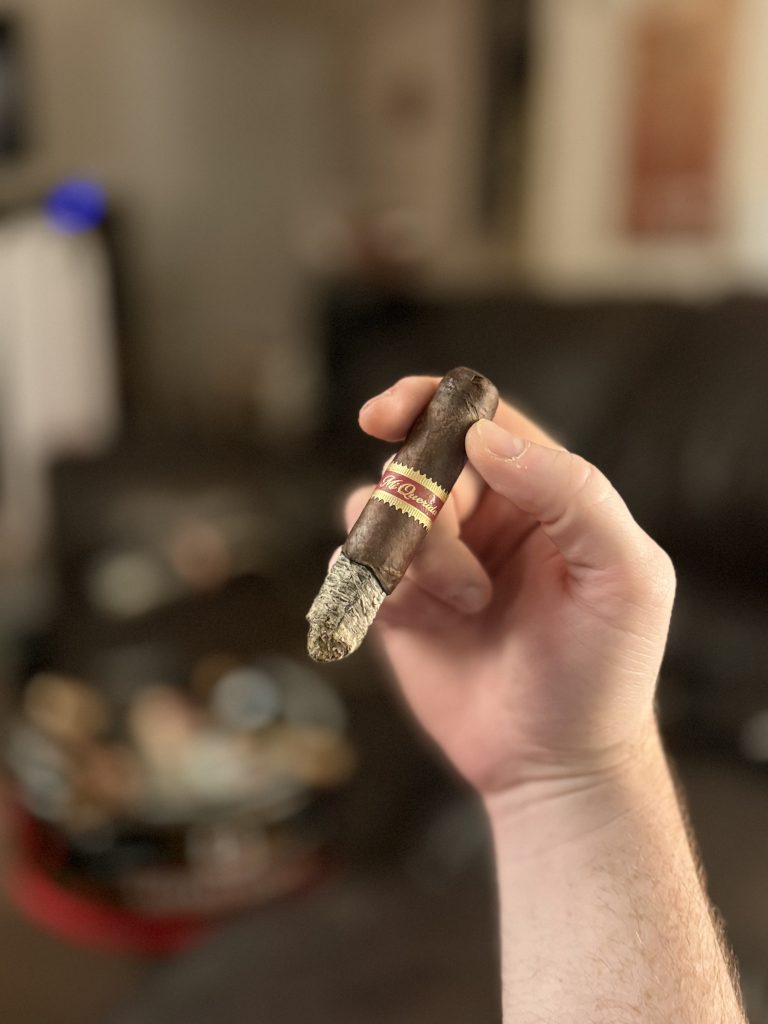
Once the band came off, there wasn’t much left to deliberate.
The decision had effectively been made on the first draw.
The Triqui Traca came out punching and then did something I appreciate enormously: it stayed true to itself.
It didn’t suddenly throw some bizarre floral note into the final third. It didn’t lose the plot. It didn’t turn hot, sour or washed out.
It just kept rocking.
The toasted-nut character that had first shown itself around the coffee eventually emerged distinctly from the cigar even after the cup was gone. Maybe Hurricane Coffee and Dunbarton were conspiring against me. That’s getting a little Dale Gribble-ish, but I’m leaving the possibility on the board.
More likely, I accidentally stumbled into a damn fine pairing.
The construction never wavered. Smoke production remained heavy. The burn might have moved a couple millimeters one direction or another, but never enough to matter.
More importantly, the profile still had authority.
This was never a cigar asking whether I was enjoying myself.
It was telling me what it was and leaving the decision to me.
Charred wood. Leather. Dark cocoa. Black pepper. Toasted nuttiness. Enough underlying sweetness to keep all that darkness from becoming oppressive.
And strength.
Plenty of it.
The Triqui Traca is unapologetic. If your ideal cigar is light, delicate and happy to disappear quietly into the background, I don’t think this is where I’d send you.
If your palate lives where mine does?
Load the wagons.
Millennium of Aftermath

Well, shit.
My first Dunbarton Tobacco & Trust cigar has created a problem.
I now need more Dunbarton Tobacco & Trust cigars.
That’s what happens when you spend enough time smoking inside familiar lanes. You find the brands and blends you like, buy them by the pile and eventually convince yourself you’ve built a diverse humidor because the labels on the boxes are different.
Then something like the Mi Querida Triqui Traca shows up and reminds you how much good stuff is sitting outside those lanes.
At $8.90 delivered through a Cigar Page Plus sampler, this particular stick made the lesson even more painful.
The Triqui Traca wasn’t the most complex cigar I’ve ever smoked. I don’t think pretending otherwise makes the review better.
It was something I may appreciate even more: confident.
It found its profile almost immediately and spent the rest of the evening working within it. Charred wood and black pepper gave way to more leather and dark cocoa, with toasted nuttiness appearing late. The Cuba 1910 Dark Roast didn’t rewrite that profile; it amplified it beautifully.
Meanwhile, the cigar burned exceptionally well, drew without complaint and produced enough smoke to make the exhaust system earn its keep.
There isn’t much else I need from it.
So why four Bands instead of five after I’ve spent this entire review carrying on like Steve Saka personally mailed me the meaning of life wrapped in Broadleaf?
Because five Bands at The Evening Draw means something specific: I’ve already bought the stack and I’m going back for more.
I’m not going to bend my own rating system because the honeymoon was spectacular.
But understand where this four sits.
This isn’t “yeah, I’d smoke another.”
This is Box Worthy with me actively looking toward the rest of Dunbarton’s portfolio and wondering how quickly I can make up for lost time.
The Triqui Traca was my first.
It absolutely will not be my last.
4 Bands — Box Worthy.
-
Wanted for Disturbing the Peace
Black Label Trading Company Lawless Robusto – Bury the Leaf Some cigars politely introduce themselves.…
-
Sometimes the Guy Behind the Counter Knows Something
Stolen Throne Call to Arms Sumatra – Bury the Leaf There are plenty of ways…
-
A S’more at the Start and Corojo by the Finish
Ceniza Fina Corojo – Bury the Leaf Some cigars arrive with a marching band. This…

Leave a Reply