
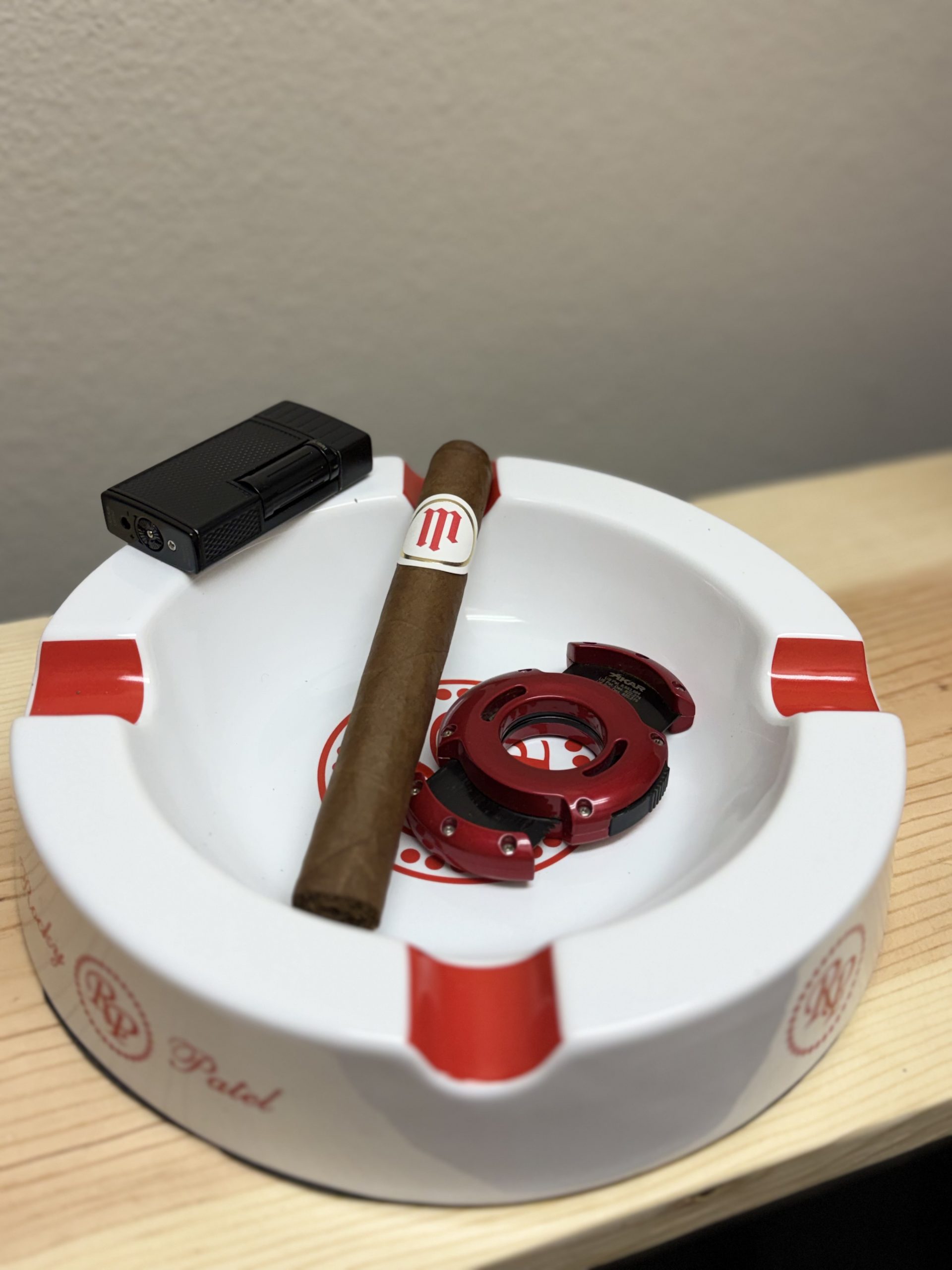
Quick Facts
Crowned Heads Mil Dias – Bury the Leaf
There are cigars you buy because you’ve researched them, hunted them down, and convinced yourself they’re going to change your life. Then there are cigars you buy because Cigar Page throws a number on the screen so low it feels disrespectful not to click “add to cart.” This Crowned Heads Mil Días Toro was the second kind.
A $3.88 toss-in has no business carrying expectations. At that price, it’s usually a flier. A “why not?” cigar. Something you buy because the downside is basically nonexistent and the upside might just be finding a sleeper. Then again, that’s the danger of a well-known name attached to a cheap stick. Even when your wallet says “this is a bargain experiment,” your brain still whispers, “yeah, but what if it turns out to be excellent?”
So into the humidor it went. Just under a year at 67% and 68 degrees, tucked away long enough for any rough edges to either smooth out or make peace with who they were always going to be. That’s enough time to give a cigar every fair chance in the world. If there was hidden depth in there, it had time to wake up. If there was ever going to be some magical transformation from “deal cigar” to “holy hell, why didn’t I buy a box?” this was the setup for it.
And in true lounge fashion, the night I finally lit it wasn’t some grand, ceremonial event. It was me in the chair, laptop nearby, half smoking and half trying to solve an entirely different problem involving hallway art placement, old cigar bands, a cow painting, a Who Dat sign, and the kind of unnecessary domestic geometry that only makes sense when you’ve had a cigar in hand for a while. Which, in hindsight, may have been the most honest environment possible for this review. Because if a cigar really wants your attention, it takes it. It doesn’t politely wait for you to finish arguing with your own walls.
That turned out to matter.
The Mil Días Toro was good. Better than good in a few respects. But there’s a difference between “good” and “you need to stop what you’re doing and pay attention.” This cigar never quite made that leap. And as the evening went on, that became both its greatest compliment and its biggest problem.
By the Numbers
- Vitola: Toro
- Wrapper: Ecuadorian Habano
- Binder/Filler: Nicaraguan binder, fillers from Nicaragua, Costa Rica, and Peru
- Storage: 67% RH / 68°F
- Rest Time: Just under a year
- Pairing: Water, laptop foolishness, and hallway art indecision
- Cut: Straight Cut
- Price Paid: $3.88
- Typical Shelf Price: $9–$12
- Band Rating: 3 Bands
Construction & First Impressions
Before first light, this cigar had already done itself a favor by looking like it belonged in a higher tax bracket than the one I paid for it. Construction was solid, firm and full from head to foot, with no soft spots and no weird hollow sections trying to hide under the wrapper. The Ecuadorian Habano leaf had a clean medium-brown tone with enough life to it to feel inviting without trying to seduce anybody. Seams were tidy. The cap looked sharp. Overall presentation was exactly what you’d want from a cigar coming out of Tabacalera Pichardo, which has built a pretty strong reputation for producing well-made smokes for Crowned Heads.
Off the wrapper there was a gentle sweetness built around faint cocoa and earthy tobacco. Not dessert sweetness. Not frosting. Just enough of a natural softness to suggest a balanced profile. The cold draw followed that same lane: mostly tobacco with a little hay, a little dryness, and a draw that felt open enough to cooperate without turning into a wind tunnel.
Nothing about the pre-light screamed “this is going to be a monster.” Nothing hinted at aggression or complexity for complexity’s sake either. It just felt like a cigar that knew exactly what it was trying to be. That can be a very good thing. It can also be a warning label, depending on how much you value predictability over surprise.
First Third
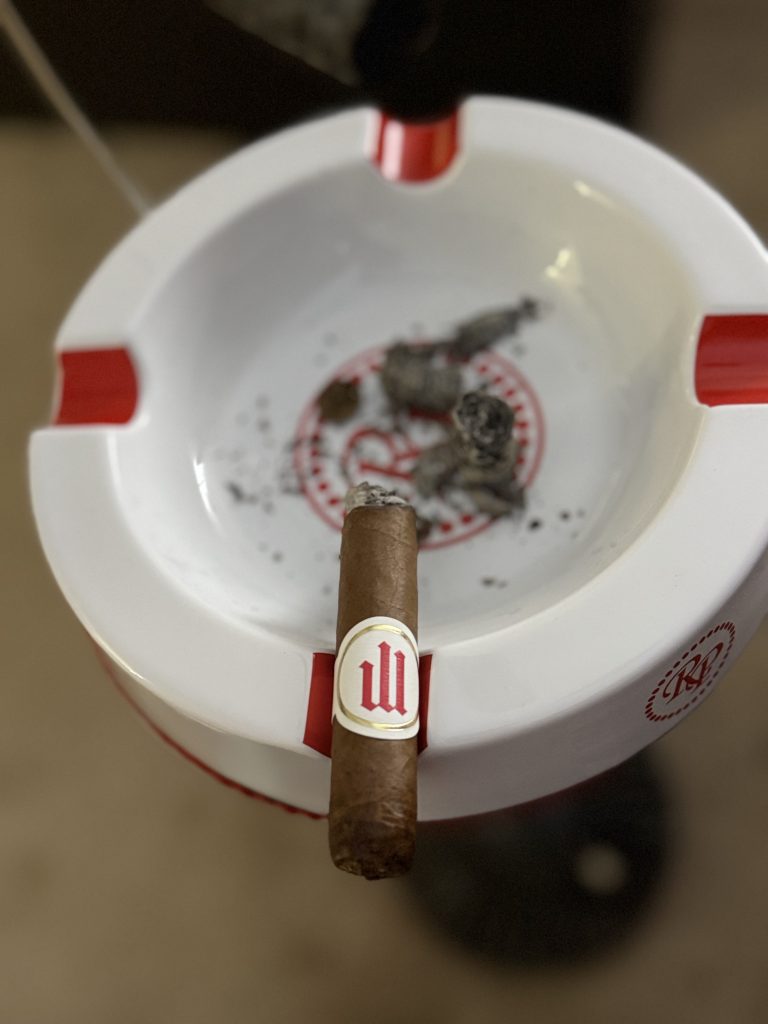
Once fire hit the foot, the first draws brought the most distinctive part of the evening. The opening was almost barnyard in character, and I mean that positively. There was earth, hay, and that old, slightly funky agricultural note that makes tobacco feel like tobacco instead of a lab-designed flavor delivery system. Alongside that came a very real minerality in the smoke while holding it in the mouth, giving the whole first stretch a sharp, clean edge that I genuinely enjoyed.
What really worked here was the contrast. The profile wasn’t rich or syrupy. It wasn’t trying to coat the palate with sweetness or blast you with pepper from the opening bell. It felt narrower than that, more restrained, but that minerality gave it enough personality to separate itself from the usual “mild-to-medium and smooth” script.
There was also a faint little hit of vanilla lurking around in the opening, but it came and went like a fart in the wind. One or two puffs would give me the impression that maybe the cigar was about to move in a softer, sweeter direction, and then just like that it would disappear and leave me right back in the barnyard-mineral-tobacco lane. It never developed into a real note, just a tiny cameo appearance.
Smoke output, on the other hand, was not shy. The Mil Días produced plenty of it from the beginning—thick, substantial clouds that helped the cigar feel more full-bodied than the actual flavor intensity would suggest. That made a good first impression. The smoke had presence even when the cigar itself was being relatively reserved.
On the exhale, I found something a little odd but memorable. If I made a tighter oval with my mouth and pushed the smoke out more narrowly, I got this papery, cardboard-adjacent note. And listen, I’m not out here pretending to know from personal experience what cardboard tastes like, but if I were a degenerate box licker, I’m fairly confident this would be the flavor profile. That note wasn’t overwhelming, but it was there enough to become part of the story.
The retrohale was the strangest part of the opening because it was almost absent. If there was anything there, it was mostly a little cedar. That’s it. No big pepper zing. No dramatic spice. No “oh there it is” moment. Just a light woody suggestion that felt almost too polite for the wrapper on this cigar. Given how often Mil Días gets described as a blend with spice, citrus, and a little liveliness to it, the lack of a real retrohale presence stood out.
Still, the first third worked. It wasn’t explosive, but it was interesting. It had a clear identity, and for a minute there it looked like this cigar might actually have something a little quirky and fun to say.
Second Third
Then the Mil Días settled in.
And by “settled in,” I mean it found a lane, put on the cruise control, and politely refused to do anything dramatic for a while.
This is the point where I need to be honest, because anything else would be unfair to both the cigar and the review. About an inch in, while it remained quite nice, the cigar stopped commanding attention. Not because it got bad. Not because it fell apart. Not because it turned bitter or harsh or muddy. It stayed smooth. It stayed composed. It stayed perfectly smokeable. It just also became the cigar equivalent of background music.
That middle third is where the phrase “good, not memorable” really took root. Flavor didn’t collapse, but it also didn’t progress in any meaningful way that made me stop and take notice. The barnyard character softened. The minerality became less distinctive. The cigar held together as a medium-bodied, smooth, easygoing smoke that never once punched me in the taste buds or insisted that I put the laptop down.
And that ended up being the indictment.
Because while I was in the middle of trying to figure out wall placement for a future cigar band collage and having the sort of ridiculous conversation only a lounge and too much thinking can create, the Mil Días was perfectly content to sit there and accompany the moment without demanding a larger role in it. Matter of fact, I barely remember the second third. That sounds brutal written out like that, but it’s the truest thing I can say about it.
This cigar didn’t fail in the middle. It simply didn’t distinguish itself.
Now, there is a segment of cigar smokers who probably read that and shrug. And honestly, fair enough. There is absolutely a place in this hobby for a cigar that behaves, smokes clean, burns well, and doesn’t ask to be the main character. Sometimes the whole point of the cigar is that it lets the evening happen around it. If that’s your thing, Mil Días has an argument here. It was smooth without being lazy and restrained without becoming dull in a technical sense. But for my palate, if a cigar wants to climb beyond “solid,” it has to give me something in the middle besides competence.
Construction, however, was the one area where this thing absolutely earned respect. Burn line stayed dead-on. Draw remained open with just enough resistance. Nothing wavered. The wrapper performed better than Morgan Wallen in Pittsburgh. And yes, that is both a compliment and a cheap shot, which means it’s the exact kind of sentence this cigar earned.
There was one running bit of tension with the ash though: this stick wanted to be an ashassin so bad. More than once I could see the ash beginning to gap and separate right before it looked ready to drop. Not in a “this cigar is poorly made” way. More in a “this thing is plotting against my lap” way. I had to outsmart it and tap ash early rather than let it commit violence on my shirt or chair.
Even that, weirdly enough, became another compliment to the construction. The cigar was holding itself together so well that the ash had enough integrity to become a threat.
Final Third
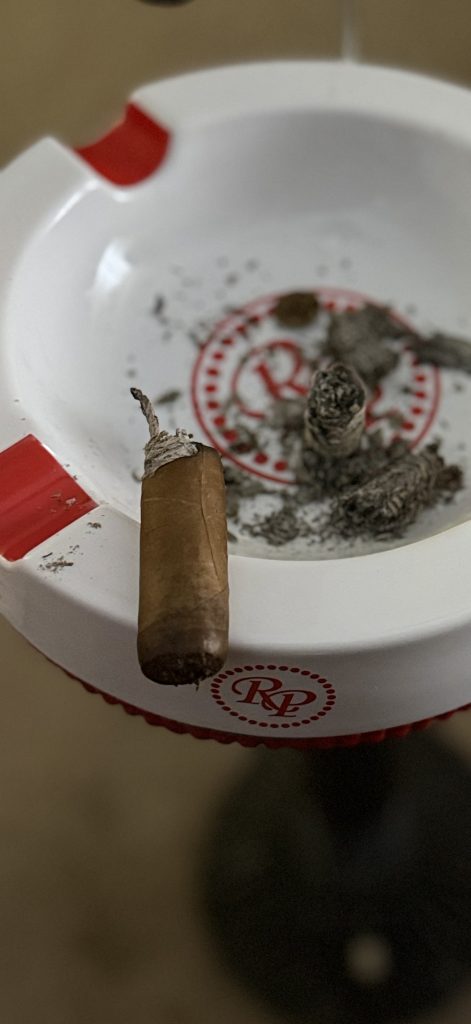
If the middle of the Mil Días was all about polite cooperation, the final third finally found a little edge.
This is where the spice started to move to the front. Not violently. Not in a “full-bodied pepper bomb” way. But enough to matter. The last inch and a half brought a legit pepper presence and a tongue tingle that made the cigar feel more awake than it had for most of the journey. It was the first time all evening that the cigar felt like it was trying to say something louder than “yes, I’m still here.”
That late development helped. A lot, actually.
Because without it, the entire cigar might have ended as a construction review disguised as a flavor review. The final stretch at least gave the Mil Días a little personality. It was still smooth, still composed, still never remotely reckless, but the spice finally gave the profile some urgency. If that character had shown up sooner, this rating might have ended up climbing.
Of course, somewhere during this phase—because apparently I’m just as responsible for the flavor story as the cigar itself—I let the damn thing fall asleep on me. And to be completely fair, that wasn’t the cigar’s fault. That belongs entirely in the “user error” file. Somewhere between overthinking art placement and underthinking the pace of the smoke, I let it go out. Relight Numero Uno happened, and the good news for the Mil Días is that it handled it just fine. No harsh restart. No acrid punishment. No bitter flare-up to make me pay for my own distraction. It just came right back and kept going.
Late in the smoke there was also one hilariously specific visual moment where a little appendage of ash and tobacco hung off the cigar like it had no intention of surrendering. A tiny Mil Días tail just dangling there, defying gravity and common sense, confirming in the dumbest possible way that this stick was in fact long filler. It was absurd. It was funny. It was also another small point in favor of how well this thing was put together.
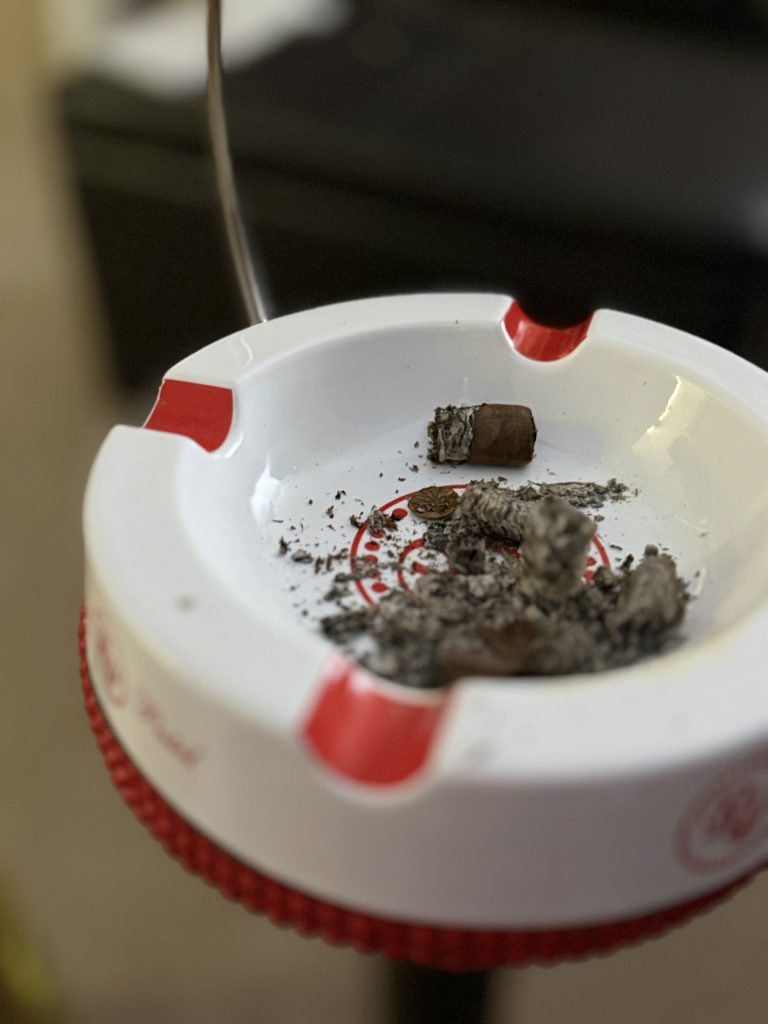
By the time I took it all the way down to the nub, the tongue tingle was still there, the spice had fully shown up, and the cigar closed stronger than it had spent most of its middle. It didn’t suddenly reinvent itself. It didn’t become profound. But it did finish with enough life to remind me there was a decent cigar in here all along.
Millennium of Aftermath
The easiest way to frame this Mil Días Toro is probably the simplest: it’s a solid cigar whose value changes wildly depending on the number on the receipt.
At $4, this thing is phenomenal.
That’s not me grading on a curve. That’s me acknowledging reality. A cigar that looks this good, burns this clean, draws this well, and still manages to give you an enjoyable evening with a decent first third and a spicy final stretch has absolutely no business being a $3.88 gamble. At that price, I’d happily keep a few around. Not because it’s magical, but because it does enough right to make that cost feel almost silly.
At $6, it’s still a pretty good stick. No complaints. No buyer’s remorse. This is where it comfortably lives as an easygoing lounge cigar—something you can smoke while talking, tinkering, listening, thinking, or, apparently, planning your hallway décor. There’s value there.
At $8, the conversation changes. That’s where I start evaluating life decisions. Not because the cigar suddenly becomes worse, but because the competition becomes sharper. At that number, there are too many cigars with more memorable second thirds, more personality, and more payoff for the same money. The Mil Días doesn’t collapse there. It just stops looking special.
At $10, it’s teetering on too much. At $12—the kind of lane you may find in a typical lounge—I’m passing. Not angrily. Not dramatically. Just calmly and confidently walking right by it. If a cigar’s middle act is going to be this forgettable, it doesn’t get to charge premium prices just because the construction team did their job.
That’s why this lands where it does: 3 Bands — Worth the Smoke.
That rating feels right. It was never a 2. This wasn’t a “might finish it” cigar. I did finish it. Gladly. It smoked well enough, built well enough, and closed strongly enough to earn more respect than that. But it also never got anywhere close to 4 Bands. “Box Worthy” requires more than competency and value. It requires the kind of experience that makes you want to chase it again because the cigar itself left a mark.
This one didn’t leave a mark. It left a good impression.
And there’s nothing wrong with that—especially when the price is right.
Would I buy it again at bargain pricing? Absolutely. Would I recommend it to somebody looking for a smooth, well-made cigar that won’t beat them up? Sure. Would I pay full lounge freight for it? Not a chance.
The Mil Días Toro ended up being exactly the kind of cigar you respect more than you crave. And at $3.88, that’s one hell of a respectable outcome.
-
Brazil by Way of Honduras
Oz Family Maracana Toro – Bury the Leaf Some cigars introduce themselves politely. The Maracana…
-
Wanted for Disturbing the Peace
Black Label Trading Company Lawless Robusto – Bury the Leaf Some cigars politely introduce themselves.…
-
Sometimes the Guy Behind the Counter Knows Something
Stolen Throne Call to Arms Sumatra – Bury the Leaf There are plenty of ways…

Final Verdict — Buy Again?
Maybe
Leave a Reply