E.P. Carrillo La Historia E-III – Bury the Leaf
There are cigars you smoke between things, and there are cigars that become the thing.
The E.P. Carrillo La Historia III is very much the latter.
This is a box-pressed Churchill wearing a wrapper dark enough to make certain assumptions seem perfectly reasonable. You look at that Mexican San Andrés Maduro and prepare yourself for something heavy, aggressive and possibly interested in stealing your lunch money. Instead, La Historia III spends much of its considerable runtime doing something entirely different.
It gets creamy. It gets nutty. Cocoa wanders through. Cedar appears. Leather comes and goes. Somewhere along the way, baking spice shows up and reminds me once again that I can identify meat cooked over six different kinds of wood but apparently cannot reliably identify whatever the hell somebody means by “baking spice.”
And it does all of that while absolutely refusing to be hurried.
That became the story here. Not whether La Historia is good. It is. Not whether I want to explore more E.P. Carrillo. I absolutely do.
The question is whether I need more than two hours of this particular vitola in my life.
That answer gets considerably more complicated.
By the Numbers
- Vitola: Churchill, box-pressed
- Wrapper: Mexican San Andrés Maduro
- Filler/Binder: Ecuadorian Sumatra binder; Nicaraguan and Dominican fillers
- Cut: Colibri V-Cut
- Duration: 2 hours, 16 minutes
- Band Rating: 3 Bands — Worth the Smoke
Construction & First Impressions
E.P. Carrillo is a glaring hole in my cigar education.
Not because I haven’t heard of the cigars. Obviously I have. But compared with the amount of time I’ve spent wandering through My Father, Crowned Heads, Rocky Patel and plenty of others, I simply haven’t spent enough time with E.P. Carrillo.
A sampler is going to start correcting that particular oversight, and La Historia III drew the opening assignment.
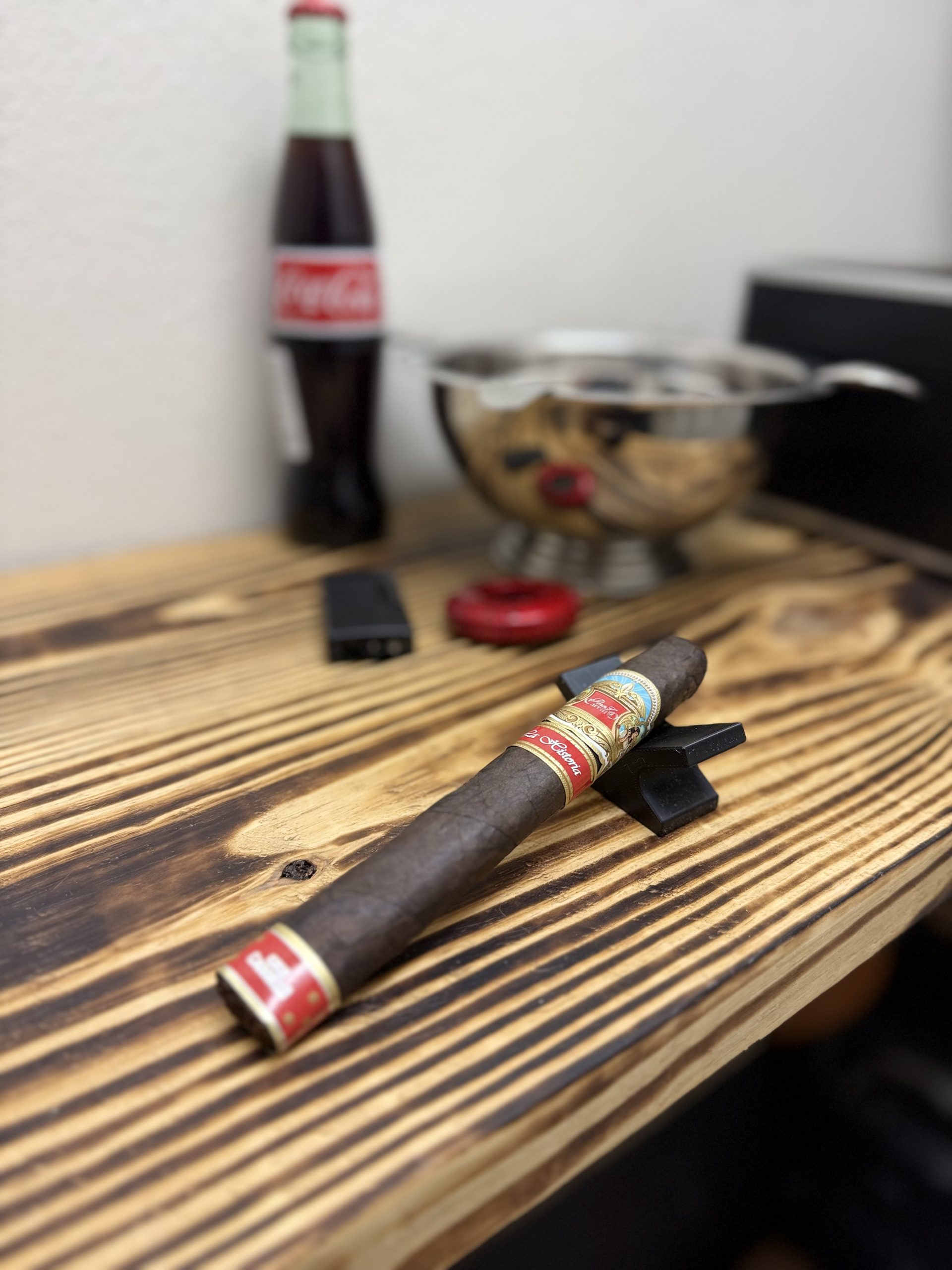
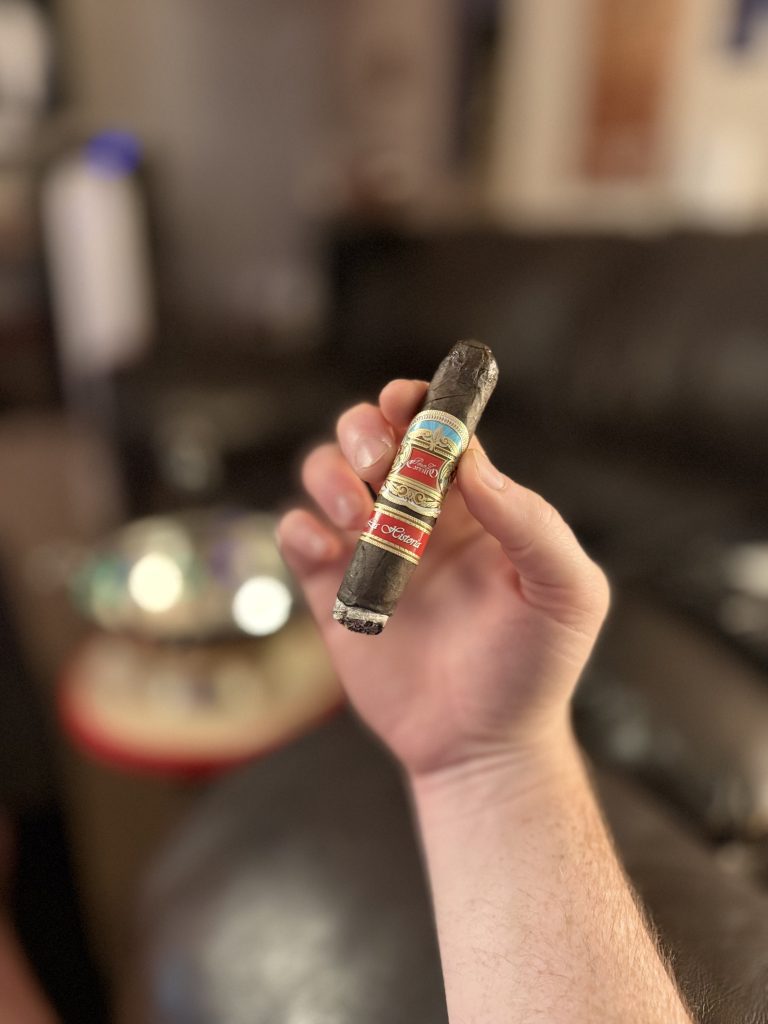
The cigar is a long, dark, box-pressed Churchill with an oily Mexican San Andrés Maduro wrapper. The seams on this particular example were fairly pronounced, and there was plenty of visible veining running through the leaf. It wasn’t the smoothest wrapper I’ve ever inspected, but it certainly looked the part of a serious Maduro.
The foot offered chocolate, cocoa and earth. Nothing particularly surprising there.
The cold draw followed the same road with earthy chocolate and cocoa coming through after a deep Colibri V-cut. I’ve become a convert to pairing a V-cut with box-pressed cigars. The combination seems to concentrate the smoke directly through that channel and, whether that’s cigar science or cigar superstition, I like the result.
Then the lighter needed butane.
Of course it did.
There is apparently an unwritten Evening Draw rule that equipment may function flawlessly until a camera starts recording. A quick refill of the Colibri Julius handled that little production interruption, and we were finally underway.
The first few draws brought earth immediately, followed by espresso and dark chocolate.
For somebody who historically hasn’t been particularly enthusiastic about Maduro cigars, that was enough to get my attention.
First Third
The opening surprised me almost immediately.
I expected pepper. I expected strength. I expected that dark wrapper to come stomping through the front door wearing work boots.
Instead, La Historia III opened with earth, caramel and chocolate.
There was some pepper, but it wasn’t remotely the dominant feature. The cigar settled into something closer to peppery coffee or mocha, accompanied by roasted nuts and an unmistakable sweetness.
And then the Mexican Coca-Cola entered the picture.
Pairing a Mexican San Andrés Maduro with Mexican Coke sounded almost too obvious, but sometimes obvious works. Real cane sugar, that distinctive Coca-Cola profile and the darker flavors of the cigar played off one another exceptionally well.
The Coke didn’t simply sit beside the cigar. It changed how some of the flavors presented themselves.
There seemed to be a vanilla quality from the Coke that amplified the cocoa coming from La Historia, pushing the combination toward creamy mocha. Roasted nuts remained underneath it, and a lighter cedar eventually started working its way into the profile.
This was not the Maduro experience I had prepared myself for.
Part of that is undoubtedly my own bias. See a nearly black wrapper and the brain immediately starts expecting strength, pepper and something capable of stripping paint. La Historia III wasn’t interested in cooperating with that expectation. It was creamy, nutty and surprisingly approachable.
Construction was initially excellent. Smoke production was plentiful, and the draw sat right where I wanted it—not tight, not loose, just consistent.
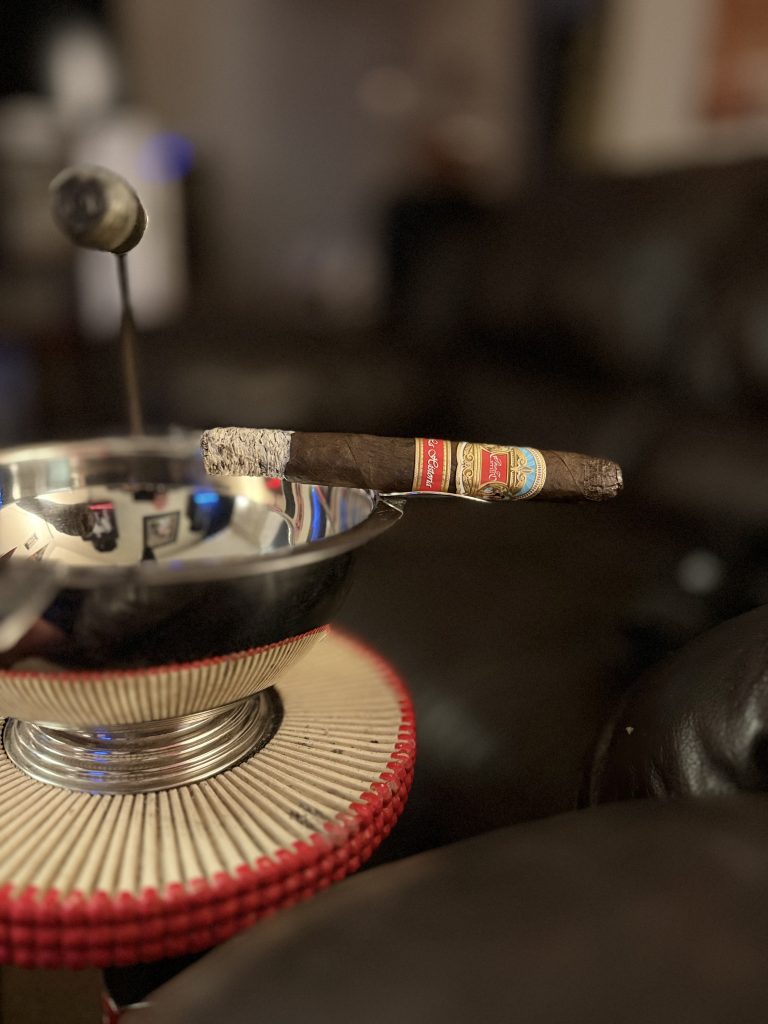
The ash held reasonably well before dropping a little over an inch into the smoke.
Then the burn started wandering.
At first, it was only the wrapper lagging slightly behind, so I gave it some room to sort itself out. There’s no reason to attack every imperfect burn line with a torch like you’re performing emergency surgery.
This one didn’t recover.
A quick touch-up got everything moving together again, and interestingly enough, the correction produced a concentrated burst of the San Andrés character: earth, nuts and cocoa all arrived together.
That minor construction issue aside, the first third was excellent.
More importantly, it was not at all what I expected.
Second Third
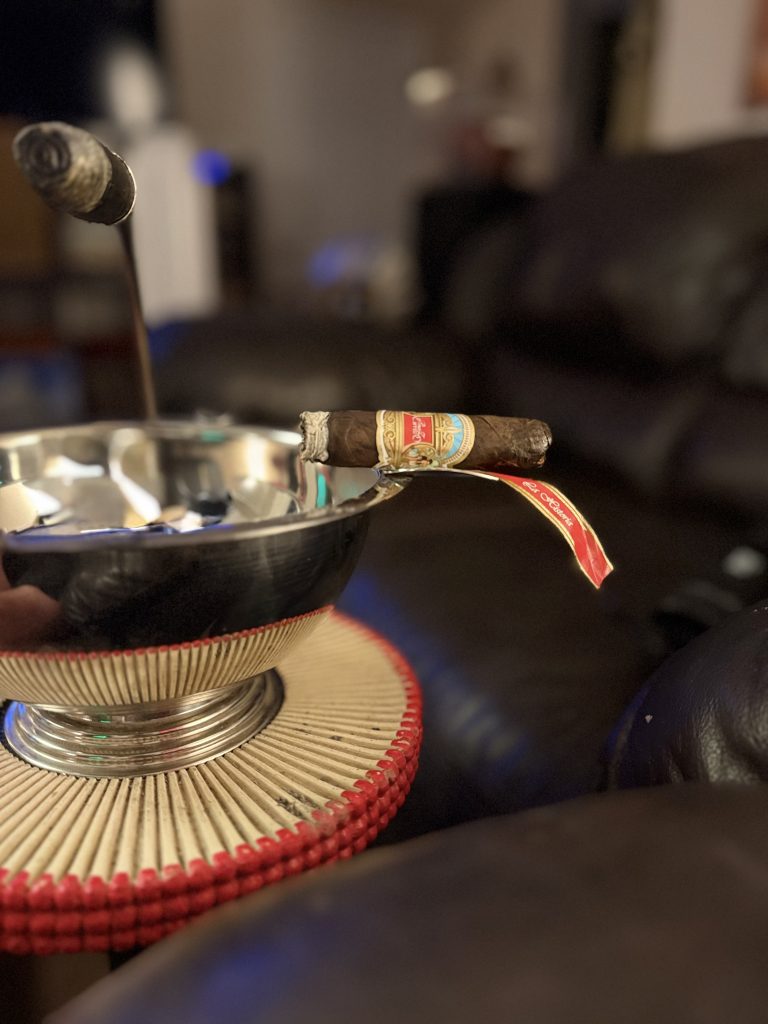
The profile deepened entering the second third.
Dark chocolate became more prominent, followed by aged leather and a deeper wood tone. The creamier character from earlier didn’t disappear completely, but the cigar started putting a little more bass into the speakers.
This was also where I started reconsidering my repeated description of the cigar as “unique.”
Maybe it wasn’t unique at all.
Maybe this is simply what a well-made Maduro can do, and I don’t smoke enough of them to recognize it.
My normal wheelhouse leans toward cigars with more spice—the Habano-type profile that occasionally punches you directly in the face. La Historia wasn’t doing that. Instead of brute force, it kept moving among cocoa, nuts, wood, earth and leather.
That movement was both interesting and occasionally frustrating.
The cigar never became boring, but it bounced among flavors more than I generally prefer. Cocoa would arrive and disappear. Earth would take over and retreat. Nuts would emerge, then wood. Leather would announce itself and then apparently remember another appointment.
The burn also wandered again.
Nothing catastrophic happened. The cigar continued producing plenty of smoke, the draw remained consistent, and it never behaved like a poorly constructed cigar. It simply required another little haircut to straighten the burn line.
Immediately afterward came another concentrated flavor—this time something brighter and sharper.
Nutmeg?
Maybe.
This is where cigar tasting can turn into theater if you’re not careful. I could pull out a flavor wheel and confidently announce seventeen spices, but I didn’t know exactly what it was. Baking spice is probably the appropriate neighborhood. There was a bright, tingling quality that changed the palate noticeably.
And it wasn’t really my thing.
That’s an important distinction.
It wasn’t bad. It wasn’t unpleasant. It simply wasn’t a flavor profile that lands squarely in my personal wheelhouse.
My palate is my palate, not the palate.
By the end of the second third, the other major characteristic of La Historia III had become impossible to ignore:
This sucker was taking forever.
That’s the Churchill proposition, of course. Nobody picks up a long cigar because they’re late for a dentist appointment. But this particular Churchill was absolutely taking its time.
And that started influencing how I felt about smoking another La Historia III.
Not another La Historia.
Another La Historia III.
There’s a difference.
Final Third
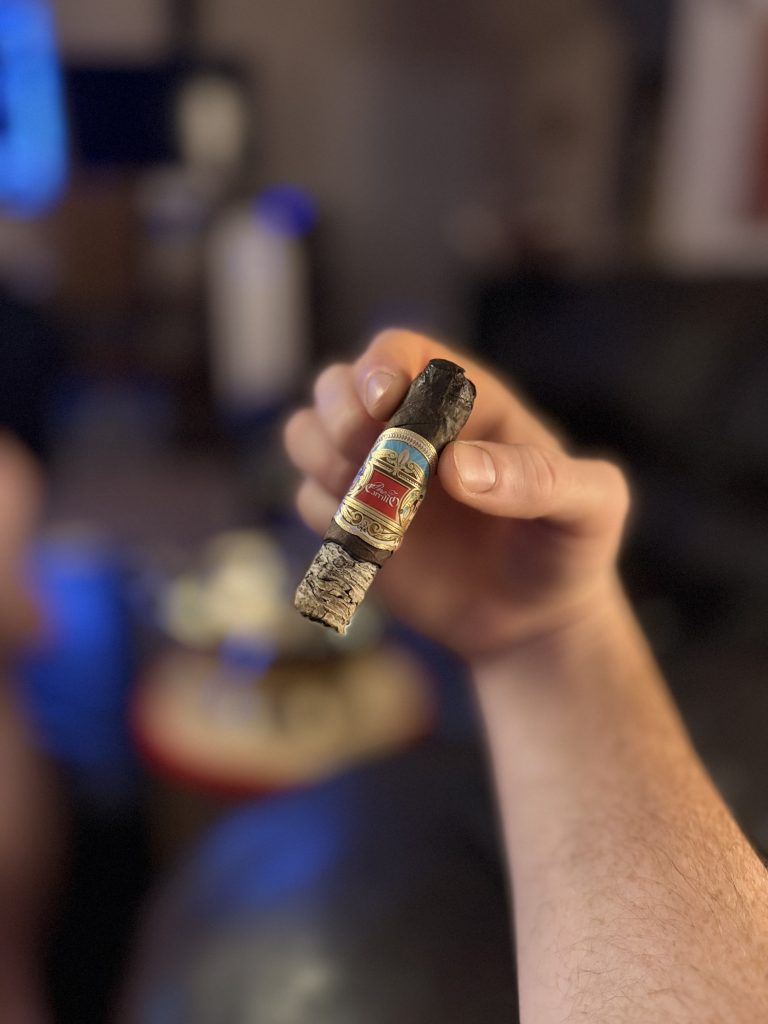
The final third brought oak to the front, and I expected the cigar to finally turn toward the darker, heavier profile I’d anticipated from the beginning.
It never completely did.
Coffee appeared around the edges. Earth remained present. Old, worn leather occasionally pushed through, and charred oak eventually became the dominant note.
Pepper finally made an appearance, but never became the big finale I expected.
Instead, La Historia III remained remarkably controlled.
That deserves some credit.
For a cigar that visually screams MADURO in capital letters, it never became oppressive. There was no sudden wall of strength and no point where the wrapper overwhelmed everything underneath it.
The final third was earthy, woody and increasingly charred, with leather continuing to drift in and out. A little pepper eventually joined the mix, and that brighter sensation from earlier continued lingering on the palate.
The cigar required attention to its burn during the session, but nothing here rose to the level of a serious construction failure. A couple of touch-ups were necessary. It also went out a couple of times, but those were on the smoker, not the smoke.
That’s my fault, not E.P. Carrillo’s.
The cigar itself continued drawing properly and producing smoke when I bothered doing my part.
Eventually, though, the sheer length of the experience became impossible to separate from the cigar.
More than two hours is a commitment.
For some smokers, that’s the selling point. Give them a comfortable chair, nowhere to be and a Churchill that refuses to die, and you’ve basically described a perfect afternoon.
I’m not always that guy.
Sometimes the moments available for a cigar simply aren’t that large.
Millennium of Aftermath
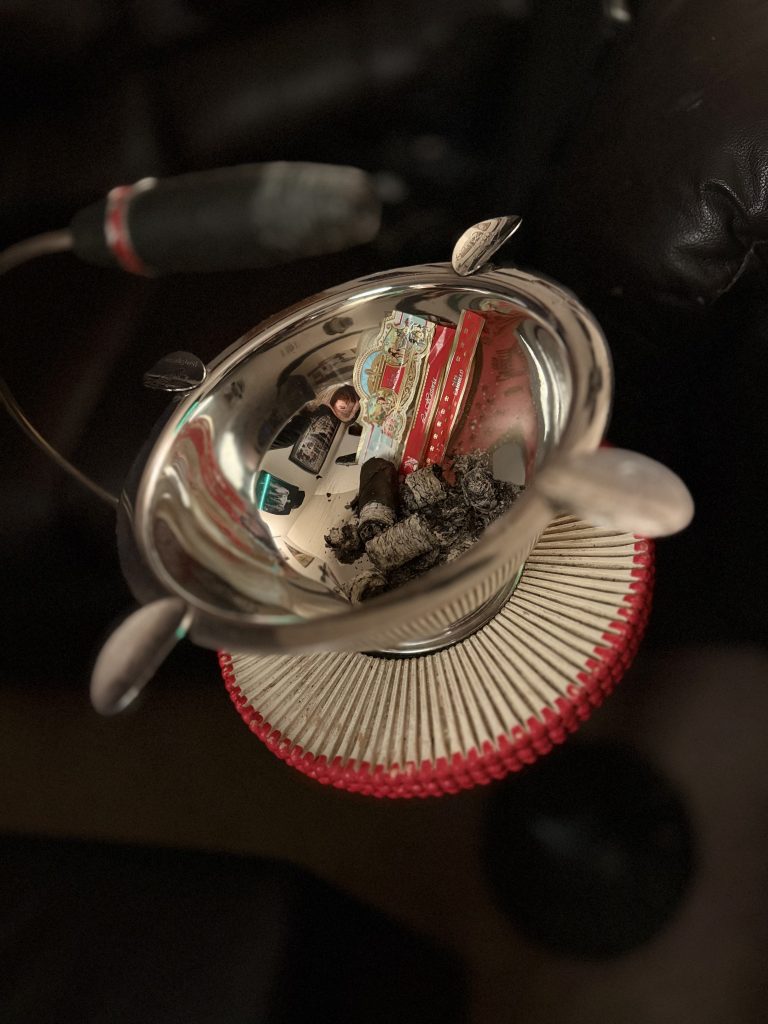
The E.P. Carrillo La Historia III did something I wasn’t necessarily expecting: it made me want to smoke more E.P. Carrillo while simultaneously making me question whether I’d smoke this exact cigar again.
That isn’t contradictory.
The blend is good.
There were stretches—particularly early—when it was damn good. The creamy cocoa, roasted nuts, mocha, caramel and restrained pepper of the first third were easily my favorite part of the experience. Mexican Coca-Cola was an outstanding companion, with the cane-sugar sweetness and apparent vanilla character amplifying the cigar’s cocoa rather than burying it.
As La Historia progressed, leather, deeper woods, earth and baking spice changed the profile. Eventually charred oak took control, accompanied by some pepper and lingering brightness.
Construction wasn’t flawless. Two burn corrections are worth mentioning, even if neither became a serious problem.
But the bigger issue for me was simply the III format.
Two hours and sixteen minutes is a lot of cigar.
Would I turn down another La Historia?
Absolutely not.
Would I deliberately chase another La Historia III Churchill?
Probably not.
Put this blend in a shorter vitola, though, and now you’ve got my attention.
That’s why the distinction matters. A cigar doesn’t become bad merely because its size doesn’t fit my preferences. Someone who wants to settle into a chair and make an entire evening out of one cigar may view the III’s longevity as a feature rather than a bug.
For me, it was simply more commitment than I generally want.
Still, La Historia accomplished something more important than convincing me to buy another Churchill: it opened another door.
E.P. Carrillo has been underrepresented in my humidors and on The Evening Draw, and that’s going to change. There are more cigars waiting, and after this introduction, I’m considerably more interested in seeing what else Ernesto Perez-Carrillo has hiding behind those bands.
La Historia III earns 3 Bands — Worth the Smoke.
A good cigar. A surprisingly approachable Maduro. An excellent demonstration of why you shouldn’t judge strength by wrapper color.
Just clear your damn calendar first.
-
Wanted for Disturbing the Peace
Black Label Trading Company Lawless Robusto – Bury the Leaf Some cigars politely introduce themselves.…
-
Sometimes the Guy Behind the Counter Knows Something
Stolen Throne Call to Arms Sumatra – Bury the Leaf There are plenty of ways…
-
A S’more at the Start and Corojo by the Finish
Ceniza Fina Corojo – Bury the Leaf Some cigars arrive with a marching band. This…

Leave a Reply