J.C. Newman Diamond Crown Julius Caeser Toro – Bury the Leaf
There are cigars you smoke.
There are cigars you contemplate.
And apparently, there are cigars you spend an evening performing minor outpatient surgery on with a Swiss Army knife.
The Diamond Crown Julius Caeser Toro was supposed to be the first two. Instead, it became the third.
That is especially frustrating because buried underneath the construction problems was a cigar I genuinely wanted to like. Toast, oak, black pepper, nuts, coffee and leather all made appearances. There were moments when the profile showed exactly why this cigar has the reputation it does.
Then I’d set it down.
And it would go out.
Again.
At some point a cigar stops being relaxation and becomes a maintenance agreement. Nearly twenty dollars bought me the latter.
This wasn’t even my first date with Julius. A Robusto smoked roughly a month earlier had also struggled to stay lit. Different vitola. Different retailer. Different state. Same basic problem.
Once is unfortunate.
Twice starts looking like a pattern.
And by the end of this Toro, I’d stabbed Julius more times than Brutus and Cassius did on the Ides of March.
By the Numbers
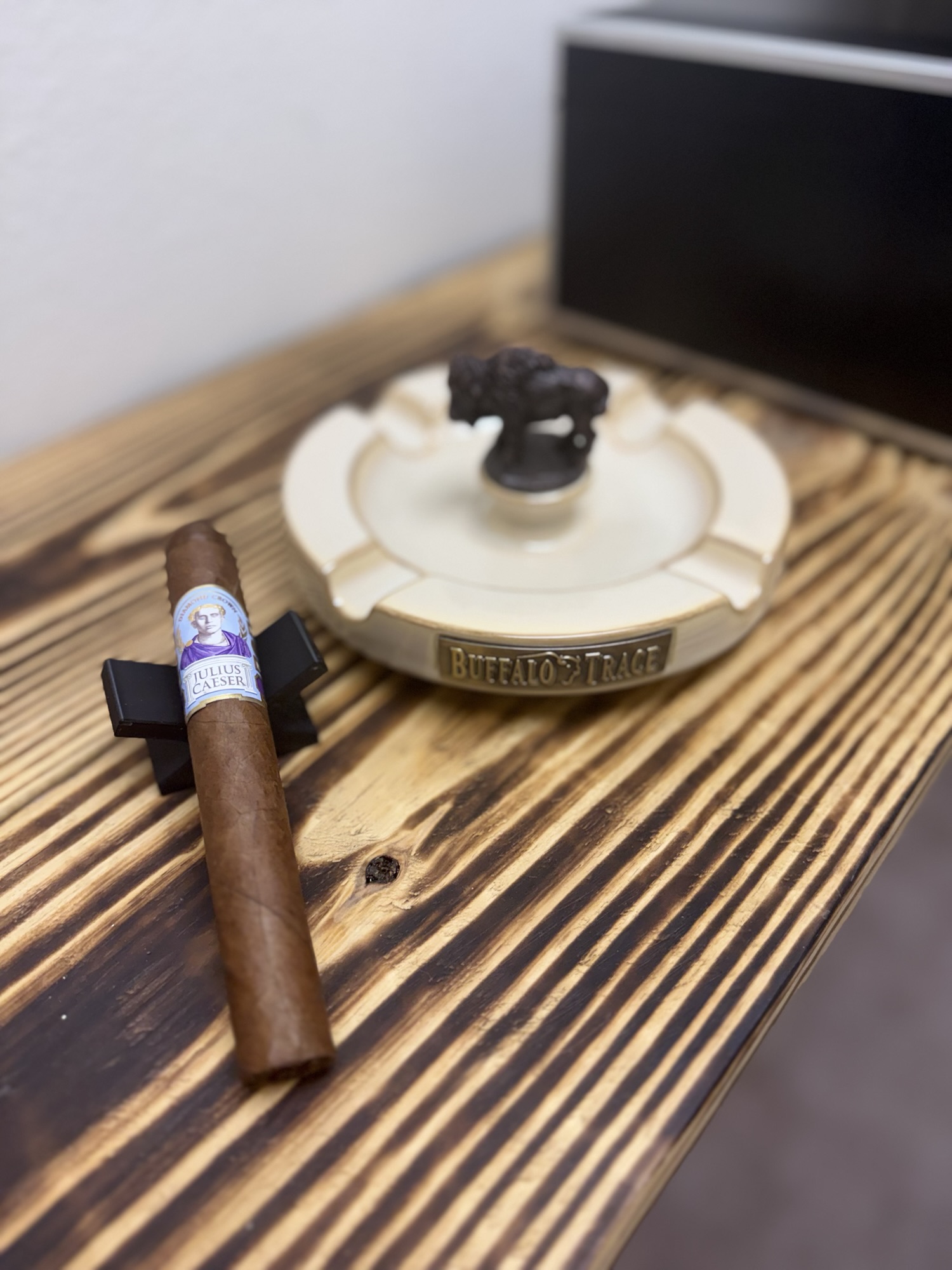
- Vitola: Toro — 6″ × 52
- Wrapper: Ecuadorian Havana-seed
- Filler/Binder: Dominican binder; Dominican and Central American filler
- Cut: Colibri SV-Cut Guillotine
- Procured from: Neptune Cigars
- Price Paid: $18.83 after tax
- Estimated MSRP: Not established in the supplied review notes
- Duration: 1 hour, 24 minutes
- Band Rating:1 Band — Leave It in the Ashtray
Construction & First Impressions
The Julius Caeser certainly knows how to dress for the occasion.
Baby blue, royal purple, white and gold make for one of the more ornate bands I’ve had sitting in the Evening Draw Lounge. It’s elegant without being boring, and paired with a fairly oily Havana-seed wrapper, the cigar absolutely looks like something carrying an almost-$20 price tag.
The wrapper itself showed some pronounced veins, but there weren’t any obvious soft spots or voids that suggested trouble ahead.
The nose was even more encouraging.
Earth and chocolate came from the wrapper and foot, but underneath them was something unexpectedly warm and sweet that reminded me of French toast. The cold draw carried some of that same character. Maybe that’s where some people find black cherry in this blend; my brain went straight to breakfast.
Whatever you call it, it smelled inviting.
The warning sign was airflow.
The cold draw was tighter than I prefer, although initially it wasn’t enough to send up the distress flare. Sometimes a cigar loosens once heat gets into it. Sometimes a slightly firm draw settles into a perfectly serviceable smoke.
This one did neither.
But before I knew that, the first few puffs gave me plenty of reason for optimism. Toast and chocolate arrived immediately, followed by oak and black pepper. The profile was warm, substantial and considerably more assertive than the band’s fancy clothes might suggest.
Then the burn started wandering.
Initially, I was willing to take the blame. I’d lit it with an unfamiliar wide-flame torch and treated the foot with all the finesse of a guy relearning how fire works.
So I corrected it with a familiar lighter.
That should have ended the story.
It didn’t.
First Third
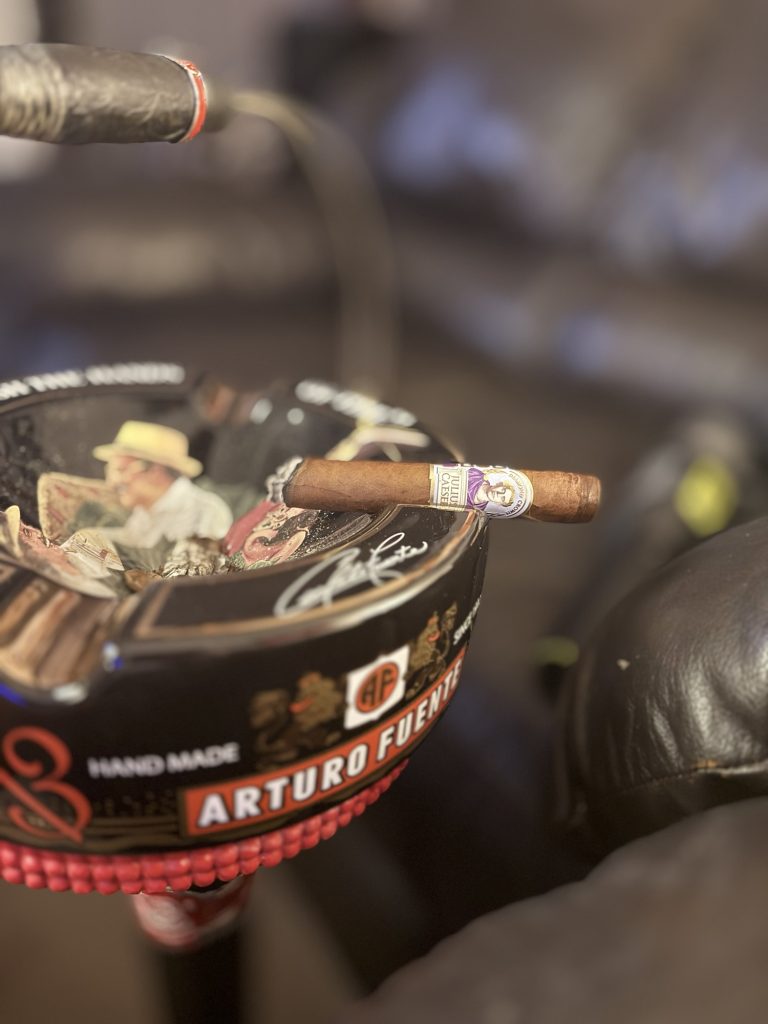
Once the foot was properly established, the profile settled around toasted bread, black pepper and a woodiness that ran deeper than ordinary cedar. Oak became increasingly prominent as the first third progressed.
Flavor wasn’t the problem.
Keeping the cigar functioning was.
The burn continued drifting badly enough to require attention, while smoke production remained surprisingly thin. Both problems seemed to point toward the same culprit: the draw was simply too damn tight.
Storage wasn’t a convenient scapegoat, either. The cigar had been properly humidified before moving into the Evening Draw review humidor. It had been temperature controlled while traveling. Nothing about its treatment gave me a convincing reason for the performance I was seeing.
Eventually I pulled out the Evening Draw’s highly unofficial draw-enhancement device: some implement on a Swiss Army knife whose actual intended purpose I couldn’t tell you.
Around here, apparently, it’s vascular surgery for cigars.
Opening the tobacco helped airflow somewhat, but that’s a lousy proposition with an expensive cigar. There’s a narrow line between correcting an obstruction and destroying the cigar you’re trying to save.
After fighting it for most of the first third, I finally let the Julius Caeser go out completely, knocked away the ash and started over.
Fresh light. Opened draw. Clean reset.
For a moment, Julius finally behaved.
The flavor brightened noticeably. A nuttiness moved forward, the toast disappeared, and the black pepper settled farther into the background. Smoke production didn’t dramatically improve, but the blend itself suddenly seemed more expressive.
Which almost made the situation worse.
Because now I knew there really was a good cigar trapped inside this thing.
Second Third
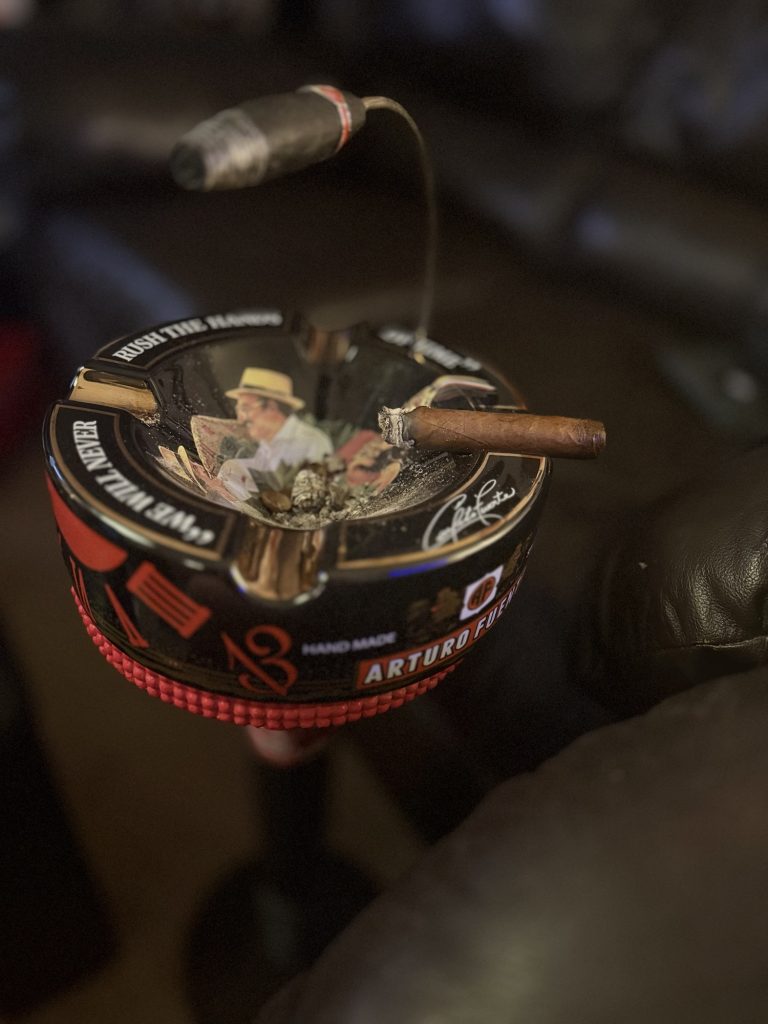
This is where construction stopped being an annoyance and hijacked the entire review.
A cigar is supposed to provide a chance to sit still for a while. Maybe you’re talking with somebody. Maybe you’re alone with your thoughts. Maybe you’re doing absolutely nothing, which occasionally is exactly what a person needs.
What you’re generally not looking for is another chore.
I couldn’t stop thinking about the Julius Caeser’s burn.
Set it down for a couple of minutes and it would begin dying. Relight it and the burn would wander again. Correct the burn and I’d get a short window before something else demanded attention.
And I’d seen this movie before.
The first Julius Caeser I smoked was a Robusto purchased elsewhere, and it also had trouble remaining lit. At the time I wrote it off as a fluke.
The second cigar makes that explanation considerably less satisfying.
I even dug the backup Toro out of the humidor during this review just to feel it. That cigar was also extremely firm.
Maybe three Julius Caesers could all prove coincidentally different. I’m not claiming a manufacturing defect across an entire line based on two smoked cigars and one squeeze test.
But I’m also not pretending the pattern doesn’t exist.
Meanwhile, the profile continued doing respectable work whenever construction got out of its way. Oak had carried the first third; nuttiness briefly moved forward after the complete relight. Later, black pepper returned alongside hints of coffee and possibly leather.
None of it mattered enough.
That’s the maddening part.
I was struggling to concentrate on flavor because I was too busy wondering whether the cigar was still burning.
For $18.83, that’s unacceptable.
Final Third
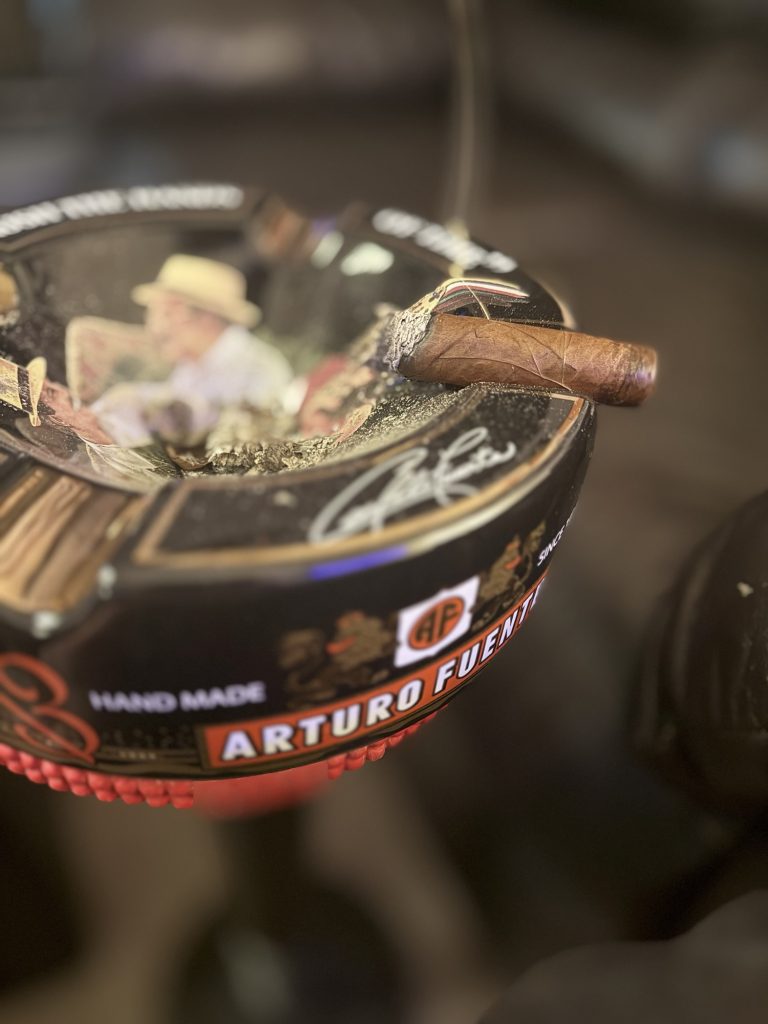
Technically, there wasn’t much of one.
Near the end of the second third, the profile had moved toward leather and coffee while the pepper faded. Under different circumstances, that transition could have made for an interesting finish.
Instead, Julius found another way to join the festivities.
The wrapper cracked.
The damage appeared beneath an over-glued portion of the band, adding one more construction problem to a cigar already suffering from a brutally restricted draw, repeated relights and a burn that refused to cooperate.
That was enough.
I could have kept going. I could have grabbed another lighter, corrected another section, opened the draw some more and squeezed another stretch of smoking time out of it.
But why?
Finishing a cigar isn’t an achievement if you’re miserable doing it.
The Julius Caeser had already consumed well over an hour of my evening, and I’d spent too much of that time managing it instead of enjoying it.
So I put it down.
Not because the tobacco became harsh.
Not because the flavor collapsed.
Because I was tired of fighting the cigar.
Millennium of Aftermath
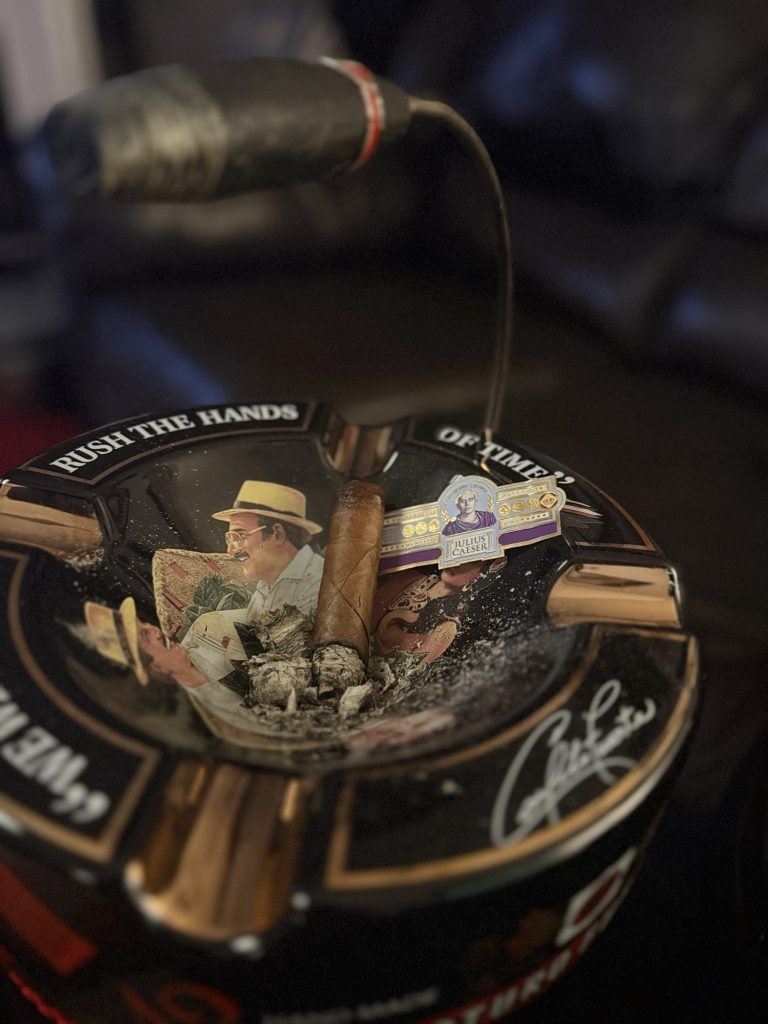
This is one of the stranger 1-Band reviews I’ve written because the Diamond Crown Julius Caeser Toro didn’t taste like a 1-Band cigar.
The tobacco deserved better.
Toast and chocolate opened the experience. Oak and black pepper took over. Nuttiness emerged after the draw was opened and the cigar completely relit. Coffee and leather developed later. There was enough movement to suggest a genuinely interesting blend underneath everything that went wrong.
J.C. Newman says those tobaccos include an Ecuadorian Havana-seed wrapper over a Dominican binder and Dominican and Central American fillers aged five years, all rolled at Tabacalera A. Fuente.
On paper, the pedigree is substantial.
In my ashtray, pedigree couldn’t save it.
The draw was oppressively tight. Smoke production suffered. The cigar repeatedly struggled to stay lit. The burn demanded correction after correction. Then the wrapper cracked beneath the band.
One bad cigar happens. Tobacco is an agricultural product rolled by human hands.
But this was my second Julius Caeser experience and my second cigar with significant combustion problems. The first was a Robusto. This was a Toro. They were purchased from different retailers in different states.
That doesn’t prove the entire line has a problem.
It absolutely changes my willingness to spend another $20 finding out.
And that’s ultimately what the Band rating measures around here. Not pedigree. Not reputation. Not whether someone else gave the cigar a 93. It measures whether the cigar sitting in front of me was worth the money and the evening I gave it.
This one wasn’t.
That’s particularly disappointing after how much I enjoyed J.C. Newman’s Brick House. I’m not walking away from Newman. I’m not even arguing there isn’t a great Julius Caeser out there.
I’m saying I’m finished looking for mine.
Because a cigar can have beautiful tobacco, beautiful packaging and a potentially beautiful profile, but performance is the combination of flavor and construction.
Take away one and the whole thing falls apart.
The Diamond Crown Julius Caeser Toro gave me plenty to taste.
It just wouldn’t give me the opportunity to enjoy it.
1 Band — Leave It in the Ashtray.
-
Wanted for Disturbing the Peace
Black Label Trading Company Lawless Robusto – Bury the Leaf Some cigars politely introduce themselves.…
-
Sometimes the Guy Behind the Counter Knows Something
Stolen Throne Call to Arms Sumatra – Bury the Leaf There are plenty of ways…
-
A S’more at the Start and Corojo by the Finish
Ceniza Fina Corojo – Bury the Leaf Some cigars arrive with a marching band. This…

Leave a Reply