Rocky Patel 2026 Year of the Horse Churchill – Bury the Leaf
There is something inherently funny about building a cigar around the Fire Horse—a symbol supposedly associated with intensity, energy, and a refusal to be restrained—and then handing somebody a seven-inch Churchill.
Churchills are supposed to require a little commitment. Clear the calendar. Settle into the chair. Maybe make sure your next of kin knows where you are.
The Rocky Patel 2026 Year of the Horse apparently missed that meeting.
This thing showed up dressed for the Kentucky Derby, kicked the stall door off its hinges, ran the race, circled the track, and was halfway back to the barn before I realized what the hell had happened.
And somehow, despite the absurd pace, it managed to leave behind a genuinely enjoyable cigar.
By the Numbers
- Vitola: Box-Pressed Churchill — 7 x 48
- Wrapper: Mexican San Andrés
- Filler/Binder: Honduran & Nicaraguan / Nicaraguan
- Cut: Colibri SV-Cut — V-Cut
- Procured from: BURN by Rocky Patel — The Battery, Atlanta, Georgia
- Price Paid: Approximately $35
- Estimated MSRP: $35
- Duration: 53 minutes
- Band Rating:4 Bands — Box Worthy
Construction & First Impressions
Rocky Patel has leaned into presentation with its Chinese Zodiac releases, and the 2026 Year of the Horse certainly isn’t shy about announcing itself.
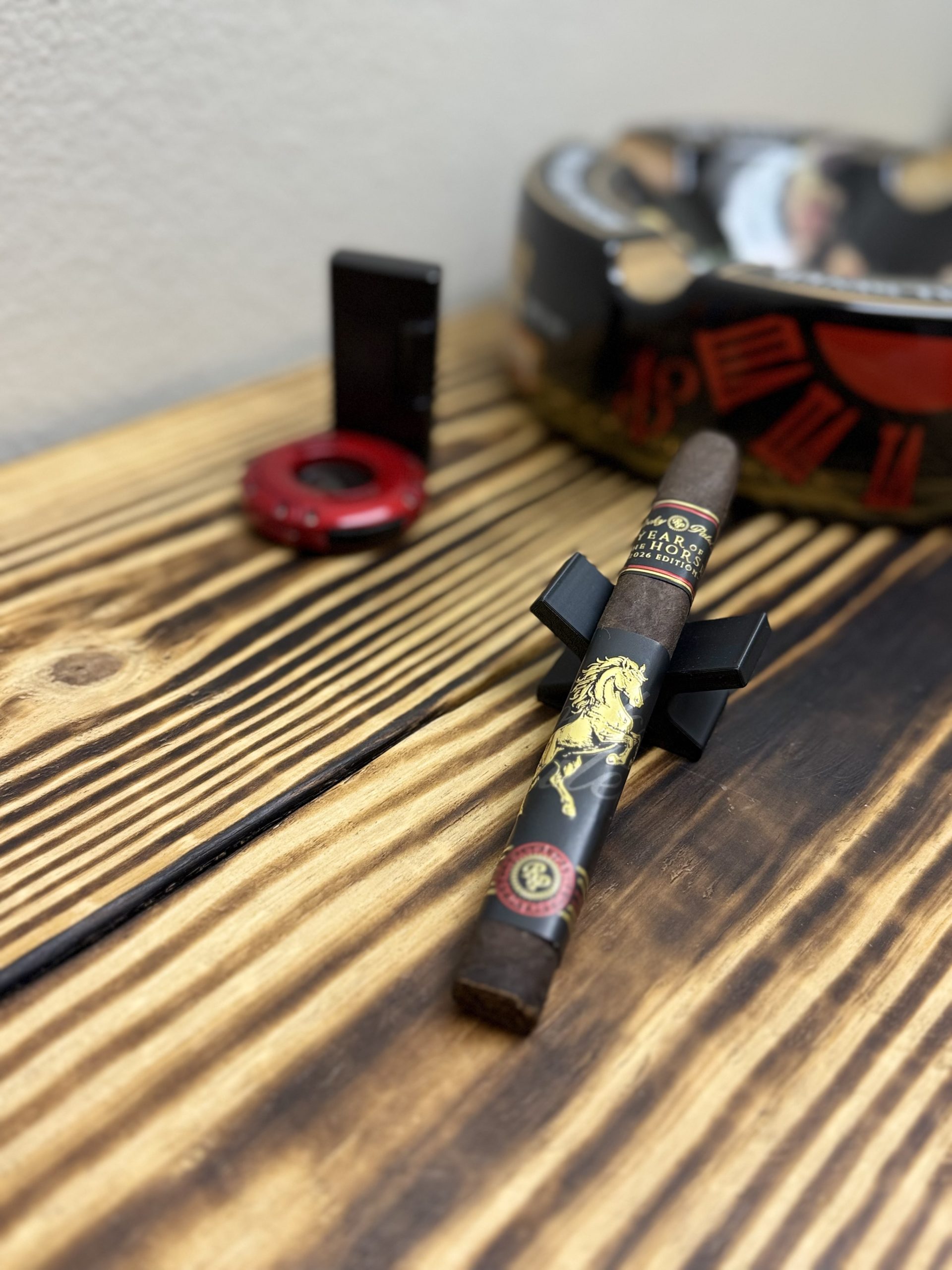
The cigar arrives wearing a substantial black, red, and gold foot band dominated by a gold horse, paired with a more conventional upper band carrying the Year of the Horse designation. It is ornate without looking cheap, and once that oversized lower band comes off, you’re left with a very attractive dark Mexican San Andrés wrapper.
More importantly, mine was in excellent condition.
That stood out after my experience with the 2025 Year of the Snake, where the wrapper wasn’t nearly as clean. Here, the leaf was dark, evenly presented, and considerably more confidence-inspiring.
The packaging deserves some attention, too. I bought several of these at BURN by Rocky Patel at The Battery in Atlanta shortly after they hit the shelves, and because only a handful remained in the box, I asked whether the box could come home with me.
It could.
I’m glad I asked.
The presentation has an almost soft-touch, velvet-like feel that is difficult to describe without actually handling it. Between the box, the banding, the dark wrapper and the long, narrow box press, the entire package feels appropriately special-release.
Rocky Patel produced the Year of the Horse as a single 7 x 48 box-pressed Churchill using Mexican San Andrés over a Nicaraguan binder and Honduran and Nicaraguan fillers. Production was limited to 6,000 ten-count boxes worldwide, or 60,000 cigars.
This particular horse had spent roughly two months resting at 67% humidity and 68 degrees before getting called out of the stable.
Box press means V-cut around here, so the Colibri SV-Cut handled the cap. The resulting draw was remarkably open—almost suspiciously so for a Churchill.
The wrapper offered plenty of earth on the nose along with something more unusual: a smoky, almost bonfire-like aroma.
The cold draw reinforced the feeling that there was a lot waiting inside.
So I introduced it to the twin soft flames of the Colibri Julius and found out.
First Third
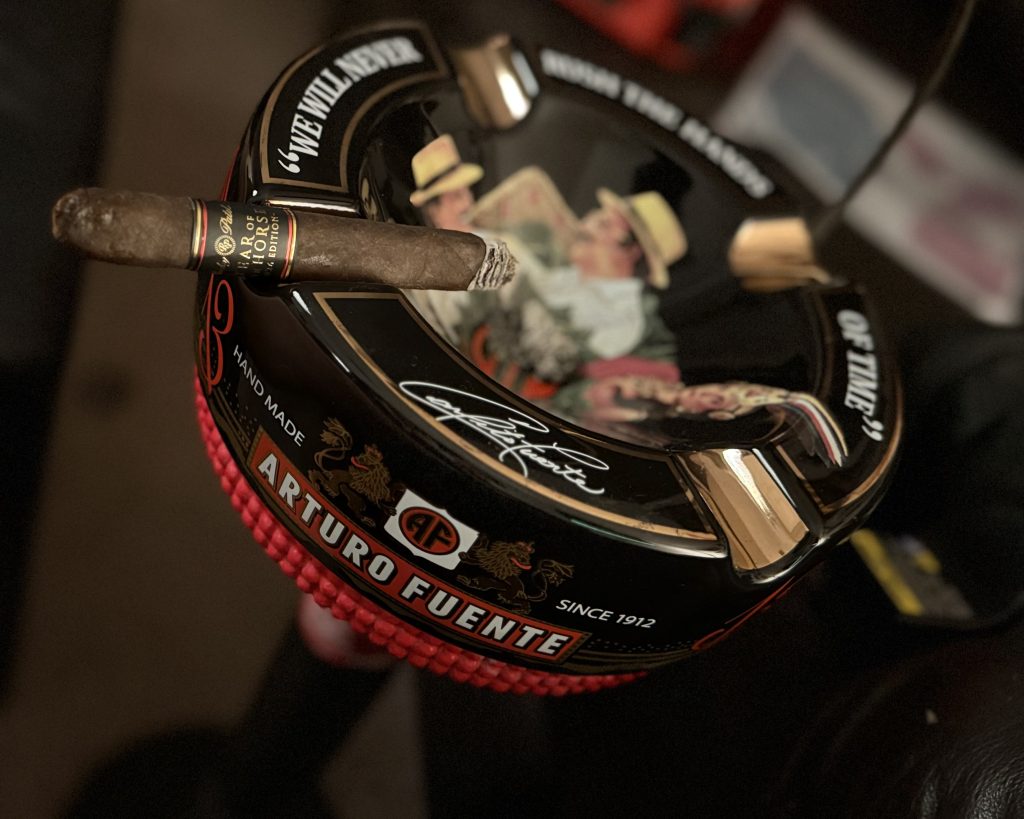
San Andrés didn’t exactly hide.
Earth came first and came hard, joined almost immediately by espresso and slightly bitter cocoa. There was enough pepper around the edges to give the profile some movement without turning the cigar into a spice delivery system.
It was bold, rich and immediately recognizable without being particularly heavy.
The smoke production, meanwhile, was ridiculous.
Not “good smoke output.”
Not “plenty of smoke.”
This cigar was manufacturing atmosphere.
The lounge exhaust and filtration system normally handles a single cigar without much drama, but the Year of the Horse was putting enough smoke into the room that I could actually see haze lingering. Four guys smoking these simultaneously might require filing a flight plan.
The ash wasn’t interested in recreating the structural engineering demonstration I got from the Year of the Snake. A natural separation line appeared early, and gravity won at roughly an inch.
No catastrophe. No shirt casualty. It politely deposited itself in the ashtray.
The burn wasn’t razor sharp either, but minor wandering corrected itself without intervention.
Then another flavor began appearing underneath the earth and cocoa.
Toast.
Not generic creaminess masquerading as toast. Actual bread-like, toasted character.
That’s not something I personally pick up particularly often, so when it appears distinctly, it gets my attention.
A restricted exhale brought even more of it forward, accompanied by cedar and something closer to toasted wood. The familiar Evening Draw tongue tingle was there as well, giving the profile another layer without overwhelming everything underneath it.
The biggest challenge was already becoming obvious.
This horse wanted to run.
That exceptionally open draw paired with the narrow box press made it incredibly easy to smoke too quickly. And when I did, the cigar let me know.
Heat crept into the profile and brought a slight harshness with it.
The solution was complicated:
Slow the hell down.
Second Third
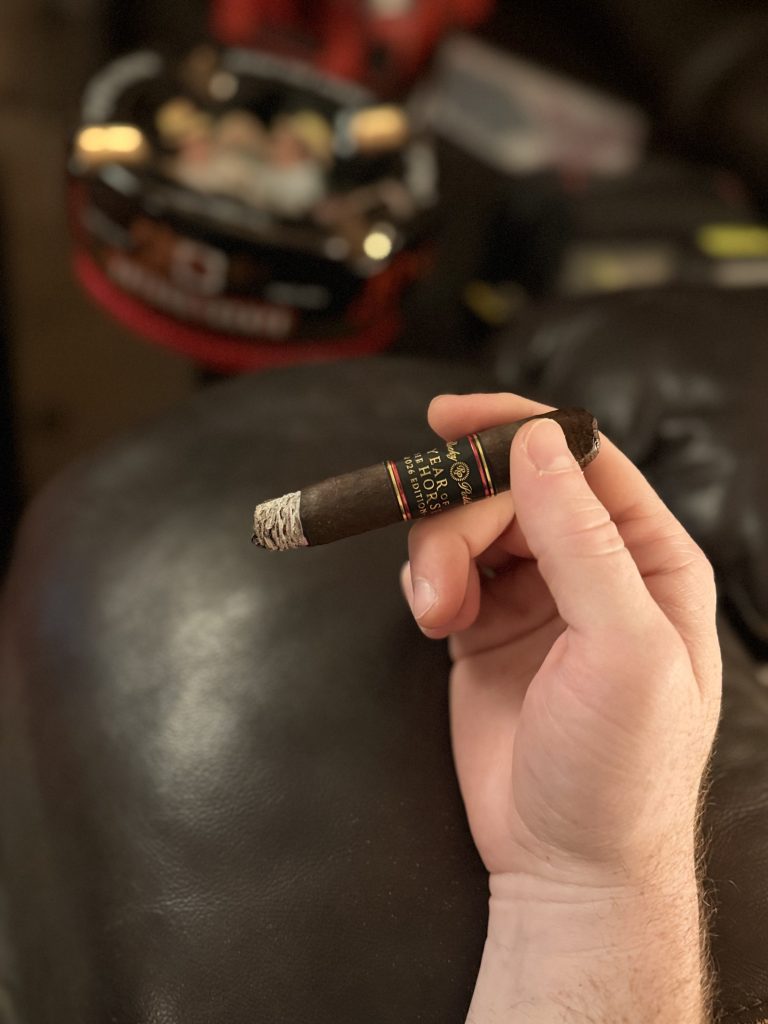
Once I stopped trying to keep up with it, the Year of the Horse settled into a surprisingly smooth middle.
Leather joined the earth, toast and cocoa. Coffee remained underneath, pepper continued hovering around the perimeter, and a nuttiness emerged distinctly enough that there wasn’t much question about what I was tasting.
The profile was assembling a greatest-hits collection of darker cigar flavors without becoming oppressive.
That’s important because looking at this cigar, I expected considerably more weight.
Dark San Andrés wrapper. Limited release. Fire Horse mythology. Black-and-gold packaging. Rocky Patel isn’t exactly whispering “delicate afternoon smoke.”
Yet the Year of the Horse never became the powerhouse its appearance suggested.
It wasn’t carrying the brute-force weight of some of the fuller Dunbarton cigars I’ve smoked, nor did it enter Liga Privada territory. But nobody is confusing it with a mild Connecticut either.
It lived comfortably in the middle-to-full neighborhood while remaining exceptionally approachable.
Construction continued to be good rather than flawless. The burn wandered occasionally, but every time I considered whether it needed help, it fixed itself.
The cigar simply needed management for another reason: temperature.
A free-flowing draw is normally something to celebrate. Here, it became almost too much of a good thing. The cigar made it extraordinarily easy to pull smoke through the leaf, and that meant it could heat up quickly if I stopped paying attention.
Let it rest, though, and everything returned.
At one point, the smoke left an unusual chalky sensation across the palate. Not unpleasant. Not something I’d necessarily request as a feature.
Just weird.
And memorable.
Meanwhile, I kept staring at what remained of the cigar and wondering where the rest of my Churchill had gone.
The answer was floating toward the exhaust.
Final Third
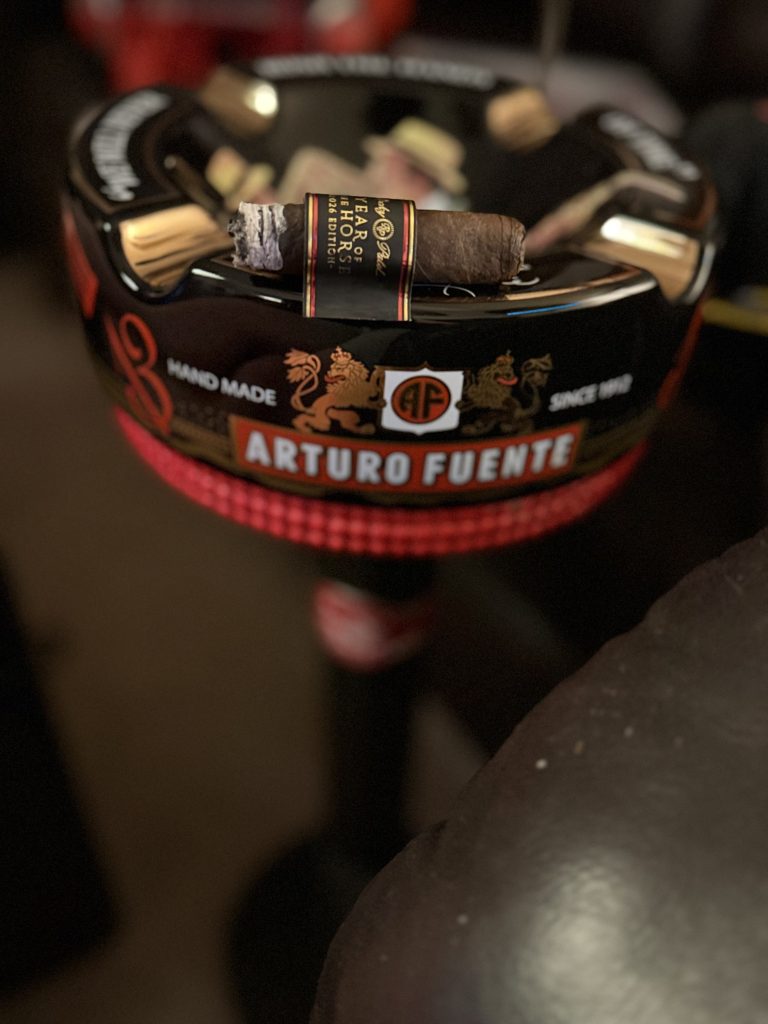
Earth came back toward the front as the final third developed, joined by charred wood and a deeper oak character.
This is where the Year of the Horse produced my favorite comparison of the night.
Imagine an oak-fired barbecue smoker before the meat goes on.
Not barbecue sauce. Not brisket. Not some forced “smoked meat” tasting note.
The wood.
The heat.
That aroma that gets into your nose and seems to linger somewhere behind your sinuses.
That.
It remained on the palate between draws and gave the final portion of the cigar a darker, more atmospheric quality than the earlier bread and cocoa profile.
Black pepper also began asserting itself more aggressively near the end, including a much stronger pepper sensation on the retrohale. There was finally some harshness there, but once again, temperature appeared to be at least partially responsible.
The Year of the Horse never developed any major construction failure. No relight. No catastrophic canoe. No wrapper issue.
The burn got sideways a couple of times and simply caught itself.
Hell, the thing may have been moving too quickly to have time to canoe.
By the end, pepper was tingling across my lips and tongue while earth, oak, char and residual cocoa occupied the palate.
The flavor remained enjoyable.
The construction remained solid.
And the smoke production remained completely absurd.
Then, 53 minutes after lighting a seven-inch Churchill, it was over.
Fifty-three.
Minutes.
I’ve had robustos demand a larger commitment.
Millennium of Aftermath
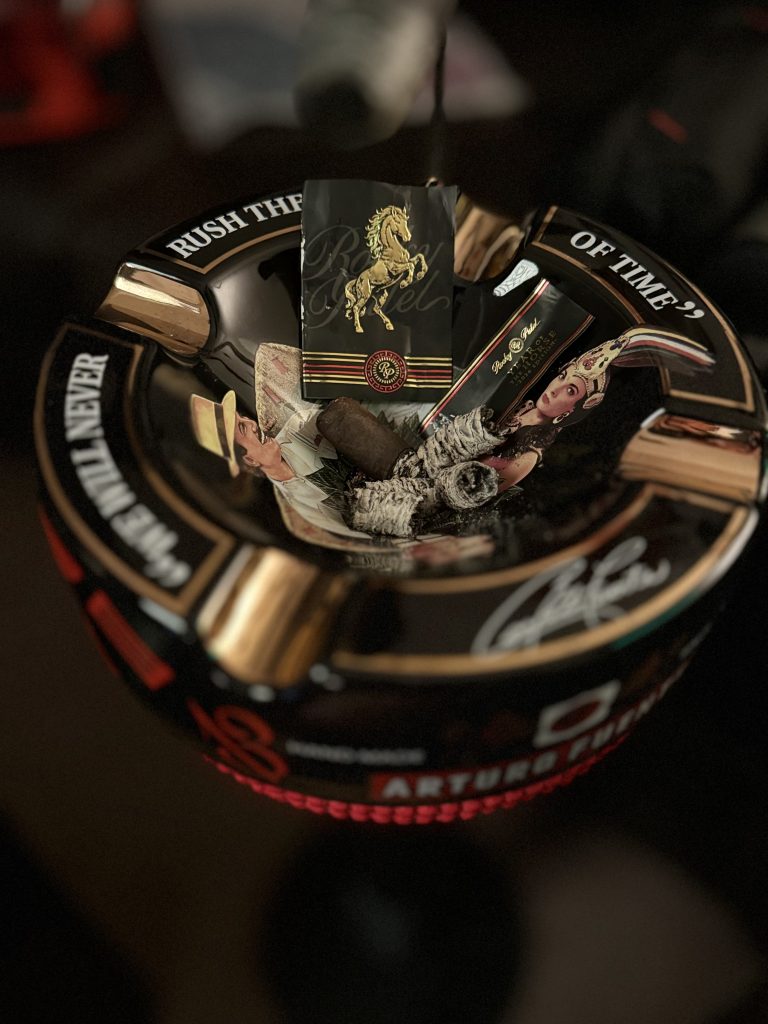
The Rocky Patel 2026 Year of the Horse is a strange cigar to evaluate because the thing I remember most vividly isn’t actually a flavor.
It’s velocity.
A 7 x 48 box-pressed Churchill disappearing in 53 minutes sounds like I sat there chain-smoking it like somebody was coming to repossess the ashtray. I didn’t.
The draw was simply that open, and the cigar produced that much smoke.
That speed becomes the cigar’s greatest strength and its greatest weakness.
On one hand, you’re getting Churchill dimensions without surrendering an entire evening. For somebody who likes the narrower ring gauge but doesn’t always want a two-hour commitment, that might actually be fantastic.
On the other, this is a premium limited-release cigar carrying a premium limited-release price. When you’re somewhere around $35 into a cigar, watching it disappear like a magician’s handkerchief isn’t necessarily the feature you were hoping to discover.
Fortunately, the experience between ignition and disappearance was very good.
Earth. Espresso. Cocoa. Toasted bread. Cedar. Leather. Nuts. Charred wood. Oak and increasingly assertive pepper.
Nothing about the progression felt artificial or desperate for complexity. Flavors moved around naturally while maintaining a recognizable earthy San Andrés backbone.
I also appreciate that the cigar wasn’t as heavy as its appearance suggested. There’s plenty of flavor here, but the profile doesn’t club you over the head with strength simply because the packaging says Fire Horse.
And then there’s the presentation.
Rocky Patel understood the assignment.
The box is gorgeous. The cigar looks special. The bands look special. Limited production gives the release some legitimate scarcity beyond simply printing “Limited Edition” on something and charging another ten bucks.
Would I tell somebody that $35 is an insignificant amount of money for a cigar?
Absolutely not.
At this price, expectations should be high.
But this delivered an experience I’d happily smoke again. More importantly for the Evening Draw scale, I’d keep several around—particularly because the unusual Churchill format, manageable strength and almost comical smoke production give it an identity beyond another dark-wrapper special release.
The Year of the Horse didn’t trot.
It didn’t canter.
The son of a bitch ran.
4 Bands — Box Worthy.
-
Brazil by Way of Honduras
Oz Family Maracana Toro – Bury the Leaf Some cigars introduce themselves politely. The Maracana…
-
Wanted for Disturbing the Peace
Black Label Trading Company Lawless Robusto – Bury the Leaf Some cigars politely introduce themselves.…
-
Sometimes the Guy Behind the Counter Knows Something
Stolen Throne Call to Arms Sumatra – Bury the Leaf There are plenty of ways…

Leave a Reply